Planting windows do not wait for maintenance. When a row-unit seeder starts dragging halfway across a field, or a baler hub begins to squeal on the second cut, the part that has given up is often a small bearing that has been breathing dust for an entire season. The bearing is cheap. The lost day is not.
Here is the short answer before the detail: farm bearings rarely fail because someone asked them to spin too fast. They fail because sealing, clearance, mounting fit and contamination control were specified for a clean factory floor and then sent into mud, slurry and stubble.
The rest of this guide covers how farm duty differs from general industrial duty, which bearing families suit which machines, how seal and lubricant choices decide service life, and what to check before a purchase order goes out.
Why Agricultural Bearings Fail Differently
Most agricultural bearings are low-speed, high-load components. A gauge wheel on a seeder might turn at a few hundred rpm. A cleaner fan or a small auger drive may reach a couple of thousand rpm, but even that is modest by industrial standards. Speed is seldom the limiting factor. Load spikes, dirt ingress and structural deflection are.
Three conditions separate farm duty from ordinary machinery duty. First, continuous abrasive contamination: fine soil dust, chaff and seed treatment powder work past shields and turn good grease into grinding paste. Second, moisture and chemistry: washdown water, slurry, condensation inside a cooling housing, and fertilizer salts that attack cages and seal lips. Third, deflection: welded frames and sheet-metal brackets flex under load, so a bearing that was aligned on the drawing bench is running slightly misaligned in the field.
Farm operating conditions and the bearing features each one demands.
| Field condition |
Effect on the bearing |
Practical countermeasure |
| Fine dust and soil |
Abrasive particles reach the raceway, grease thickens and wear accelerates |
Contact seals, protected seal recesses, controlled grease fill and shorter relubrication intervals |
| Fertilizer, slurry and washdown |
Corrosion pitting on rings and balls, hardened or swollen seal lips |
Corrosion-resistant seal compounds, sealed-for-life units, rust-preventive grease |
| Impact from stones and stubble |
Peak loads several times the nominal load, cage fatigue, brinelling when parked under load |
Higher static safety margin, double row or roller designs, robust cages |
| Frame flex and bracket distortion |
Edge loading, uneven roller path, premature seal rubbing |
Machined housing seats, designs with some misalignment tolerance, careful shimming |
Matching Bearing Type to Farm Equipment
There is no single agricultural bearing. The right choice follows the load path: what the shaft carries, in which direction, and how dirty the surrounding air is.
Deep Groove Ball Bearings for Implements and Auxiliary Drives
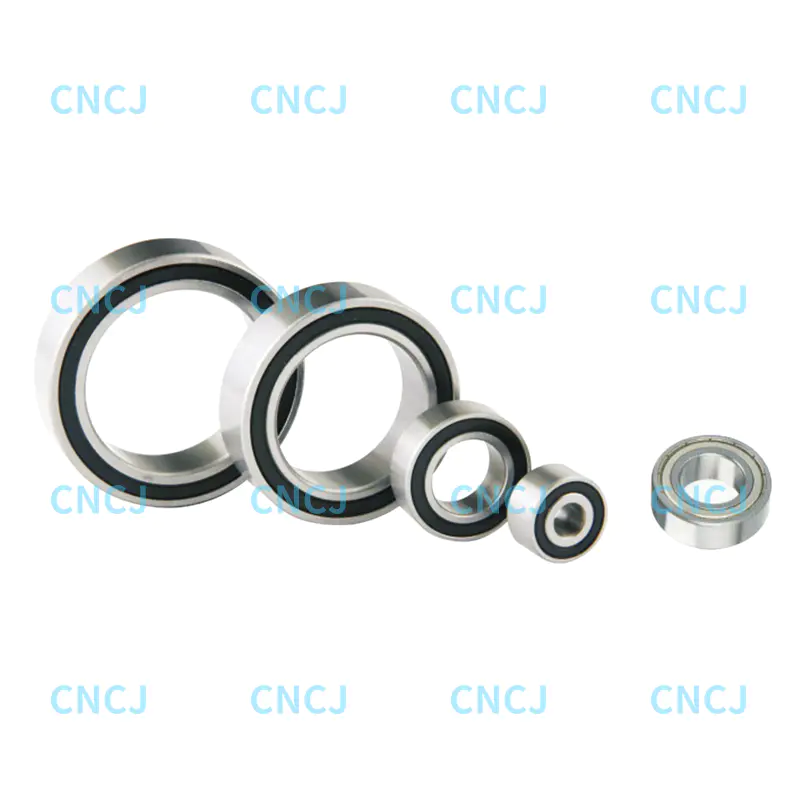
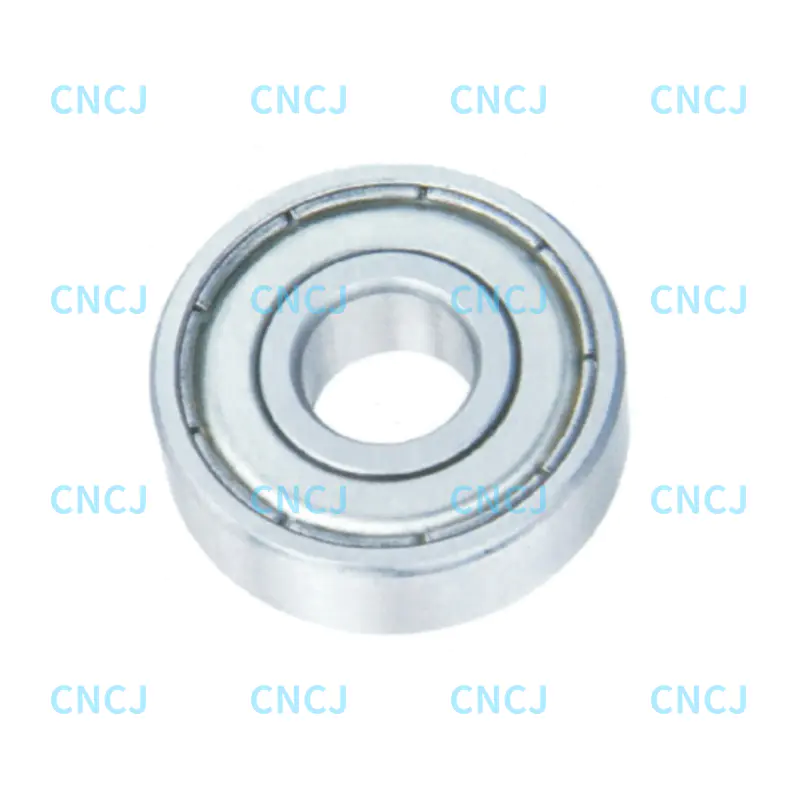
Single row deep groove ball bearings handle the quiet, low-torque positions: fan shafts, small augers, metering drives, blower and cleaning-shoe mechanisms, sprayer pump pulleys. They carry radial load well and a moderate axial load in either direction, which is why they appear in so many auxiliary drives. Where a machine was designed around imperial dimensions, keeping the original shaft and housing fits matters more than converting to metric, and inch series deep groove ball bearings preserve the geometry the equipment was built for.
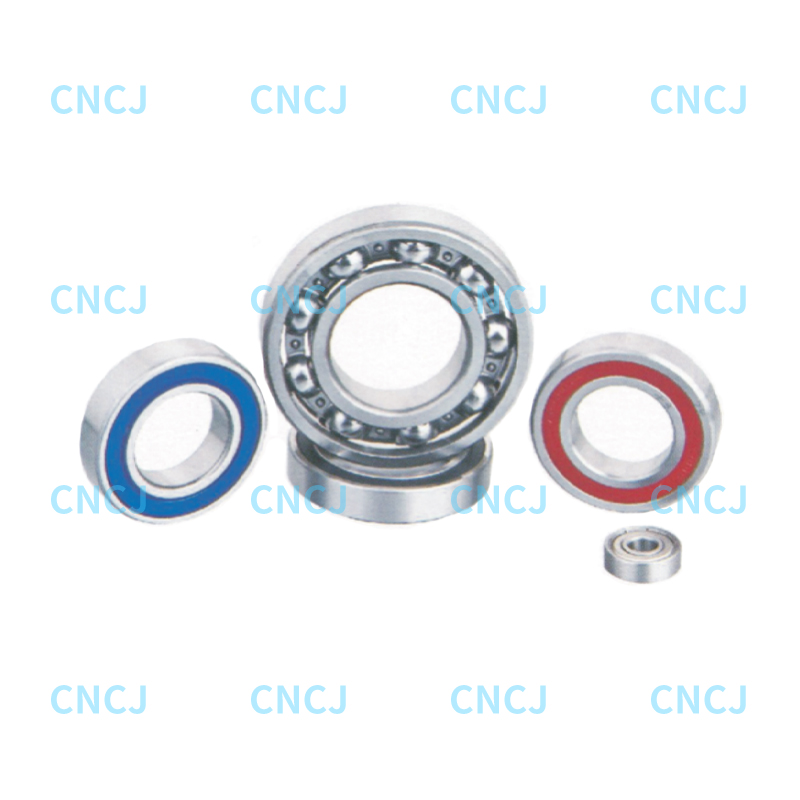 Deep Groove Ball Bearings for Auxiliary DrivesView this category for deep groove ball bearings suited to quiet, low-torque positions and inch-series fits where original geometry matters.View Product →
Double Row Angular Contact Bearings for Combined Loads
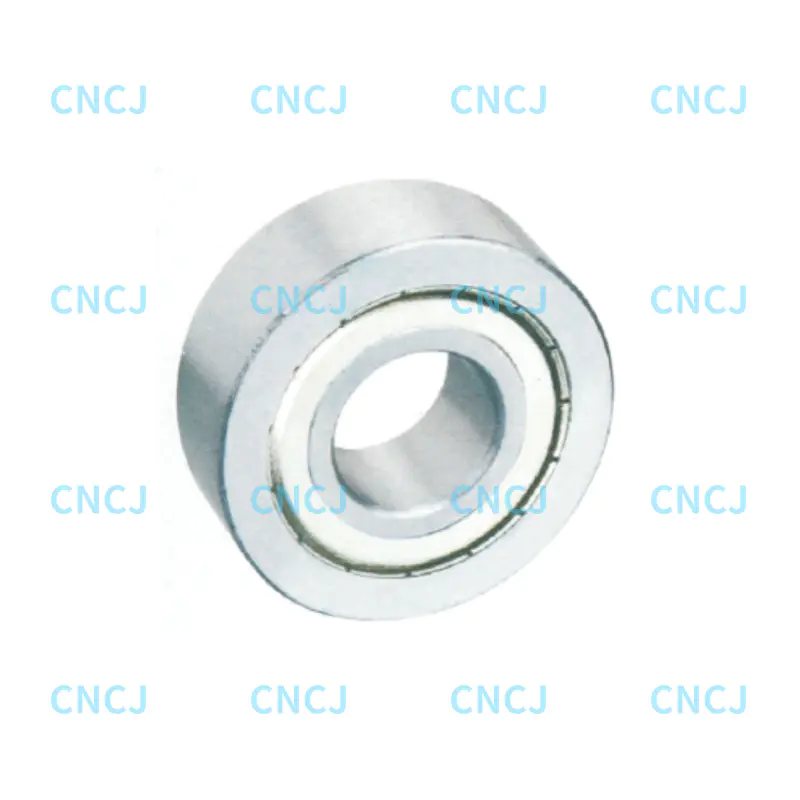
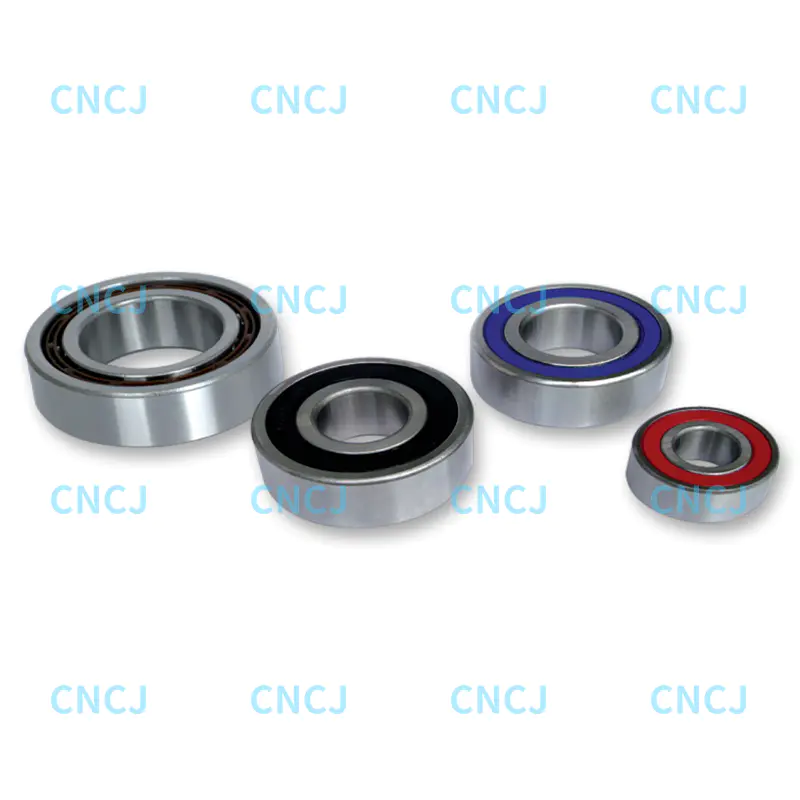
When radial and axial loads arrive together and the housing is too narrow for two separate bearings, a double row angular contact bearing does the work of a pair in one envelope. Hub assemblies, idler positions and press rollers on balers and mowers are typical. The 52 and 53 series are common in seeding equipment, and 32 and 33 series appear in higher-speed drive positions.
Seeding machines are a good illustration of how sealing decides outcome rather than load rating. If a row unit keeps stalling and the bearing comes out packed with dust, the fix is usually the sealed variant and a check on the housing bore, not a larger bearing. Our teardown of why seeders keep jamming on 5203 bearings walks through that failure pattern in detail.
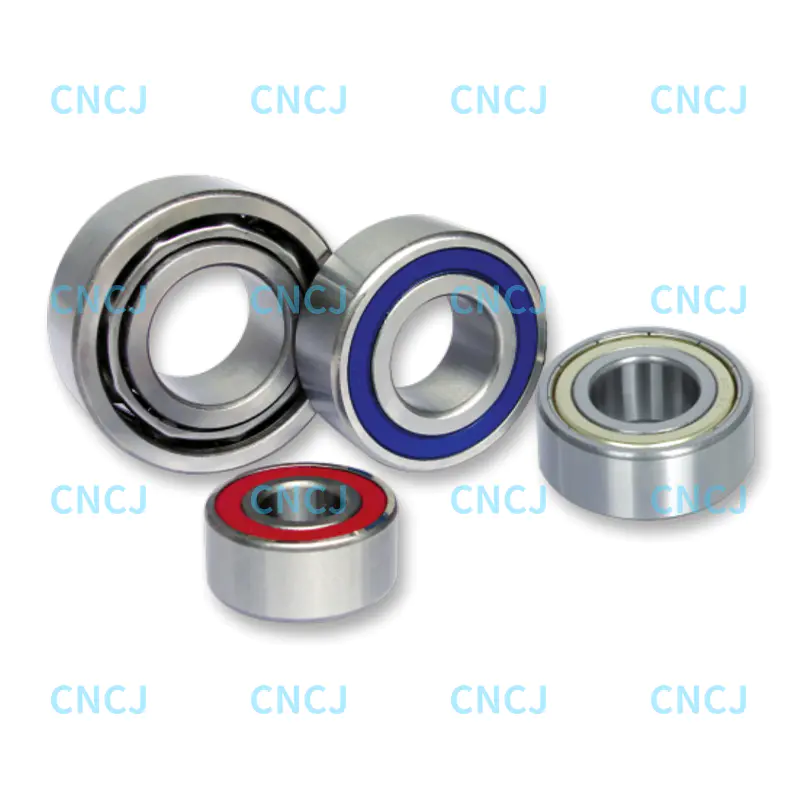 52 and 53 Series Double Row Angular Contact BearingsReview this series for combined radial and axial loads where a compact double-row bearing can replace two separate bearings in one envelope.View Product →
Track Rollers and Guide Rollers in Row Units and Booms
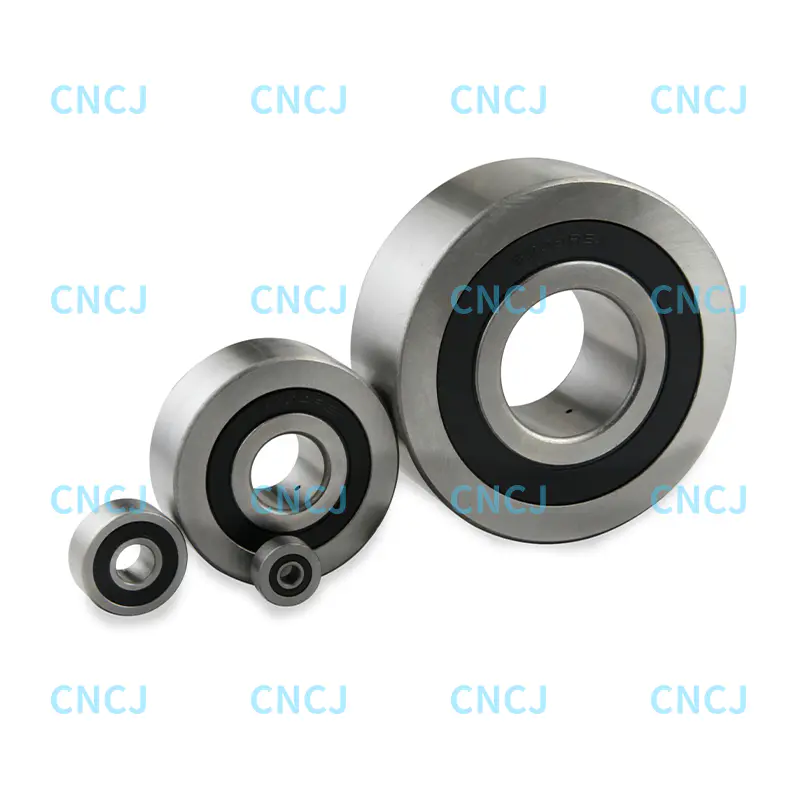
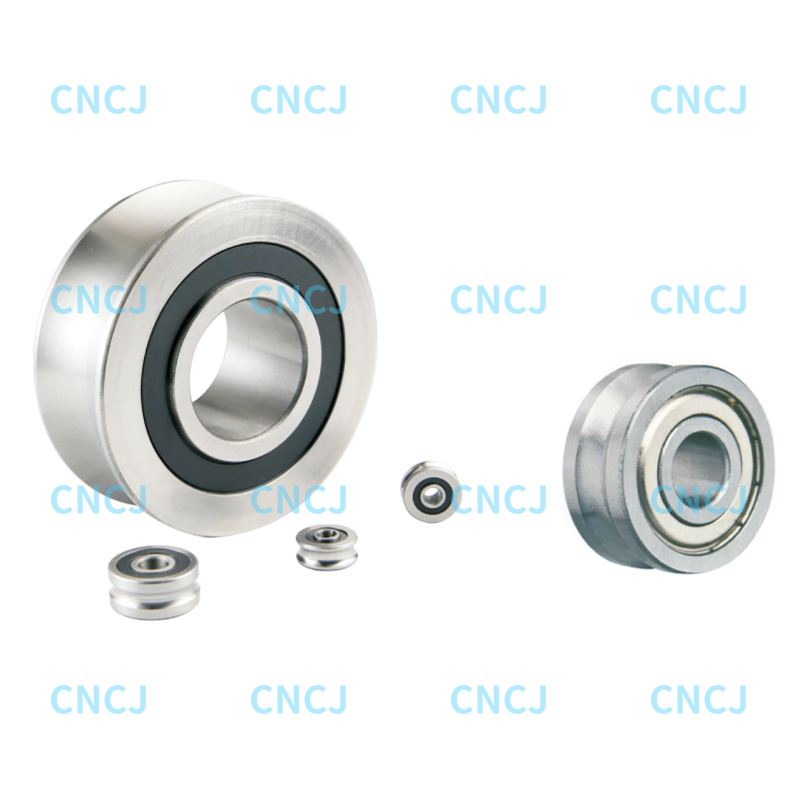
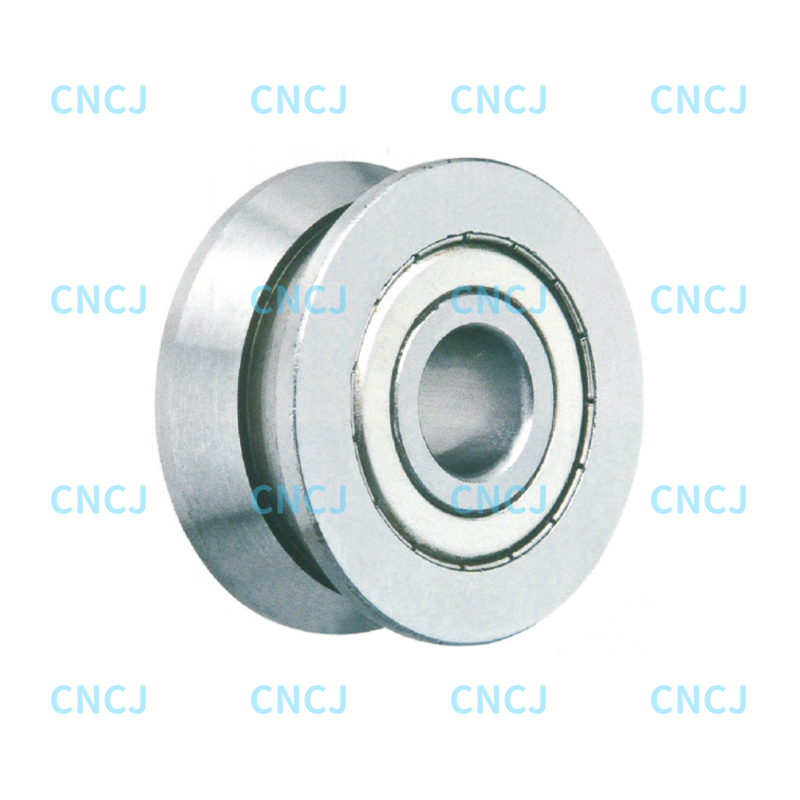
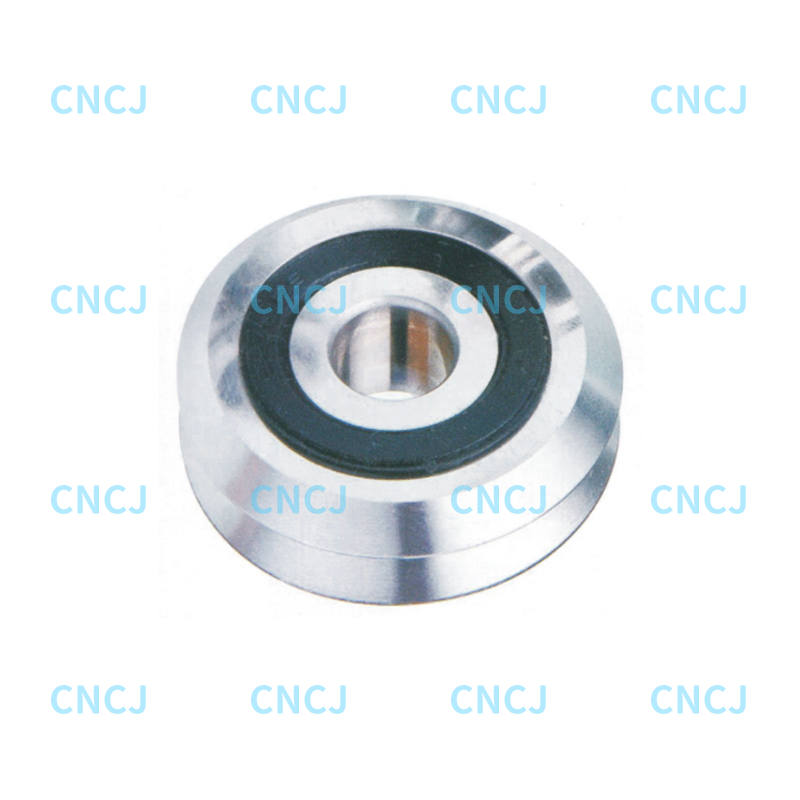
Not every farm bearing sits in a housing. Row-unit depth control, boom guidance and rail-based handling systems use rollers that run directly on a track. The outer ring profile decides stress distribution: a crowned outer ring reduces edge stress where the track is slightly misaligned, while a cylindrical profile gives a wider contact band on a well-aligned rail. V-groove and gothic arch profiles locate the roller laterally as well as radially, which matters on a sprayer boom that moves in three directions at once.
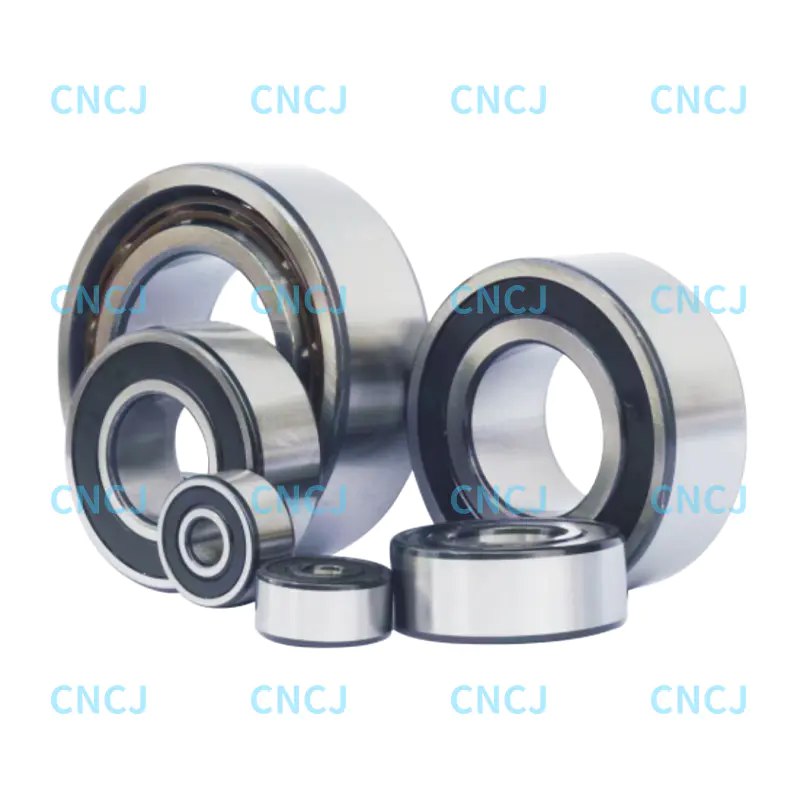 Track Rollers with Cylindrical or Crowned Outer RingsConsider these support rollers for rail-based equipment, where the outer ring profile helps distribute load and reduce edge stress.View Product →
Sealing, Lubrication and Clearance Decisions
These three choices decide whether a correctly sized bearing lasts two seasons or ten. They also cause most of the disagreement between a maintenance team and a purchasing team.
- Seals versus shields. A rubbing lip seal keeps fine dust out and is the default for tillage and seeding. A shielded bearing runs cooler and allows grease to purge, but it excludes very little dust and suits only positions that are relubricated regularly.
- Grease fill and type. Filling roughly a quarter to a third of the free space is typical for slow farm shafts. A lithium complex grease with extreme pressure additives covers the load range, but the temperature window and water resistance have to be checked against washdown and cold storage.
- Clearance and preload. A C3 clearance is common where an interference fit and a warm housing close the internal gap. Double row angular contact bearings are pre-set during manufacture, so adding shims changes internal load rather than improving alignment.
- Fits. A shaft that is too loose frets and wears; a housing that is too tight consumes clearance and raises running temperature. Check both before blaming the bearing.
Sizing Checks Before You Place an Order
Sizing is a short exercise when the machine is in front of you. Work through these in order.
- Establish the load direction and magnitude, including the axial component from a helical drive or a steering link.
- Apply an application factor for shock. Smooth drives may need only a small margin; tillage tools working stony ground need considerably more.
- Check the static safety factor for the parked or jammed condition, which is often worse than the running condition.
- Confirm the speed and temperature rating against the selected grease, not against the catalogue maximum alone.
- Verify the envelope: width, chamfer, seal recess and the space needed to press the bearing in without loading the outer ring through the balls.
- Confirm shaft and housing tolerances, shoulder heights, and whether the bearing can be extracted without cutting the housing.
Procurement Risks Worth Controlling
Agricultural bearings are bought in volume and replaced on a schedule, which makes them a target for cost-cutting and for counterfeit stock. A few checks cover most of the exposure.
- Material and heat treatment records, since case depth and hardness variation shows up as short life under shock load.
- Seal compound declaration. Nitrile is fine for general work but not for continuous fertilizer or chemical contact.
- Grease identity and fill weight, because a substituted grease with a narrower temperature range will not be visible until winter.
- Running torque and noise checks on a sample, which catch seal drag and damaged raceways before a full lot enters stores.
- Batch traceability and storage history, since a bearing stored in a damp shed can arrive already corroded.
An ISO 9001 quality system is a reasonable floor for any supplier of agricultural bearings, but it says nothing about whether the seal was designed for a field. Ask what the supplier knows about the specific machine and the environment it works in.
Field Signals That Justify a Change
Most farm bearings announce their condition before they seize. Rising noise at low speed, a housing that is noticeably warm after a short run, grease weeping past the seal lip, a rusty purge mark, or a wear band on only one side of the outer ring are all early indicators. Recorded against the season, these signals let a maintenance planner change a bearing during a scheduled stop instead of on a headland.
Seasonal handling matters as much as running condition. Machines stored after washdown with water sitting against a seal will show corrosion pitting at the first cold start. A short run before storage, plus a dry, ventilated shed, prevents a category of failure that has nothing to do with bearing quality.
Choosing agricultural bearings comes down to reading the environment as carefully as the load. A bearing rated for the radial load but sealed for a clean workshop will not survive a seeder; a bearing with a modest rating but the right seal, clearance and grease often will. That is why the useful conversation with a supplier is about shaft drawings, load direction, mounting practice and working conditions rather than part numbers alone.
Ningbo Wanshun Bearing Co., Ltd. manufactures high precision, low noise double row angular contact ball bearings and small to medium deep groove ball bearings at its plant in Cixi, Ningbo, with annual output of around 6 million double row angular contact bearings and 35 million deep groove bearings, a technical team of 35 and ISO 9001 quality management. Sharing the application details is usually enough to narrow a farm bearing selection down to two or three candidates worth testing.
 English
 中文简体
 Deutsch
 Español