A 15 kW motor running at 6,000 rpm should not be destroying lip seals every eight months. When it does, the seal is doing exactly what it was designed to do, pressing a rubber lip against a rotating surface, and the heat from that friction is what finishes it off. Replacing that lip seal with a non contact seal often solves the problem in a single step, because the seal no longer touches anything. Non contact seals give up a little contamination protection in exchange for lower friction, lower running temperature, a higher speed ceiling and longer grease life. For clean, fast or hot equipment, that exchange is usually the right one.
What Counts as a Non Contact Seal
A non contact seal keeps lubricant in and contamination out without any rubbing between the rotating and stationary parts during normal running. In bearing work you will meet four common versions:
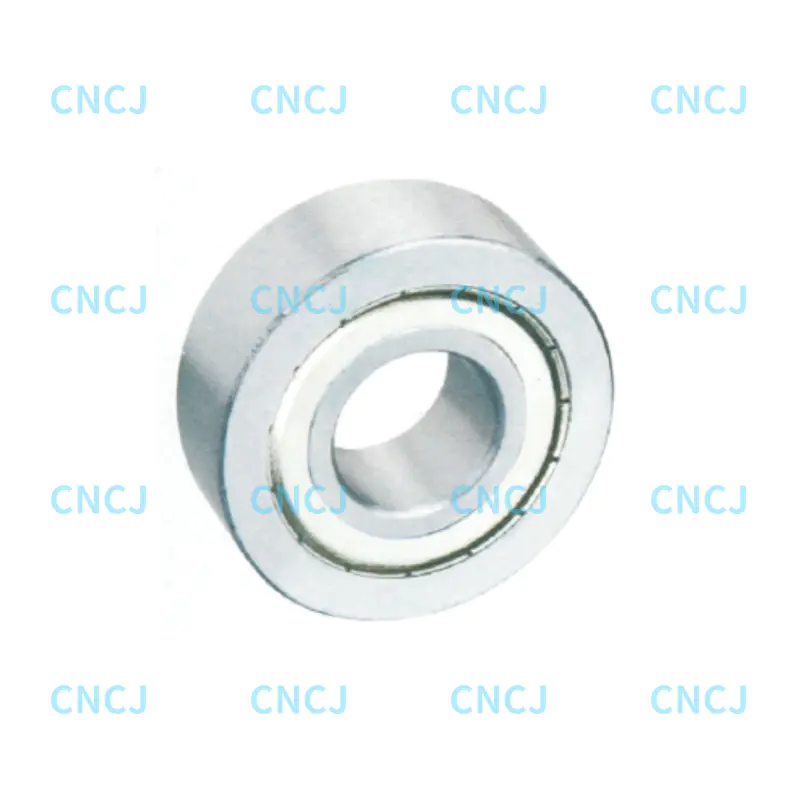
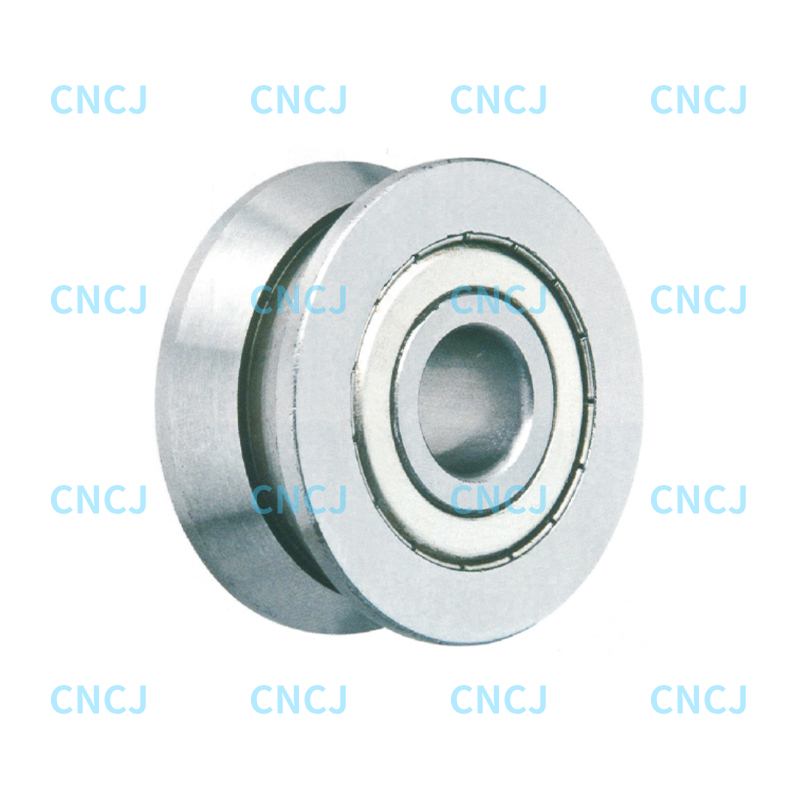
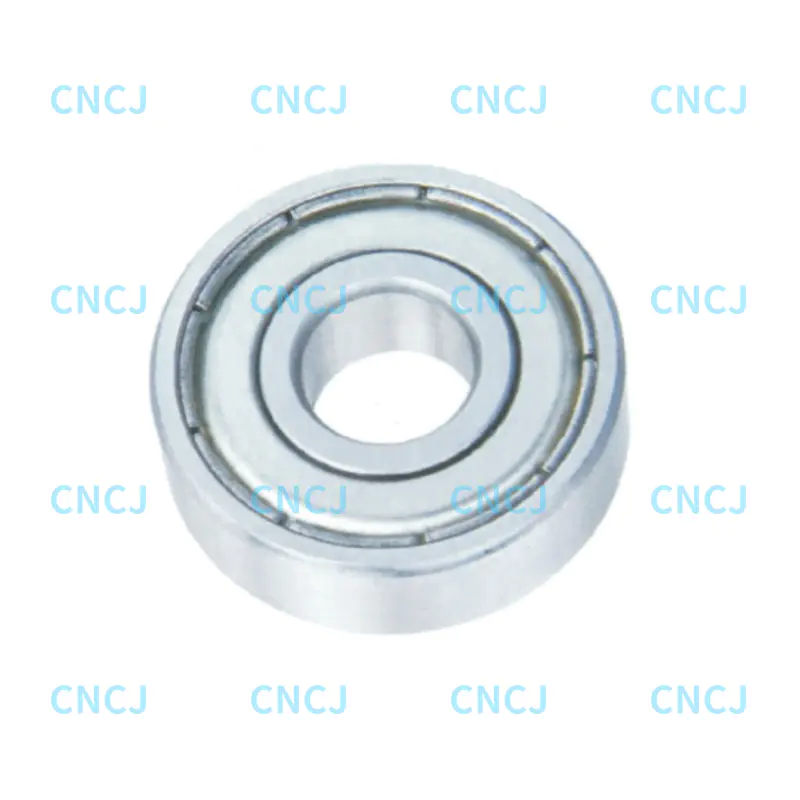
- Pressed steel shield, shown as the ZZ suffix on a bearing part number
- Labyrinth seal, machined as a path of turns in a ring or housing
- V seal or gap seal, sitting close to a shoulder without pressing on it
- Hybrid designs that combine a labyrinth path with a light deflector or a felt element
The pressed steel shield is the simplest and cheapest of the group, and it handles coarse dust, grease retention and high speed well. A labyrinth is the strongest option in the group when it has enough internal turns and a drain path, but it also demands the most careful design work and the most accurate machining.
What you gain is measurable. Friction torque stays low and stays stable over the life of the bearing, heat generation drops, the limiting speed rises and grease life improves because the base oil is not cooked by seal friction. There is also no wear groove cut into the shaft or sleeve, which matters when the shaft is expensive or hard to replace.
What you give up is equally clear. The gap that removes friction is also a path. Fine dust, coolant mist, washdown water and submersion will find their way through a plain non contact seal, so heavy contamination, food plant cleaning cycles and submerged duty normally need a contact seal, a secondary barrier or a purge.
Comparing Seal Types on the Same Bearing
The table below places the common options on the same criteria, so the trade between friction and protection is visible rather than assumed.
Seal choice is always a trade between friction and contamination protection, and no single option wins on both sides.
| Seal type |
Contact with mating surface |
Friction and heat |
Contamination protection |
Typical duty |
| Pressed steel shield, ZZ |
None |
Very low and stable |
Moderate, coarse dust and grease retention |
Clean, high speed, wide temperature range |
| Labyrinth seal |
None |
Very low |
Moderate to high when drain grooves are used |
Gearboxes, large machines, splash and mist |
| V seal, gap or light contact |
Little or none |
Low |
Good against light dust and splash |
Electric motors, fans, higher speed |
| Nitrile lip seal, 2RS |
Continuous |
High and rising with speed |
High, resists water and fine dust |
Low speed, wet or dirty duty |
| PTFE lip seal |
Continuous |
Moderate to high |
High, plus chemical resistance |
Chemical and food equipment, hot duty |
How a Non Contact Seal Actually Keeps Dirt Out
Protection in a non contact seal comes from the path rather than from a barrier. Understanding three factors explains most real world results.
Labyrinth Geometry and Particle Momentum
A labyrinth forces air and particles to change direction several times. Every turn drops pressure and traps particles in a groove, so the contamination has to travel further and with less energy to reach the bearing. On a rotating ring, centrifugal force throws particles outward before they reach the innermost gap. A single straight gap performs far worse than a path with three or four direction changes, which is why two seals of the same nominal size can behave completely differently in service.
Clearance and Thermal Growth
Clearance decides whether a non contact seal works or fails. Radial gaps in the region of 0.1 to 0.3 mm per side are typical on small and medium bearings, and they must be recalculated when the housing is aluminium and the shaft is steel, when running temperature differs from assembly temperature by more than about 60 degrees Celsius, or when the shaft shows noticeable runout. A gap that closes at running temperature becomes a rubbing seal with none of the benefits and all of the wear.
Orientation, Drains and Grease Purge
Most non contact designs are directional. The rotating deflector should face the contamination source so that particles are thrown away from the bearing, and the stationary groove should sit on the clean side. A drain hole at the lowest point of the housing lets water and condensate leave instead of pooling against the gap. A slight grease purge also helps, since a small amount of grease working out through the gap carries particles with it and seals the path from the inside.
Where Non Contact Seals Fit Best
These applications rarely disappoint:
- Electric motors and fans, where speed is constant and the environment is clean or lightly dusty
- High speed spindles and machine tool drives, where friction heat limits accuracy
- Gearboxes and pump housings with oil splash, where a drain path can be machined
- Robot joints and linear guide systems, where long grease life matters more than a tight barrier
- Industrial automation running on filtered air in a controlled workshop
These applications usually need something more:
- Foundry, mining and aggregate handling, where abrasive dust is present in large quantities
- Food lines with daily washdown and caustic cleaning agents
- Submerged pumps and continuously wet machinery
- Very fine conductive dust, such as graphite or metal powder, which can bridge a narrow gap
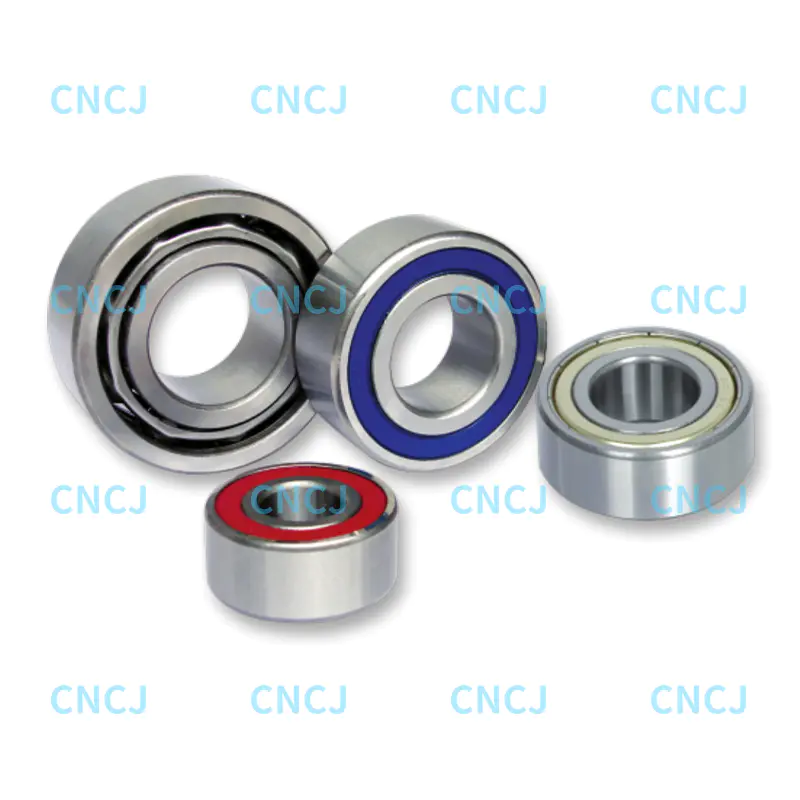
Small and medium deep groove ball bearings are the workhorse in most of the clean applications above, from fan motors to pump drives, and the sealing suffix is what decides how they behave in each one.
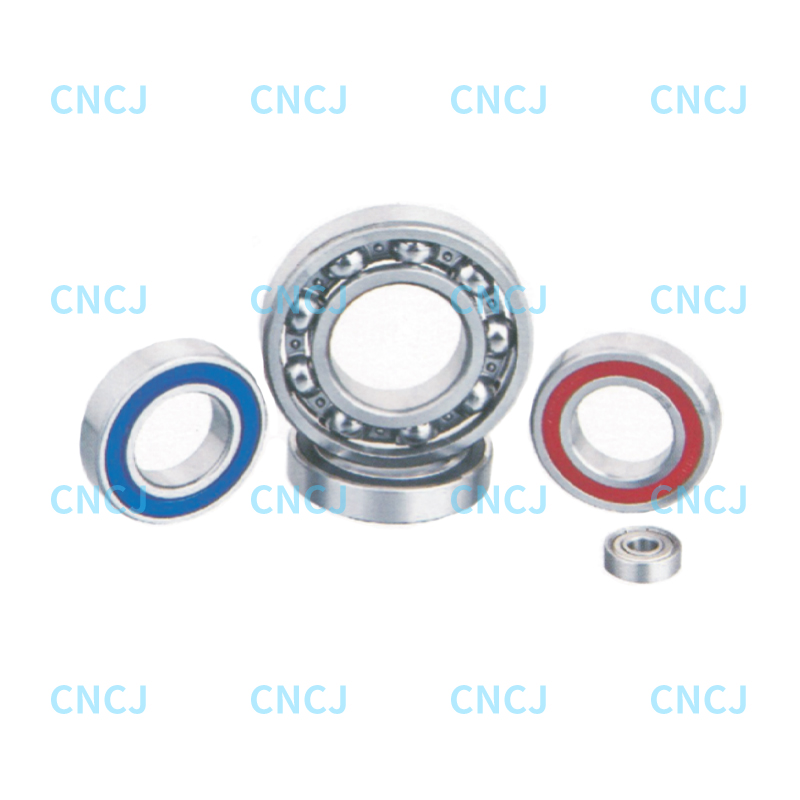 Small and Medium Deep Groove Ball BearingsReview deep groove ball bearings for fan motors, pump drives, and similar clean-duty equipment where the sealing suffix shapes performance.View Product →
Selection Criteria That Decide the Result
Work through these points in order, because each one narrows the options for the next:
- Speed. Compare the required speed with the limiting speed for the chosen sealing method, not just for the bearing
- Temperature range and temperature differential, including the difference between assembly and running conditions
- Contaminant type and particle size, since fine powder behaves very differently from coarse grit or liquid splash
- Lubrication method, because grease purge behaviour depends on fill quantity and base oil viscosity
- Available axial and radial space for a labyrinth with enough turns
- Maintenance access, because a seal that cannot be inspected will be replaced as a whole unit
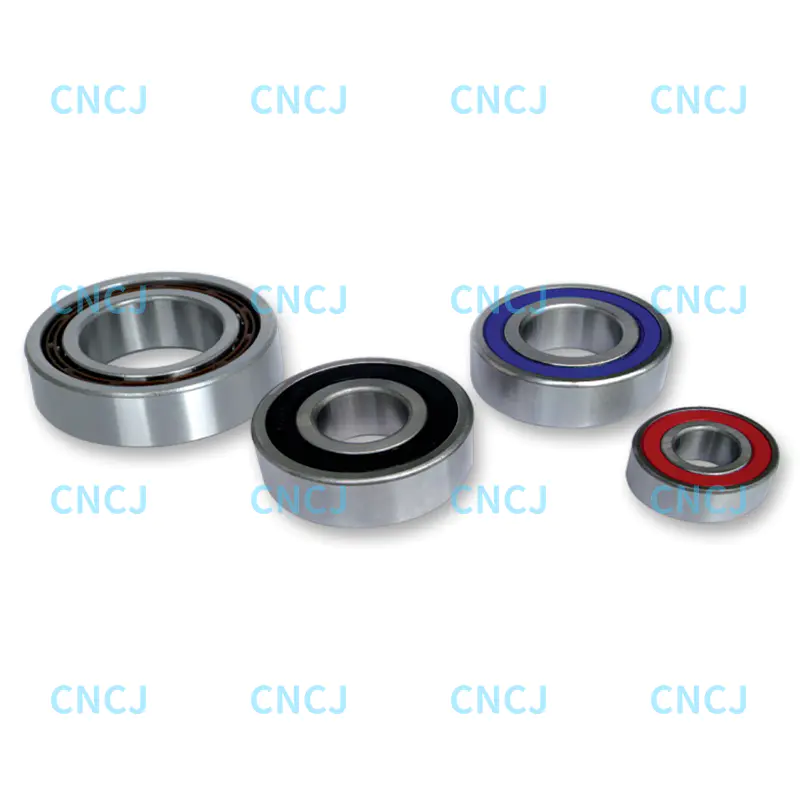
When speed and combined radial and axial loads appear together, double row angular contact ball bearings in the 52 and 53 series are frequently specified with non contact shields, since friction heat at speed costs more than the extra sealing tightness buys.
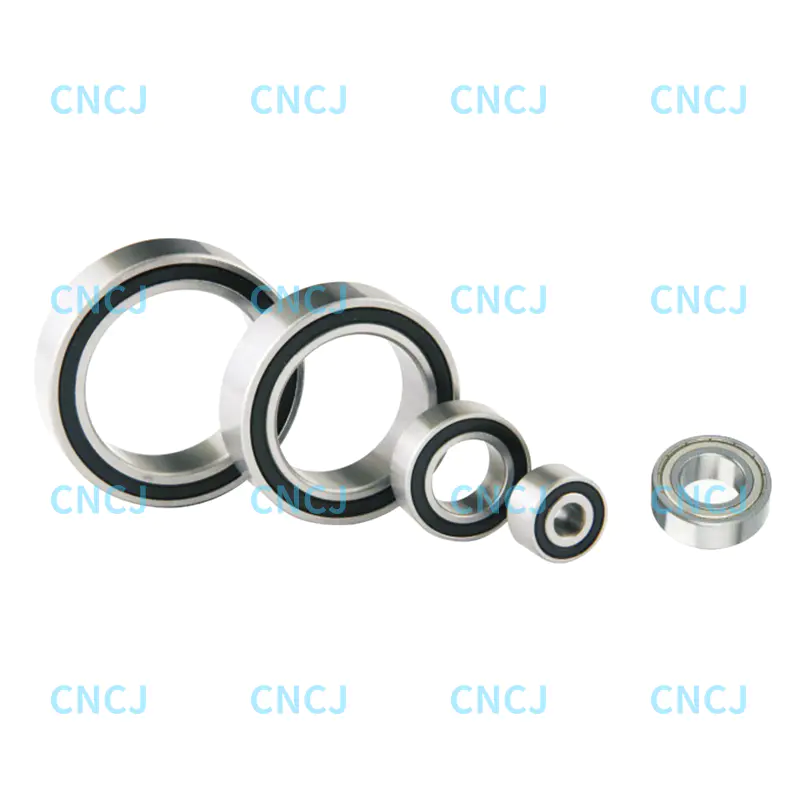 52 and 53 Series Double Row Angular Contact BearingsConsider 52 and 53 series double-row angular contact bearings for combined radial and axial loads at speed, where non-contact shields reduce friction heat.View Product →
Installation and Handling That Protects the Gap
The gap is small by design, so assembly care matters more than it does with a lip seal:
- Measure the actual gap after assembly, not only on the drawing, and check it again on a warm unit after the first run
- Keep the seal groove free of excess grease before closing the housing, since a blocked path turns into a rub
- Press on the ring being fitted and never through the shield or labyrinth ring
- Check concentricity and shaft runout, because a gap that is uneven around the circumference will close on one side first
- Confirm drain and deflector orientation before the housing is bolted down
- Inspect for rubbing marks after the first hours of running, while correction is still cheap
Failure Modes and What They Tell You
Most non contact seal problems show up in a small number of recognisable ways.
Diagnosing a non contact seal is usually a matter of matching the symptom to a clearance, orientation or lubrication issue.
| Symptom |
Likely cause |
What to check first |
| Grease weeping from the gap |
Over greasing or a gap that is too open |
Fill quantity and measured clearance |
| Dark streaks near the gap |
Fine dust passing the labyrinth |
Number of turns and any secondary shield |
| Temperature rise after a few hours |
Rub at the gap caused by thermal growth |
Clearance at running temperature |
| Rust on the outer ring or bore |
Water ingress or condensation |
Drain position and splash protection |
| Noise without visible damage |
Incorrect orientation or dry path |
Deflector direction and lubrication |
Matching a Seal to the Bearing Series
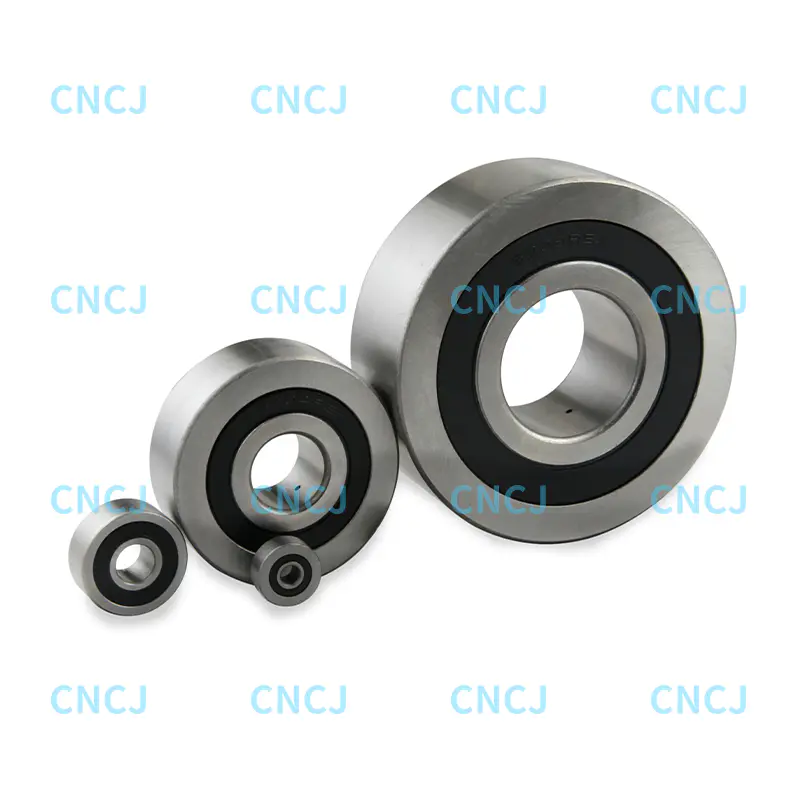
The suffix on a part number is a quick guide to the sealing principle. ZZ means a pressed steel shield with no contact, and 2RS means a contact rubber lip seal. Double row angular contact ball bearings in the 30 and 38 series are supplied in both forms, so the same bearing can serve as a clean high speed unit or a dirtier low speed one depending on the suffix chosen at order entry. Deep groove ball bearings follow the same logic, with shields for motors and fans and lip seals for wet or dusty duty.
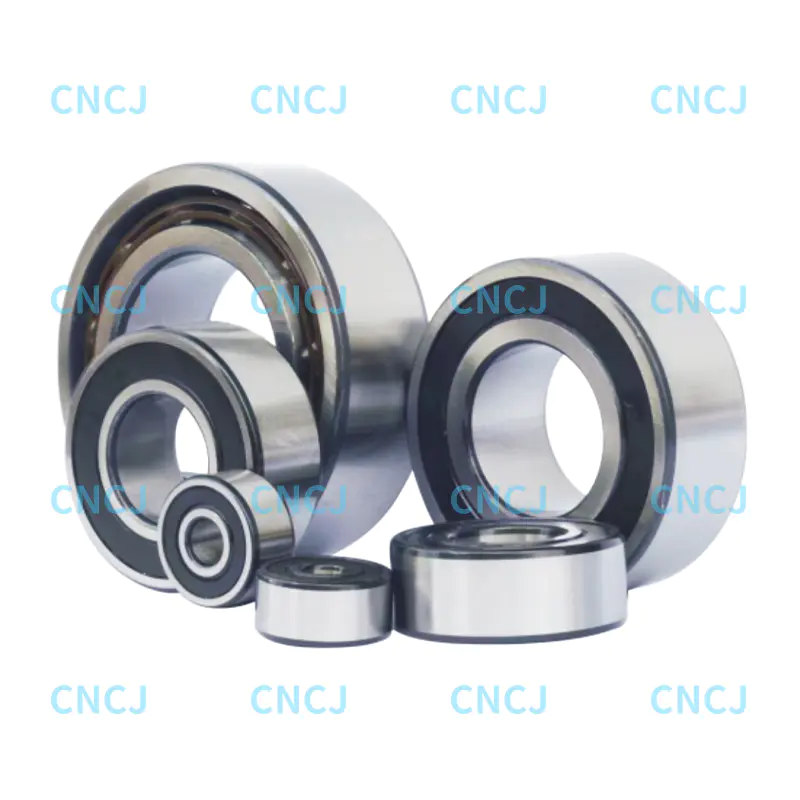 30 and 38 Series Double Row Angular Contact BearingsCompare ZZ non-contact shields and 2RS contact seals to balance speed limits against dust and moisture protection in these 30 and 38 series bearings.View Product →
When the choice between a higher speed limit and a tighter seal is still unclear, this note on seal type and speed selection for 3802 bearings walks through the same decision with a worked example.
A Short Checklist Before You Specify
- Confirm the contaminant and decide whether a gap is acceptable at all
- Calculate clearance at running temperature, not at room temperature
- Check the limiting speed for the sealing method you intend to use
- Design the drain and the deflector orientation into the housing from the start
- Plan a grease purge path and a realistic relubrication interval
- Inspect the first unit after a short run and record the measured gap
Non contact seals are not a universal answer, but they are the better answer far more often than they are used. Get the clearance right, keep the path clean and orient the deflector toward the dirt, and a shielded or labyrinth design will outlast several sets of contact seals in the same position. If you are working on a specific housing or load case, you can review the full range from a bearing manufacturer in Cixi, Ningbo that builds both sealed and shielded versions of the same series.
 English
 中文简体
中文简体 Deutsch
 Español