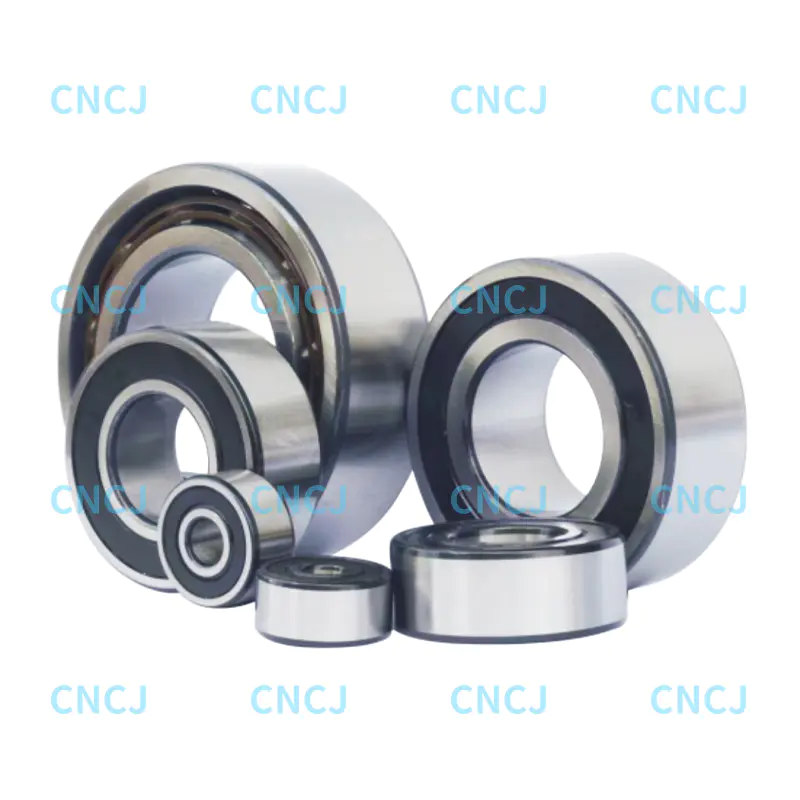
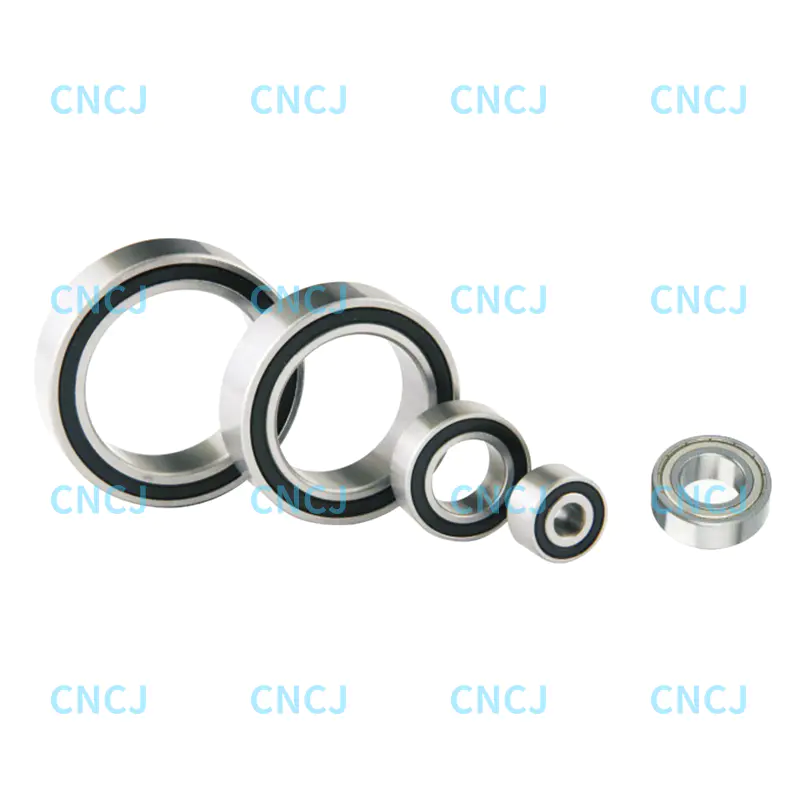
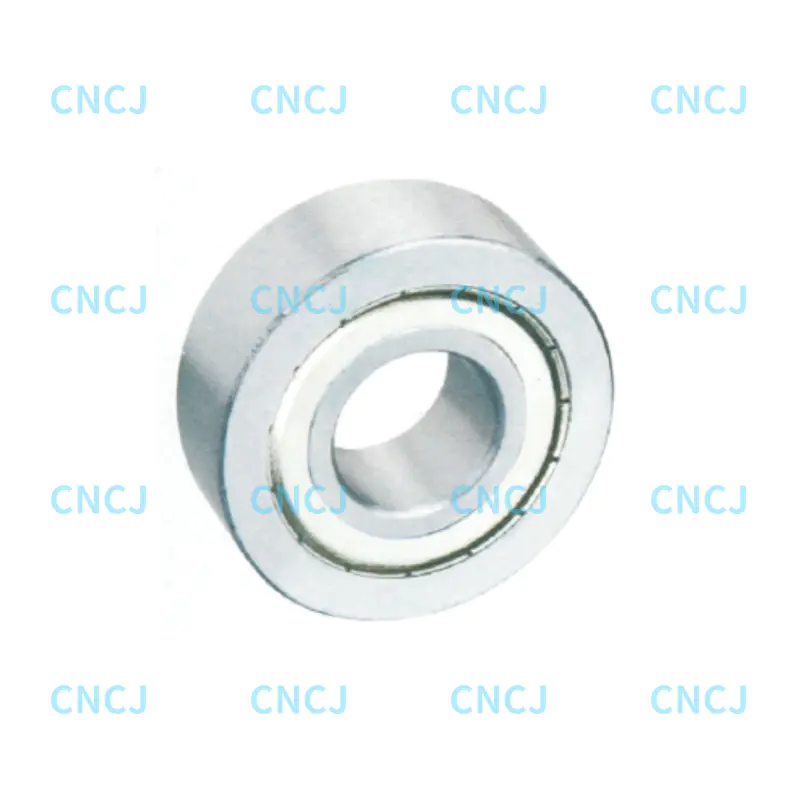
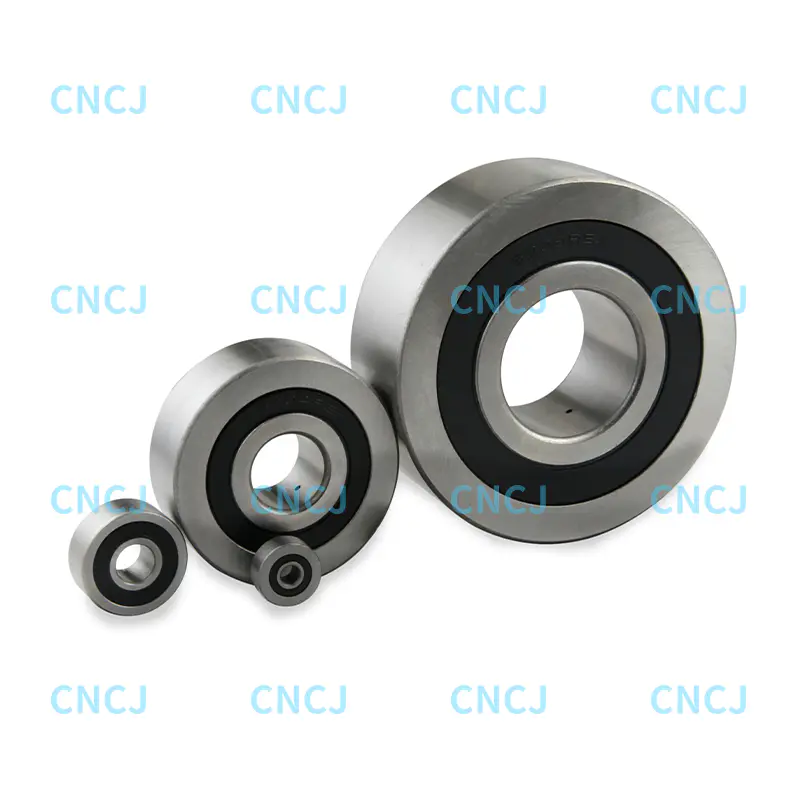
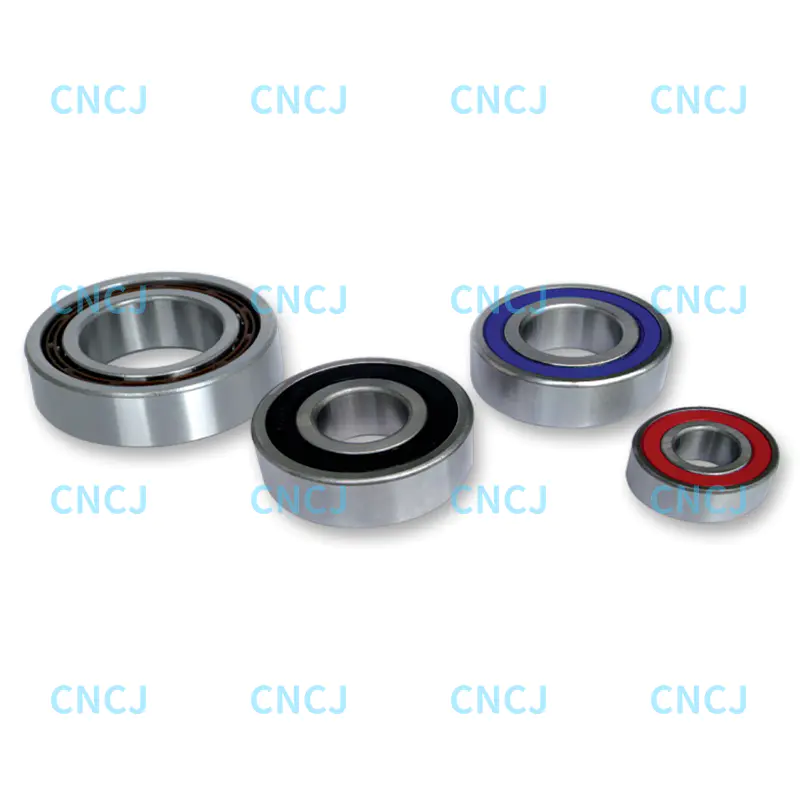
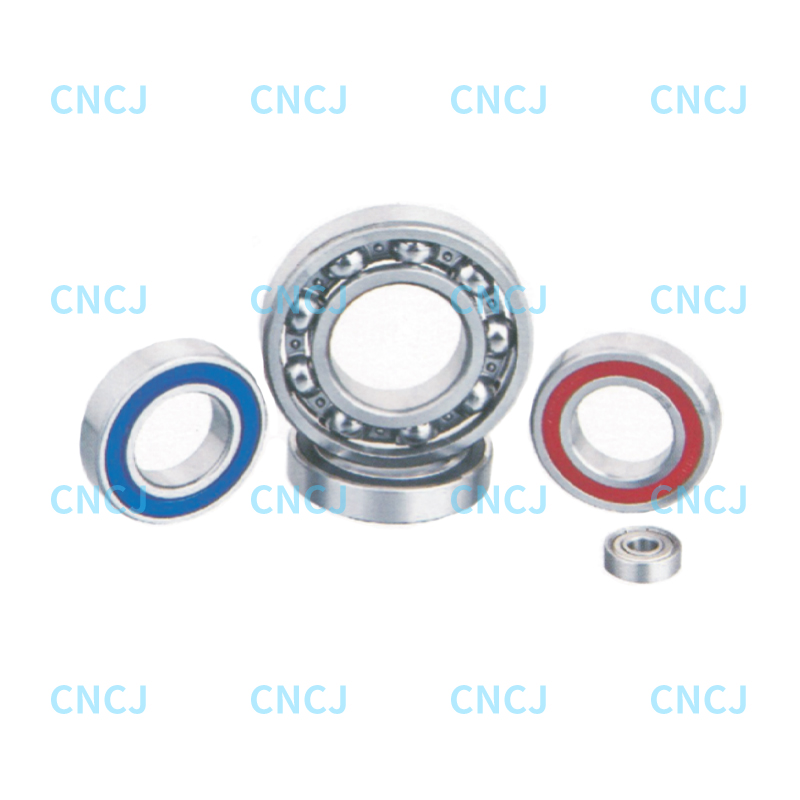
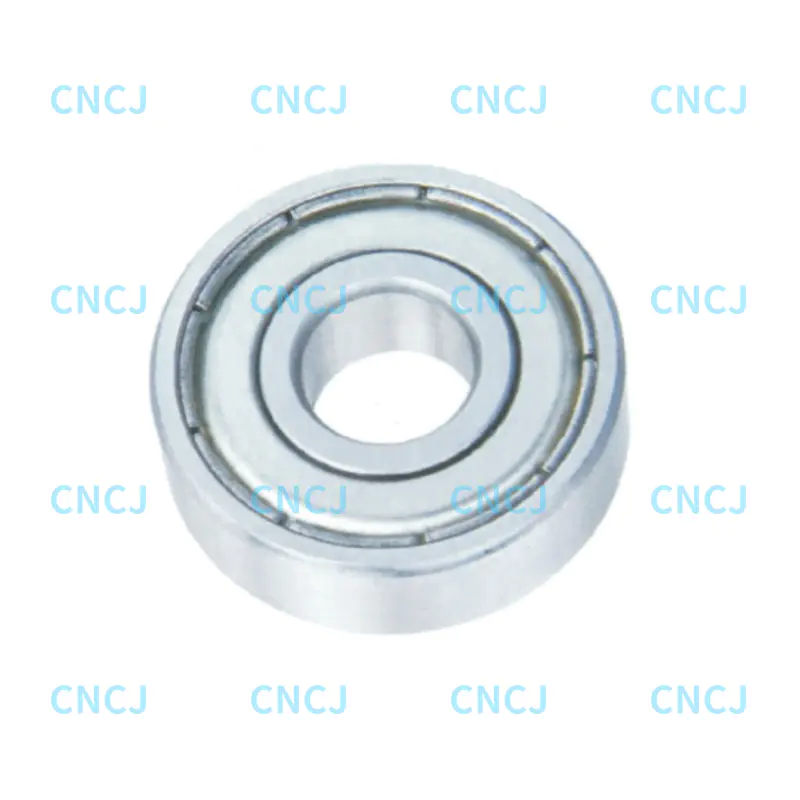
The 53 series double row angular contact ball bearings offer a compelling combination of advantages that make them one of the most versatile and capable bearing designs for demanding applications: simultaneous load capacity in both radial and bidirectional axial directions, high rigidity, compact axial space requirements, and the ability to carry combined loads without requiring a paired bearing arrangement. By integrating two rows of balls in a single bearing unit — each row contacting the races at a defined contact angle — the 53 series delivers the combined performance of two single-row angular contact bearings in an assembly that is easier to mount, more consistent in preload, and more space-efficient than any equivalent paired configuration.
These bearings are specifically engineered for applications where axial loads act in both directions, where shaft rigidity is critical, or where installation space is limited — including machine tool spindles, pumps, compressors, gearboxes, and precision instrumentation. Understanding the full range of advantages offered by the 53 series requires examining their structural design, load characteristics, dimensional benefits, operational performance, and application suitability in detail.
Structural Design Advantage: The Back-to-Back Double Row Configuration
The defining structural feature of the 53 series double row angular contact ball bearing is its back-to-back (DB) internal arrangement, in which two rows of balls contact the raceways at opposing contact angles — typically 25° or 40° — that diverge outward from the bearing centerline. This arrangement means that the pressure lines from each row's contact points converge outward from the bearing axis, creating a wide effective load span within the bearing's own axial width.
How the Back-to-Back Arrangement Works
In the back-to-back configuration, the outer ring is a single continuous component while the inner ring is typically split into two halves — one for each row — with a spacer or direct contact adjustment between them. This design allows the bearing to be factory-set with a defined internal preload or clearance, ensuring that both rows are loaded simultaneously from the moment of installation.
The outward divergence of the contact angles in the DB arrangement creates a moment-resisting couple within the bearing itself. When a tilting moment is applied to the shaft, one row resists in compression while the other resists in tension — producing excellent resistance to shaft deflection and tipping without requiring any external structural support. This is a fundamental structural advantage over face-to-face (DF) configurations, which have converging contact lines and consequently poorer moment resistance.
Integrated Preload for Immediate Rigidity
A key advantage of the 53 series design is that the factory-applied preload between the two rows is built into the bearing during manufacture — no external adjustment, spring washers, or paired lock nut arrangements are needed to achieve the desired level of internal preload. The bearing arrives at the application with its preload condition already set, eliminating one of the most common sources of bearing assembly error and ensuring consistent, reproducible rigidity across every unit produced to the same specification.
Load Capacity Advantages: Radial, Axial, and Combined Load Handling
The load capacity performance of 53 series double row angular contact ball bearings is one of their most significant advantages, directly resulting from their two-row construction and optimized contact geometry.
Radial Load Capacity
With two rows of balls sharing the radial load, a 53 series bearing carries approximately 60–70% more radial load than a comparable single-row angular contact bearing of the same bore diameter. The double ball complement distributes the contact stress across twice the number of rolling elements, reducing the peak Hertzian contact stress at each ball-raceway interface and significantly extending fatigue life under radial loading conditions.
Bidirectional Axial Load Capacity
Single-row angular contact bearings can carry axial load in one direction only — the direction in which the contact angle opens. To support bidirectional axial loads, two single-row bearings must be mounted in opposition. The 53 series eliminates this requirement entirely: because the two rows are oriented in opposing directions, axial loads acting in either direction along the shaft axis are supported by one of the two rows, with the other row remaining loaded by the preload force. This bidirectional axial capability is fundamental to many applications — particularly machine tool spindles, worm gear reducers, and pump shafts — where axial thrust reverses direction during operation.
Combined Load Handling in a Single Unit
Perhaps the most practically valuable load advantage of the 53 series is its ability to handle combined radial and axial loads simultaneously within a single bearing. In real machinery, shafts rarely experience purely radial or purely axial loads — most shafts carry both simultaneously, often with variable ratios between the two components. The 53 series handles this without the complexity of designing a two-bearing arrangement, simplifying shaft design, housing design, and assembly procedures while maintaining full load capacity in all directions.
The ratio of axial to radial load capacity depends on the contact angle. The 53 series is available in 25° contact angle configurations — which provide a balanced combination of radial and moderate axial capacity — and 40° contact angle configurations — which sacrifice some radial capacity in exchange for significantly higher axial load capacity. This allows engineers to select the contact angle that best matches the predominant load direction in their specific application.
High Rigidity and Moment Load Resistance
Shaft rigidity — the resistance of the shaft-bearing system to deflection under load — is a critical performance parameter in many precision applications. The 53 series double row angular contact ball bearing provides substantially higher rigidity than single-row alternatives, for reasons rooted directly in its structural design.
Why Double Rows Provide Greater Rigidity
Bearing rigidity is determined by the stiffness of the elastic contact between each ball and its raceways, multiplied by the number of load-bearing balls and the effective load span. In a double row bearing, twice the number of balls share the applied load, and each individual ball contact deforms less under the same total load, reducing the elastic compliance of the bearing as a whole. The result is a bearing system that deflects significantly less under a given load than a single-row equivalent — typically 30–50% stiffer in the axial direction compared to a single-row angular contact bearing of the same bore.
Superior Moment Load Resistance
The back-to-back arrangement of the 53 series creates an effective load span — the distance between the lines of action of the two rows' contact forces — that is larger than the bearing's physical width. This wide effective span dramatically improves the bearing's ability to resist overturning moments, which are tilting forces applied to the shaft by eccentric loads, cantilevered masses, or misaligned couplings.
In machine tool applications, where spindle rigidity directly determines the precision and surface quality of the machined workpiece, this moment resistance advantage translates directly into better dimensional accuracy, improved surface finish, and reduced tool chatter — all critical quality metrics that differentiate precision from standard machining operations.
Space Efficiency: Compact Axial Dimensions Compared to Paired Single-Row Bearings
One of the most practically significant advantages of the 53 series bearing in real engineering applications is its ability to provide bidirectional axial load capacity and high rigidity in a substantially smaller axial envelope than a pair of single-row angular contact bearings mounted in opposition.
To achieve equivalent bidirectional axial load capacity with single-row bearings, engineers must mount two bearings back-to-back on the shaft, with each bearing occupying its own axial space plus the necessary clearance for individual inner ring locking and inner ring separation. A typical paired arrangement of two single-row angular contact bearings of a given bore size requires an axial housing length approximately 30–40% greater than a single 53 series double row bearing of the same bore providing equivalent load capacity.
This compactness advantage is particularly valuable in:
- Electric motors and generators where minimizing axial length reduces the machine's overall footprint and weight
- Gearboxes and transmissions where shaft center distances are fixed and housing length is constrained by adjacent gear elements
- Pumps and compressors where the bearing housing must fit within a defined envelope between the impeller and the motor flange
- Precision instruments and medical devices where miniaturization is a primary design constraint
Simplified Installation and Assembly Advantage
The self-contained nature of the 53 series bearing provides important practical advantages during machine assembly and maintenance that are often underestimated when comparing it to paired single-row bearing arrangements.
No Pairing or Matching Required
When two single-row angular contact bearings are mounted in opposition to achieve bidirectional axial support, the two bearings must be carefully matched — their inner ring widths must be controlled to a tight tolerance so that the desired preload (or clearance) is established when the lock nut is tightened. Mismatched pairs produce either insufficient preload (reducing rigidity and allowing axial play) or excessive preload (generating heat and reducing life). Selecting matched pairs, maintaining their pairing through storage and handling, and verifying preload at assembly all add time and cost to the assembly process.
The 53 series eliminates all of these concerns. The preload is set during bearing manufacture and maintained by the bearing's internal geometry — it cannot be altered by careless assembly, mixed-up components, or variable lock nut torque. Every unit of a given part number delivers the same preload condition, making assembly simpler, faster, and more consistent.
Reduced Shaft and Housing Complexity
With a single bearing replacing a paired arrangement, the shaft and housing design is simplified. Instead of two bearing seats separated by a spacer, two lock nuts, and potentially two separate lubrication channels, the 53 series requires only one bearing seat of the correct width, one retention method, and one lubrication point. This reduces machining operations, shortens the shaft's bearing section, and decreases the risk of assembly errors related to spacer dimensioning or lock nut torque sequencing.
High-Speed Performance Capability
Angular contact ball bearings as a category are inherently well-suited to high-speed operation compared to roller bearings, due to the lower rolling element mass and consequently lower centrifugal forces at high rotational speeds. The 53 series retains this fundamental speed advantage of the angular contact design while adding the load capacity and rigidity benefits of the double row configuration.
The speed capability of a 53 series bearing depends on bore diameter, lubrication method, and preload level, but typical limiting speeds are in the range of 3,000–15,000 rpm for oil lubrication, with smaller bore sizes reaching the higher end of this range. For grease-lubricated versions, limiting speeds are typically 60–70% of the oil-lubricated values. High-precision versions manufactured to P5 or P4 accuracy grades can operate at significantly higher speeds due to tighter tolerances on ball diameter variation, raceway roundness, and cage balance.
Low Heat Generation at Speed
The ball-raceway contact in angular contact bearings generates less heat per unit of load than the line contact in cylindrical or tapered roller bearings, because point contact produces lower rolling friction coefficients despite higher contact stresses. For the 53 series, properly optimized preload is critical to balancing rigidity against heat generation at speed — too much preload increases friction and heat; too little reduces rigidity and allows ball skidding. The factory-set preload in the 53 series is optimized for this balance, ensuring that heat generation remains within acceptable limits across the rated speed range without compromising the rigidity advantage.
Precision and Low Noise Performance
The 53 series double row angular contact ball bearing is manufactured to high dimensional and geometric precision standards that directly determine both the positional accuracy of the supported shaft and the noise and vibration levels generated during operation.
Dimensional Accuracy Grades
53 series bearings are produced to standard dimensional accuracy grades defined by ISO 492 and equivalent national standards. The available precision grades and their applications are:
ISO accuracy grades for double row angular contact ball bearings and their corresponding application requirements
| ISO Accuracy Grade |
Bore Tolerance (typical) |
Radial Runout (RBCF) |
Typical Application |
| P0 (Normal) |
0 / -12 µm (30mm bore) |
≤15 µm |
General industrial, gearboxes, pumps |
| P6 |
0 / -8 µm (30mm bore) |
≤10 µm |
Higher-precision gearboxes, better motors |
| P5 |
0 / -6 µm (30mm bore) |
≤5 µm |
Machine tool spindles, precision instruments |
| P4 |
0 / -5 µm (30mm bore) |
≤4 µm |
High-speed precision spindles, measuring equipment |
| P2 |
0 / -4 µm (30mm bore) |
≤2.5 µm |
Ultra-precision grinding spindles, gyroscopes |
Low Vibration and Noise
High-precision 53 series bearings manufactured to tight geometric tolerances — including ball diameter variation within a single bearing of less than 0.5 µm for P5 grade — generate minimal vibration during operation. The low noise and vibration characteristics are assessed using standardized vibration measurement methods (such as the Anderon meter method) that quantify vibration levels in low, medium, and high frequency bands. These specifications are particularly important in applications where bearing vibration contributes to product quality outcomes — such as electric motor noise, precision spindle runout, or instrument accuracy.
Versatility of Cage, Seal, and Lubrication Options
The 53 series is available with a range of cage, sealing, and lubrication configurations that allow it to be precisely matched to the requirements of specific applications — extending its versatility well beyond what a single standard specification could serve.
Cage Materials and Designs
- Steel stamped cage: The standard option for general industrial applications — strong, economical, and suitable for most operating speed and temperature ranges
- Brass machined cage: Preferred for higher-speed applications and where the cage must run in oil lubrication without risk of fatigue failure from stamped cage limitations; better conformance to the ball pockets at high centrifugal loading
- Polyamide (PA66) cage: Lightweight, low-friction polymer cage suitable for moderate speeds with grease lubrication; reduces cage mass and centrifugal loading; not suitable for elevated temperatures above approximately 120°C
- PEEK or specialty polymer cage: For applications requiring cage performance beyond PA66's temperature limits — PEEK cages retain their mechanical properties to 250°C continuous and are used in high-temperature process machinery
Open, Shielded, and Sealed Variants
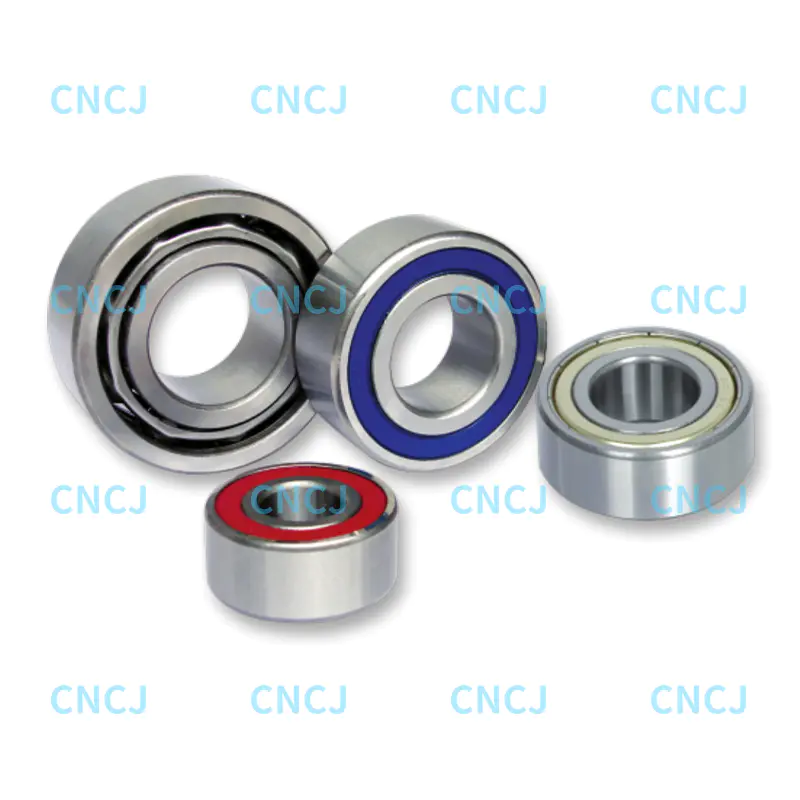
53 series bearings are available in open (without seals or shields), shielded (ZZ — with metal shields on one or both sides), and sealed (2RS — with rubber lip seals on one or both sides) configurations. Sealed variants contain factory-filled grease and are maintenance-free for the bearing's operational life — a significant advantage in applications where re-lubrication access is difficult or where contamination of the lubrication system by external contaminants is a concern.
Application Areas Where the 53 Series Advantages Are Most Valuable
The specific combination of advantages offered by the 53 series makes it the preferred bearing type in a well-defined set of applications where bidirectional axial load capacity, high rigidity, and compact dimensions are simultaneously required.
Key applications for the 53 series double row angular contact ball bearing and the specific advantages they utilize
| Application |
Primary Advantage Used |
Typical Load Condition |
Recommended Contact Angle |
| Machine tool spindles |
Rigidity, precision, high speed |
Combined + moment loads |
25° |
| Centrifugal pumps |
Bidirectional axial, compact size |
Radial + variable axial thrust |
25° or 40° |
| Compressors |
Combined load, rigidity |
High radial + axial thrust |
40° |
| Worm gear reducers |
High axial load, single unit |
Heavy combined load |
40° |
| Electric motors (precision) |
Low noise, compact axial length |
Radial + light axial |
25° |
| Precision instruments |
High accuracy, moment resistance |
Light combined + moment |
25° |
| Printing and textile machinery |
High speed, low vibration |
Radial + moderate axial |
25° |
Comparison: 53 Series Double Row vs. Alternative Bearing Types
To fully appreciate the advantages of the 53 series, it is useful to compare its performance characteristics directly against the main alternative bearing types that might be considered for the same applications.
Performance comparison between the 53 series double row angular contact ball bearing and alternative bearing types for combined load applications
| Criterion |
53 Series DRACBB |
Paired Single-Row ACBB |
Deep Groove Ball Bearing |
Tapered Roller Bearing |
| Bidirectional axial capacity |
Excellent |
Excellent |
Limited |
Excellent (paired) |
| Axial compactness |
Excellent |
Poor (two bearing widths) |
Excellent |
Poor (two bearing widths) |
| Moment load resistance |
High |
High (wide span) |
Low |
High (paired) |
| High-speed capability |
High |
High |
High |
Moderate |
| Assembly simplicity |
High (single unit) |
Moderate (matching needed) |
High |
Low (adjustment critical) |
| Preload consistency |
Factory-set, consistent |
Assembly-dependent |
N/A |
Assembly-dependent |
| Radial load capacity (vs. bore) |
High |
High |
High |
Very high |
About Ningbo Wanshun Bearing Co., Ltd.
Ningbo Wanshun Bearing Co., Ltd. is a manufacturer specializing in the production of high-precision, low-noise double row angular contact ball bearings and small and medium-sized deep groove ball bearings. The company is located in Henghe Town, Cixi, Ningbo, Zhejiang Province — a region recognized as the hometown of bearings in China and one of the country's most concentrated centers of bearing manufacturing expertise and supply chain infrastructure.
With a production focus on high-precision and low-noise performance as defining product attributes, Ningbo Wanshun Bearing Co., Ltd. is positioned to supply the demanding requirements of applications where bearing accuracy, vibration, and noise characteristics directly determine product quality — including machine tool spindles, precision motors, pumps, and instrumentation. The company's expertise in double row angular contact ball bearings encompasses the full range of the 53 series and related configurations, with the capability to supply products across standard and higher precision grades to meet the specific requirements of both domestic and international customers.
 English
 中文简体
中文简体 Deutsch
 Español