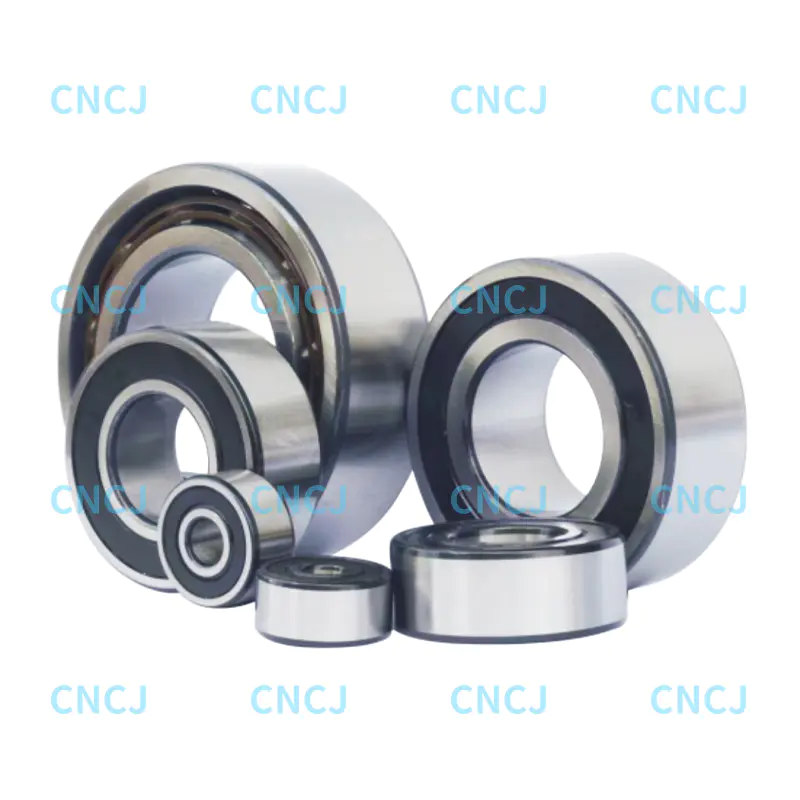
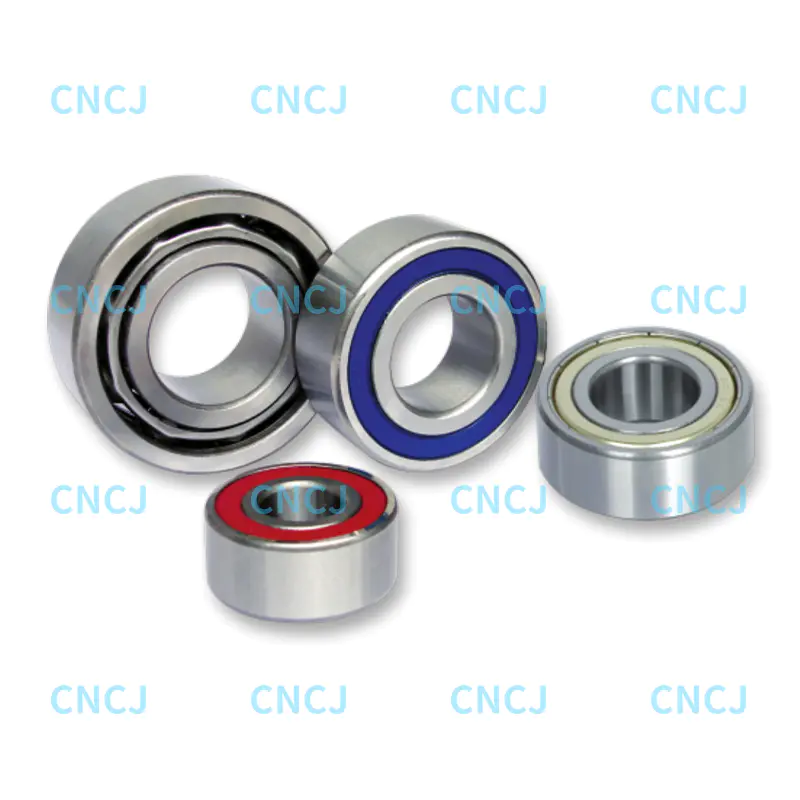
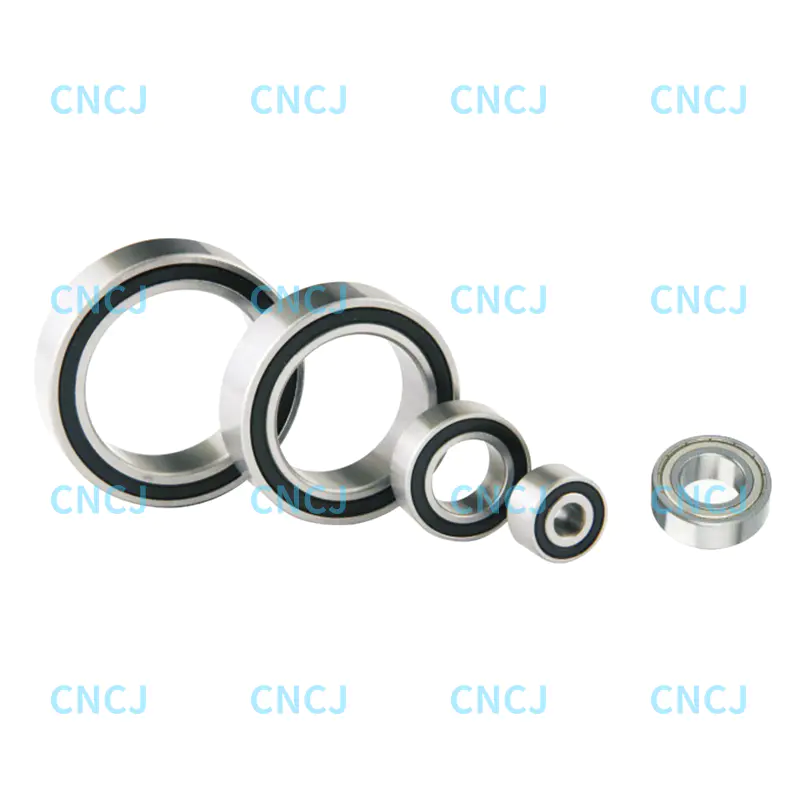
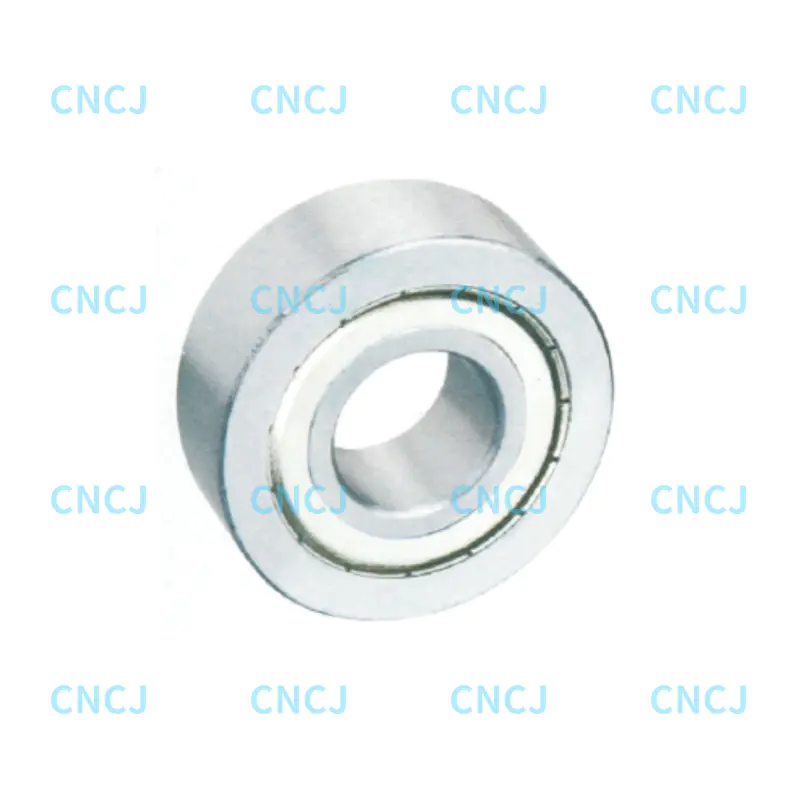
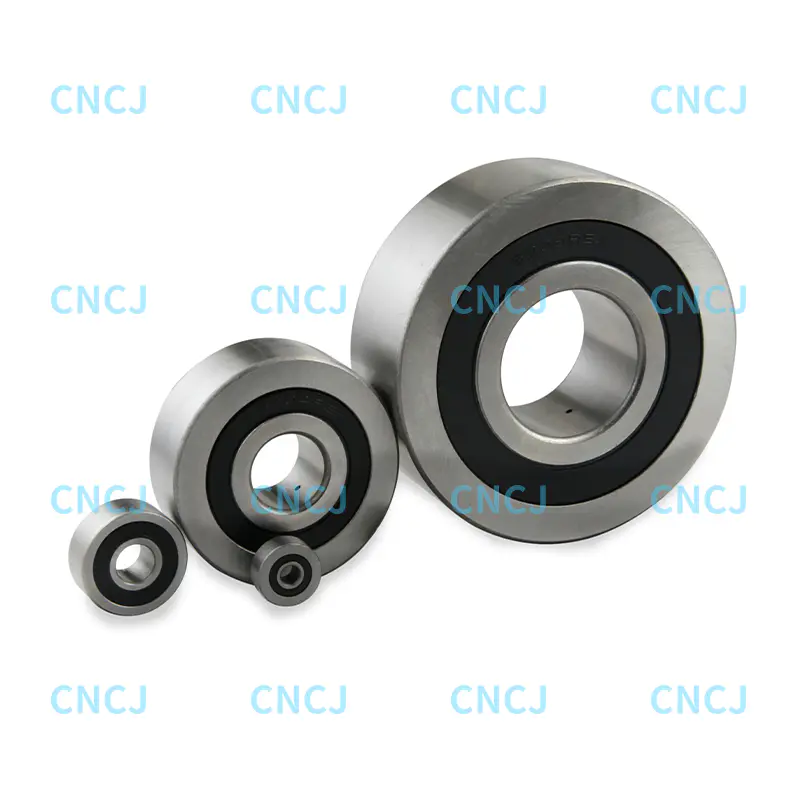
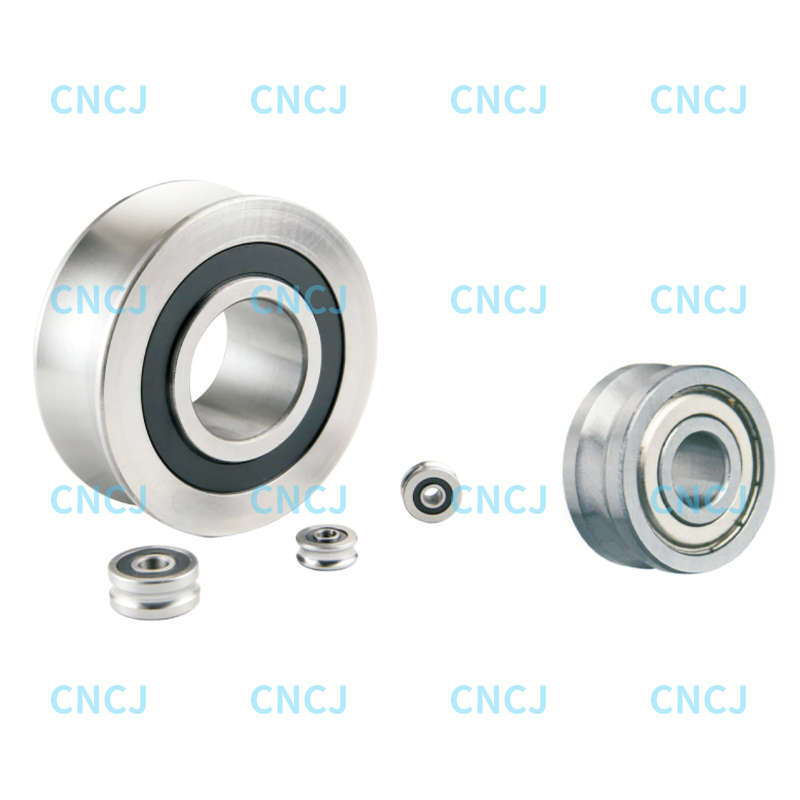
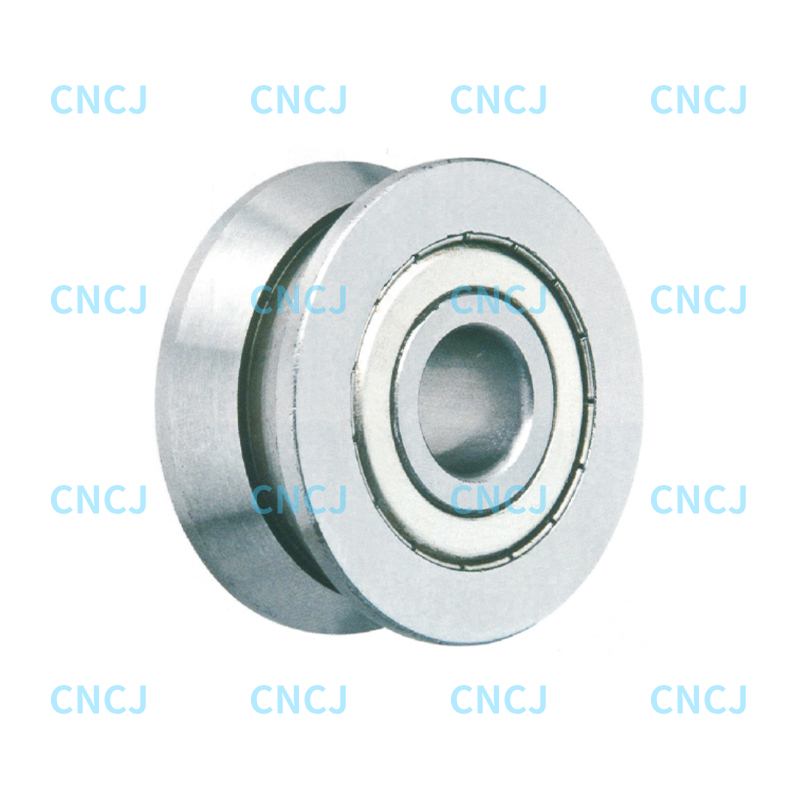
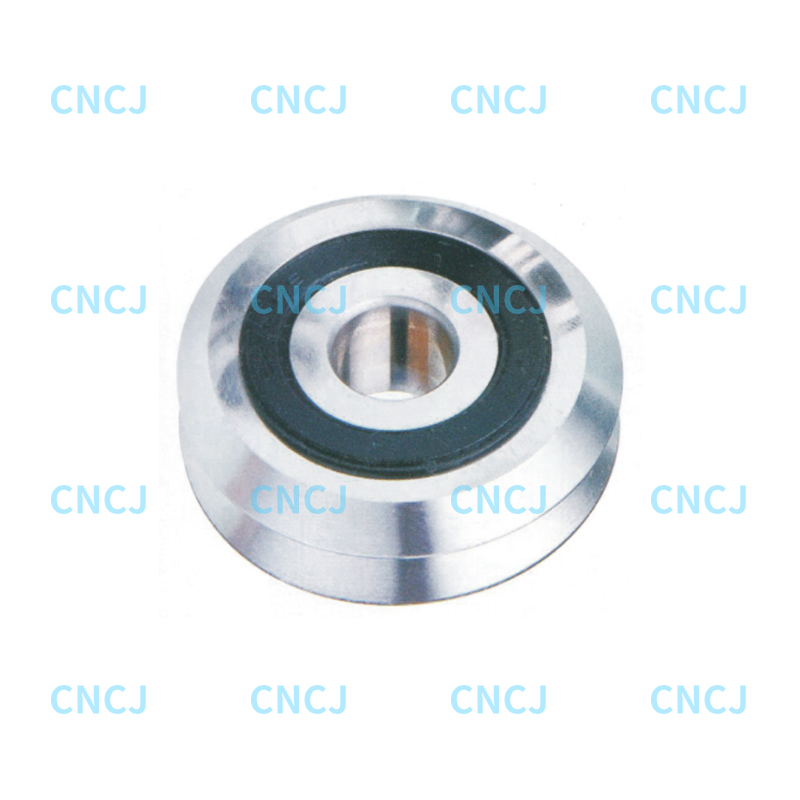
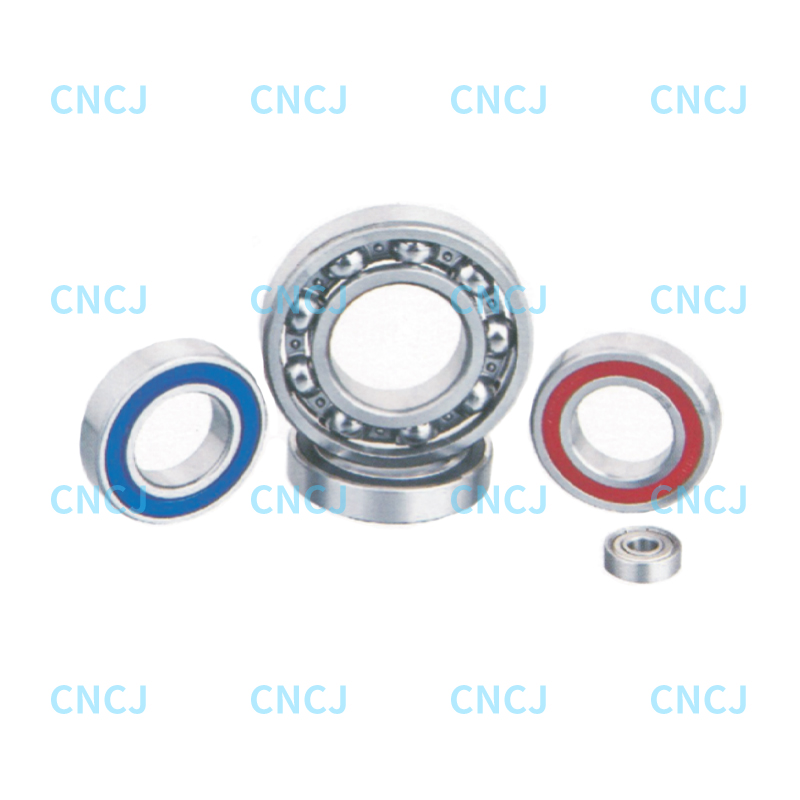
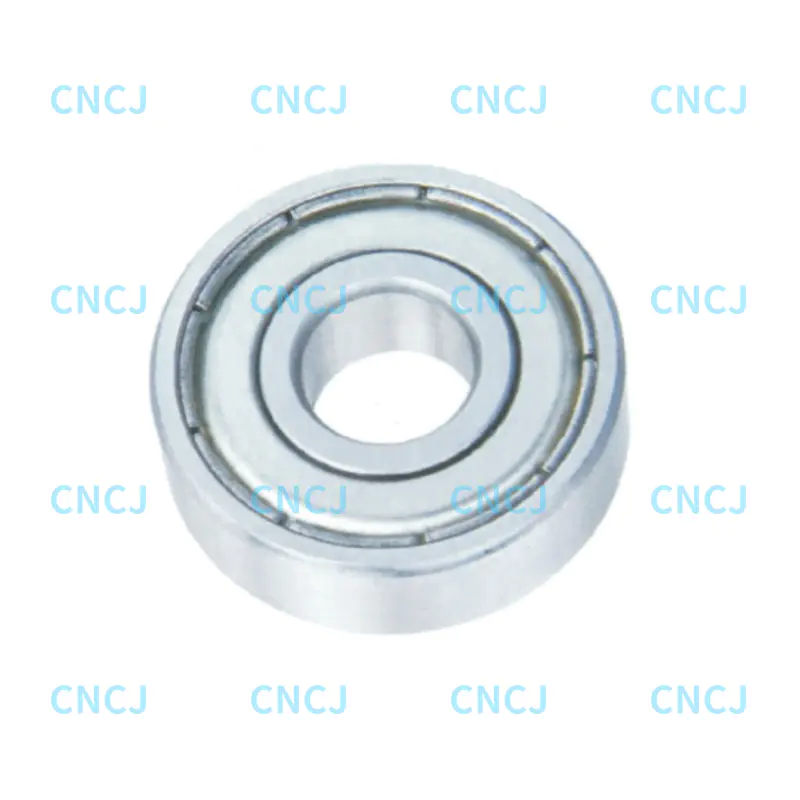
Double row ball bearings are used in applications that require higher radial load capacity, greater axial stiffness, and the ability to handle combined radial and axial loads in a compact axial space — needs that a single row bearing cannot fully meet. The two rows of balls arranged side by side within a single outer ring effectively double the radial load capacity compared to an equivalent single row bearing while adding significant axial rigidity. Common applications include electric motors, machine tool spindles, automotive wheel hubs, gearboxes, agricultural machinery, and conveyor systems — wherever load intensity, shaft stiffness, or combined loading requirements exceed what a single row design can provide.
Electric Motors and Generator Shafts
Double row ball bearings are widely used in the non-drive end of electric motors — particularly in medium and large frame sizes — where the bearing must handle the radial weight of the rotor shaft combined with the axial forces generated by rotor imbalance and thermal shaft elongation. A double row deep groove ball bearing at the non-drive end provides the axial location needed to manage shaft float while maintaining smooth, low-friction rotation at motor speeds that commonly range from 1,500 to 6,000 rpm.
For applications such as HVAC fans, pumps, and compressors — where the motor operates continuously and bearing replacement is costly — the extended service life from the higher load distribution of a double row bearing reduces maintenance intervals and total cost of ownership.
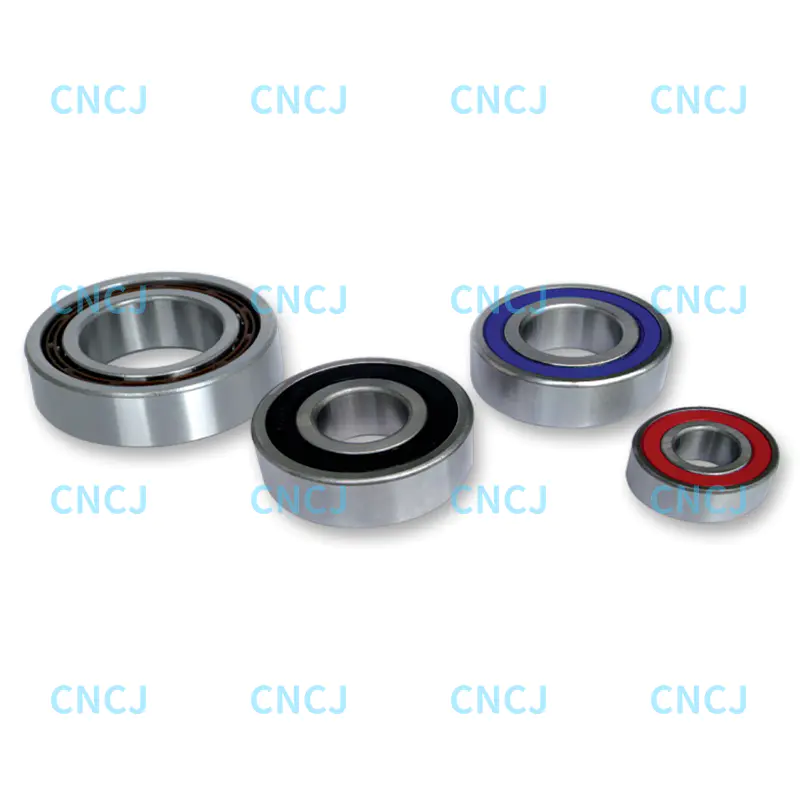
Machine Tool Spindles and Precision Machining Equipment
In machine tool spindle applications — lathes, milling machines, grinding spindles, and machining centers — double row angular contact ball bearings are the standard solution for the spindle rear (non-cutting end). The double row design provides:
- High rigidity against axial forces from back-and-forth tool engagement and thermal growth of the spindle
- Compact axial footprint that minimizes spindle overhang and maximizes the stiffness-to-space ratio
- Preloaded operation that eliminates play and maintains dimensional accuracy of machined parts
For high-speed machining centers, double row cylindrical roller bearings at the rear spindle position are often combined with double row angular contact ball bearings at the front — this tandem arrangement handles both the radial cutting forces and axial positioning loads that spindle operation generates.
Automotive Wheel Hubs and Steering Knuckles
The modern automotive wheel hub bearing unit — the component that connects the wheel to the suspension upright — is built around double row angular contact ball bearings configured in an X arrangement (back-to-back or face-to-face). This geometry is specifically chosen because vehicle wheel bearings must simultaneously handle:
- Radial loads from the vehicle's weight and road surface forces
- Bidirectional axial loads from cornering forces that alternate direction depending on the turn
- Moment loads from the leverage arm between the wheel contact patch and the bearing center
No single row bearing can handle this combination of loading reliably over the typical wheel bearing service life of 150,000–250,000 km. The sealed, pre-greased double row hub unit eliminates the need for field greasing and provides a maintenance-free solution for the vehicle's service life.
Gearboxes and Power Transmission
In industrial and automotive gearboxes, double row ball bearings are used on gear shafts that experience high radial loading from gear mesh forces combined with axial thrust from helical gear action. Double row deep groove ball bearings can handle the combined loading in a single compact unit — particularly valuable in gearbox designs where axial space between gear stages is restricted and installing two separate single row bearings is not feasible.
Agricultural gearboxes — used in tractors, combine harvesters, and tillage equipment — rely heavily on double row ball bearings because of the highly variable loading conditions: the bearings must handle shock loads from hitting rocks and hard ground, sustained high radial loads during operation, and wide temperature cycling from cold starts to hot operating conditions.
Conveyor Systems and Material Handling Equipment
In conveyor belt drives, idler rollers, and sorting equipment, double row ball bearings are used in take-up pulleys and drive drums that experience continuous high radial loading from belt tension combined with misalignment from thermal expansion and frame deflection. Self-aligning double row ball bearings are particularly valued in conveyor applications because they tolerate shaft misalignment of up to 2–3 degrees without generating internal stress or edge loading on the bearing raceways — a critical feature in long conveyor systems where perfect shaft alignment across multiple support frames is impractical.
Application Summary by Industry
| Industry |
Typical Application |
Key Load Type Handled |
| Electrical equipment |
Electric motor non-drive end |
Combined radial + axial |
| Machine tools |
Spindle rear position |
Axial location + rigidity |
| Automotive |
Wheel hub bearing unit |
Radial + bidirectional axial + moment |
| Industrial gearboxes |
Helical gear shaft support |
High radial + helical thrust |
| Agriculture |
Tractor and harvester drives |
Heavy radial + shock loads |
| Material handling |
Conveyor pulleys and drums |
Radial + misalignment tolerance |
Double row ball bearing applications by industry with primary load type handled
 English
 中文简体
中文简体 Deutsch
 Español