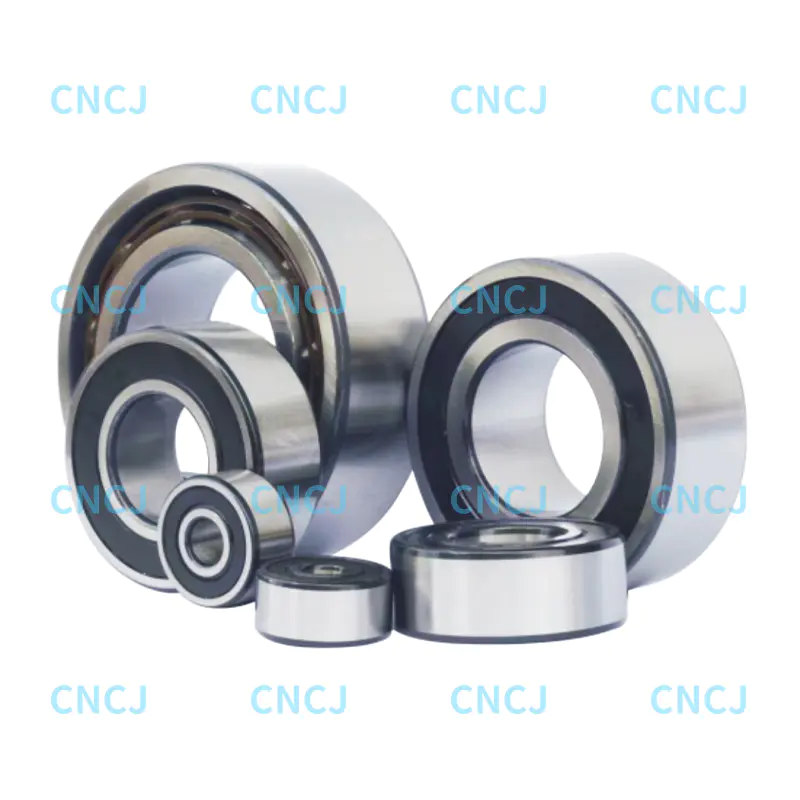
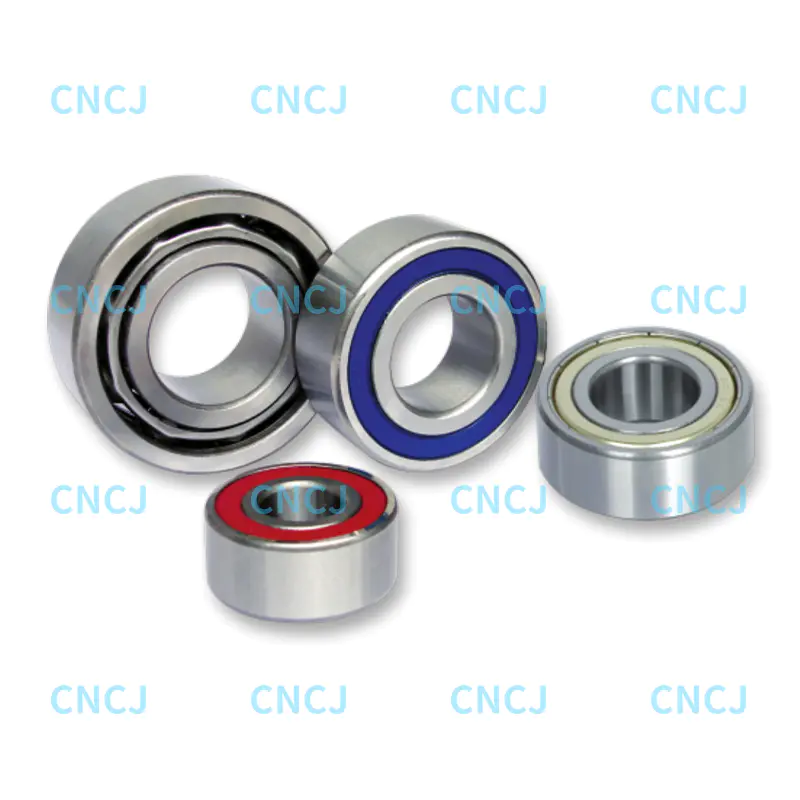
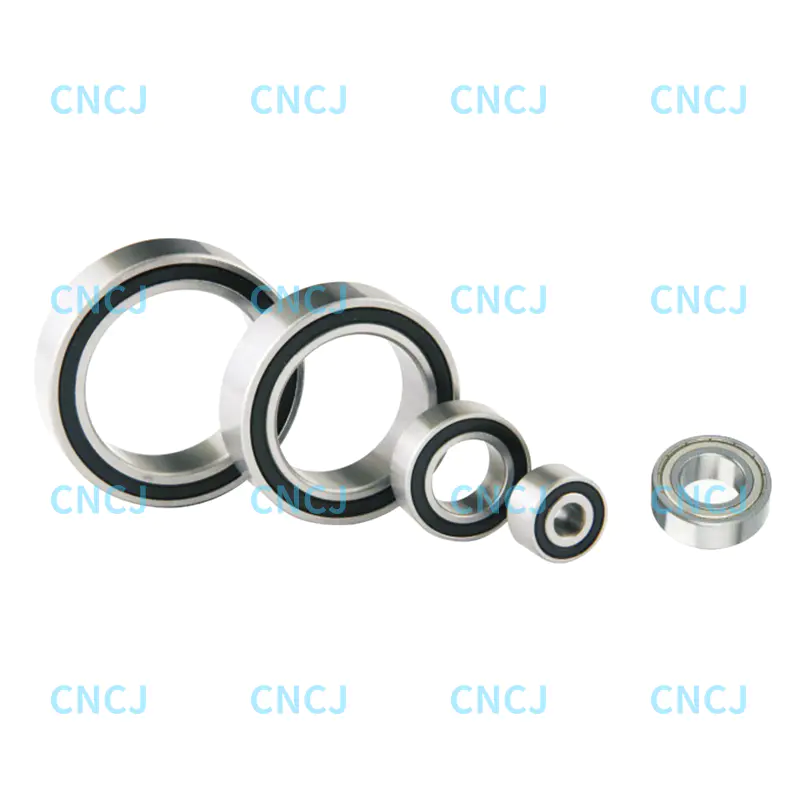
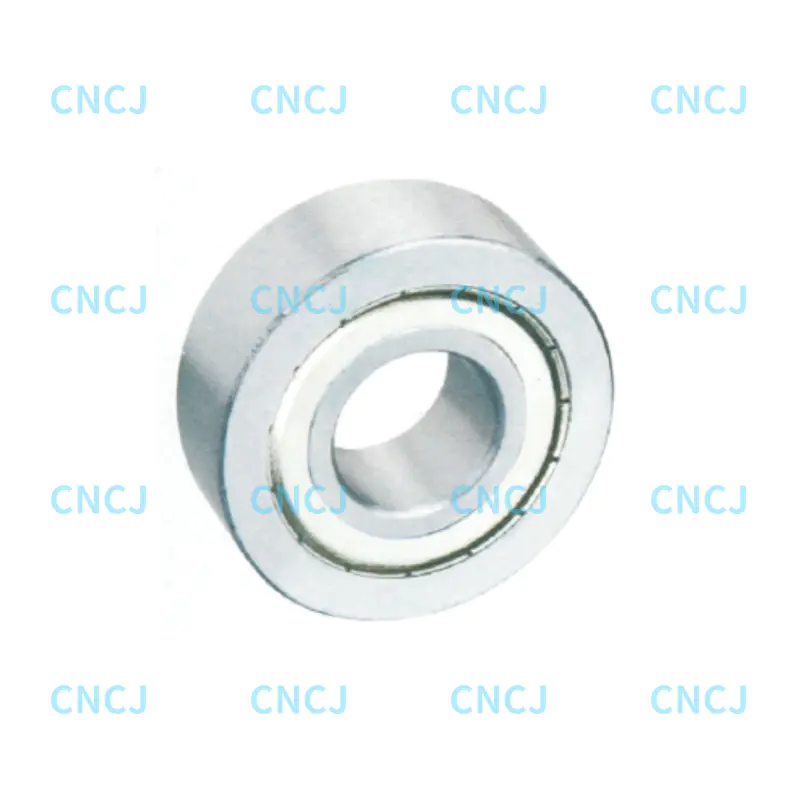
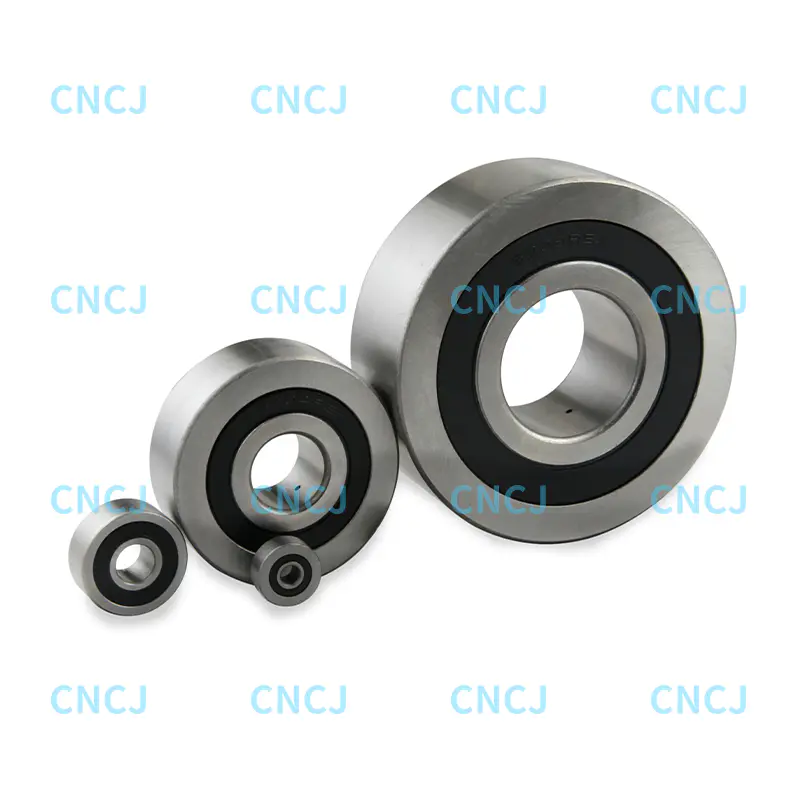
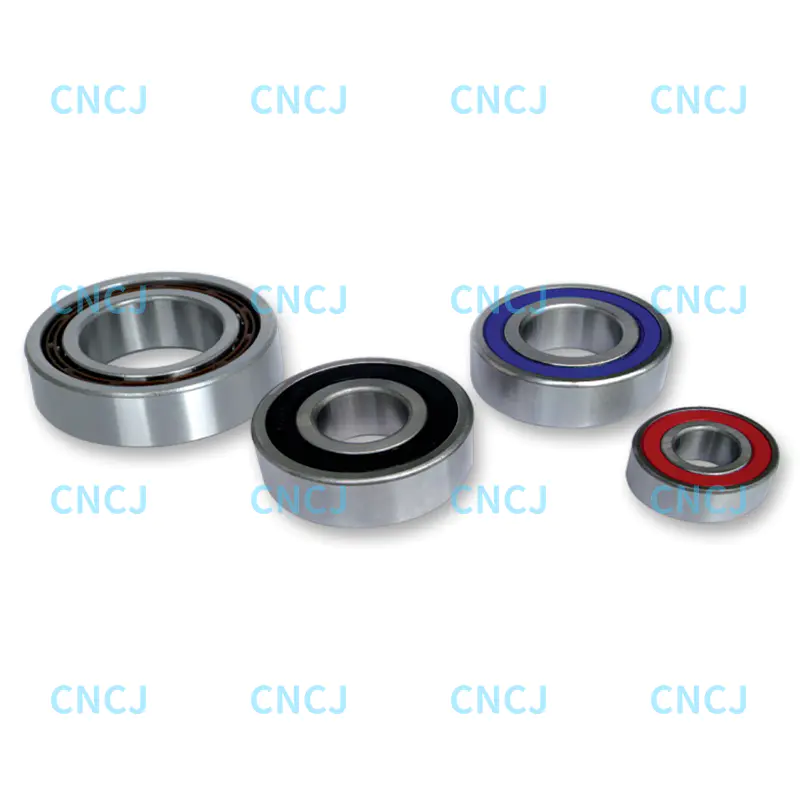
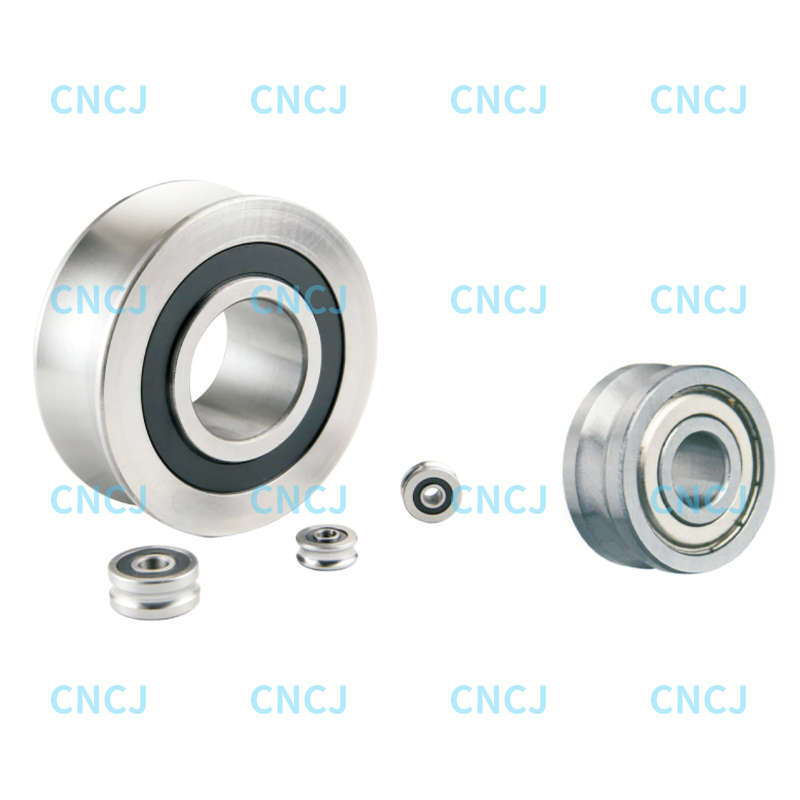
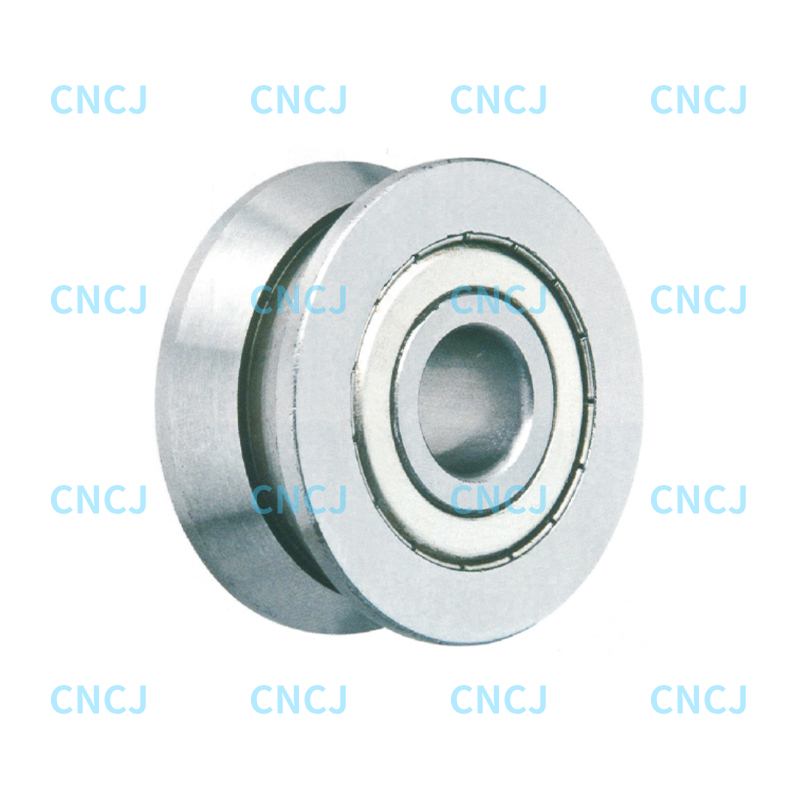
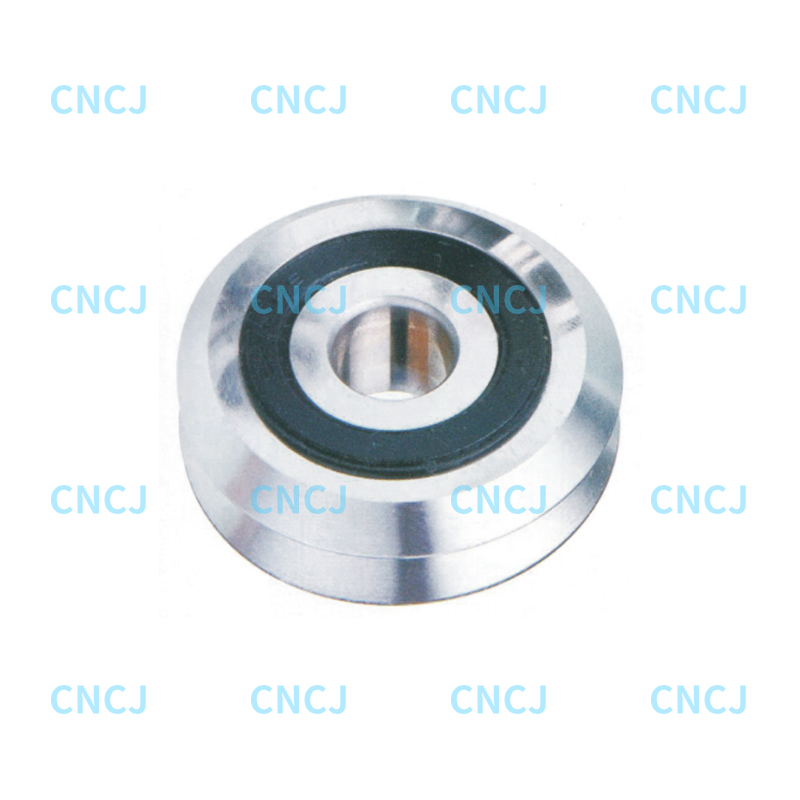
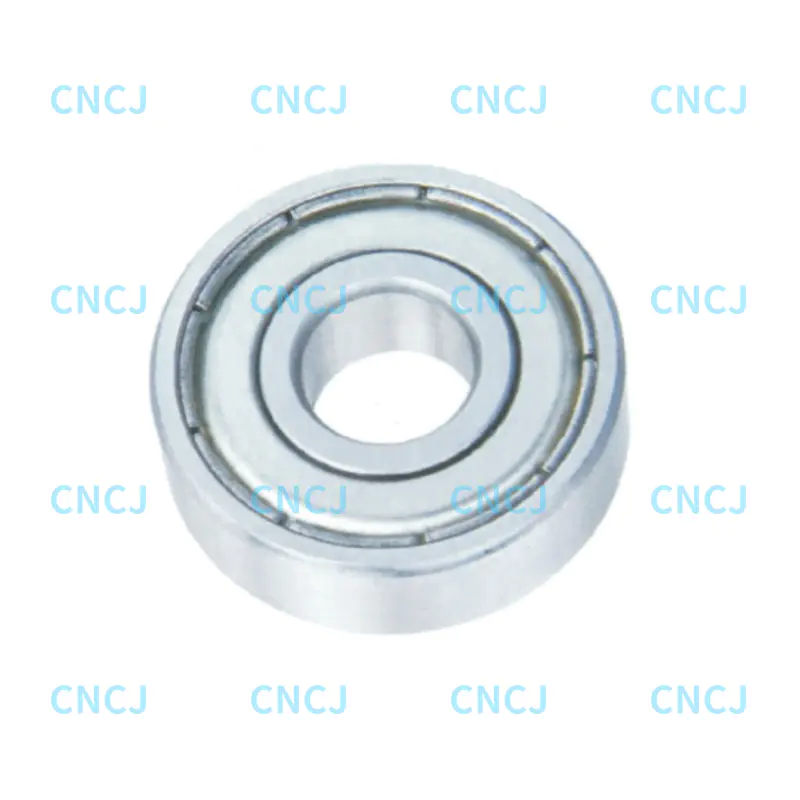
The fundamental difference between deep groove ball bearings and shallow groove ball bearings lies in how deeply the balls are seated within the raceway grooves of the inner and outer rings. In a deep groove ball bearing, the groove radius is typically 51.5–53% of the ball diameter, causing the ball to sit well below the top of the raceway wall. In a shallow groove bearing, the groove is cut to a lesser depth — the ball sits higher, with less material surrounding it on either side.
This seemingly small geometric difference has far-reaching consequences for load capacity, axial load handling, operating speed, noise level, assembly requirements, and the range of applications each bearing type can serve reliably. Deep groove ball bearings are by far the more widely used design — they are the most produced and most standardized rolling element bearing in the world — while shallow groove variants are applied in specific contexts where their narrower geometry or particular performance characteristics are advantageous.
This article works through every significant dimension of difference between the two types, using concrete data and application examples to make the distinctions practically actionable for engineers, buyers, and maintenance professionals.
Geometry and Groove Depth: What the Numbers Mean
The groove geometry of a ball bearing determines how much of the ball's surface is in contact with the raceway, and how much of the raceway wall rises above the ball's equator to retain it under load.
Deep Groove Raceway Geometry
In a standard deep groove ball bearing conforming to ISO 15 and related standards, the groove radius on both the inner and outer rings is typically between 51.5% and 53% of the ball diameter. This tight conformity ratio means the ball and groove arc are very close in curvature, maximizing the contact area between them. The groove walls rise well above the ball's equatorial plane, so the raceway effectively cradles the ball from multiple directions simultaneously.
The contact angle in a deep groove bearing under pure radial load is nominally 0°, but the geometry allows the bearing to develop a contact angle of up to 45° under axial loading before the ball begins to ride out of the groove. This is the geometric source of the deep groove bearing's well-known ability to carry both radial and axial (thrust) loads without requiring a separate thrust bearing.
Shallow Groove Raceway Geometry
Shallow groove ball bearings use a larger groove radius relative to ball diameter — typically 55% or more of ball diameter, sometimes significantly higher depending on the application. The lower conformity means the ball sits closer to the top of the raceway wall, with less material surrounding it. The contact area between ball and groove is smaller, and the groove walls do not rise high enough to support significant axial loads.
One important sub-category is the Conrad-type assembly groove — a shallow groove or filling notch cut into one side of the outer ring, allowing more balls to be loaded into the bearing during assembly. This filling notch is a deliberate geometric feature, not a performance characteristic, but it illustrates how shallow groove geometry is sometimes used as a manufacturing enabler rather than a load-bearing design.
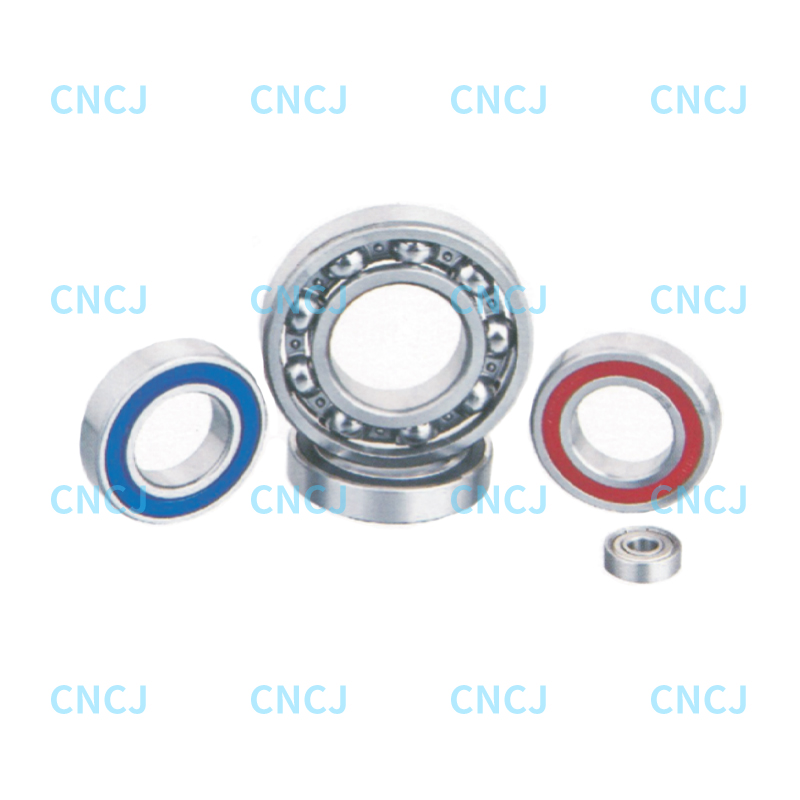
Load Capacity: Radial, Axial, and Combined
Load capacity is the most practically important difference between the two designs, and it is directly determined by groove depth.
Radial Load Capacity
For pure radial loads, deep groove ball bearings have a significant advantage because the high conformity between ball and groove distributes the contact stress over a larger area. More balls are typically loaded into a deep groove bearing (since the filling slot is not needed), contributing further to radial load capacity. A deep groove ball bearing can carry 20–40% more dynamic radial load than a comparably sized shallow groove bearing, depending on the specific groove radius and ball complement.
For example, a standard 6205 deep groove ball bearing (25 mm bore, 52 mm OD, 15 mm width) has a dynamic radial load rating of approximately 14.0 kN. A shallow groove or lower-conformity variant of similar envelope dimensions would typically rate 10–11 kN or less for the same dynamic radial capacity.
Axial Load Capacity
This is where the difference is most dramatic. Deep groove ball bearings can carry substantial axial loads in both directions — typically up to 50% of their dynamic radial load rating as a sustained axial load, and higher values in short-duration thrust applications. This capability comes directly from the groove wall height: when an axial load is applied, the ball migrates to one side of the groove and presses against the groove wall, which has sufficient material to support the load.
Shallow groove ball bearings have very limited axial load capacity. With lower groove walls, the ball quickly reaches the groove shoulder under axial loading, beyond which additional load causes the ball to ride over the shoulder — a failure mode that leads to rapid wear, noise, and eventual bearing seizure. In most shallow groove designs, sustained axial loads exceeding 10–15% of radial capacity are not recommended.
Combined (Radial + Axial) Load Situations
Real-world applications frequently impose both radial and axial loads simultaneously — electric motor shafts, conveyor rollers, pump impeller shafts, and gearbox output shafts are all common examples. Deep groove ball bearings handle combined loading naturally as a single bearing without requiring additional hardware. Shallow groove bearings used in combined load applications typically require a paired thrust bearing on the shaft to carry the axial component separately, adding cost, space, and assembly complexity.
Operating Speed: How Groove Depth Affects Maximum RPM
At high rotational speeds, the geometry of the rolling contact zone becomes critical for heat generation, friction, and the stability of the ball-raceway interaction.
Deep groove ball bearings, with their high ball-to-groove conformity, generate slightly more sliding friction at the contact zone because the curved surfaces do not roll against each other in pure rolling — there is always a small degree of spinning or differential slip across the contact ellipse. At moderate speeds this is negligible, but at very high speeds, the heat generated by this sliding becomes a limiting factor.
Shallow groove bearings, with lower conformity, have a smaller contact ellipse and thus less spinning friction per unit load. This gives them a theoretical speed advantage in applications where the load is light and the priority is minimal friction at high RPM. Some precision shallow groove designs achieve limiting speeds 20–30% higher than equivalent deep groove bearings of the same bore diameter, making them attractive in instrument bearings, gyroscopes, and high-speed spindles where operating loads are low but speed is paramount.
However, this speed advantage only applies at light loads. Under any significant radial or axial load, the lower load capacity of the shallow groove bearing more than offsets its speed advantage, and a deep groove bearing with appropriate lubrication becomes the better all-around choice.
Friction and Running Torque Characteristics
Starting torque and running friction are important in applications where power consumption is critical or where the bearing must operate from rest with minimal resistance — precision instruments, battery-powered devices, and low-torque servo systems being typical examples.
The friction coefficient of a deep groove ball bearing under light preload and ideal lubrication is approximately 0.0010–0.0015. Shallow groove bearings, due to their smaller contact area and lower conformity, achieve friction coefficients as low as 0.0005–0.0010 under the same conditions — roughly half that of deep groove designs.
This difference becomes significant in applications where the bearing must operate continuously at very low loads and the cumulative energy loss from friction is measurable. In a precision gyroscope or a scientific instrument spindle running thousands of hours at near-zero load, the lower friction of a shallow groove bearing can meaningfully extend battery life or improve measurement accuracy. In most industrial applications, however, the friction difference is insignificant compared to other system losses.
Noise and Vibration Performance
Noise level is a critical specification in applications such as household appliances, office equipment, medical devices, and audio equipment, where bearing noise directly affects product quality perception.
Deep Groove Bearings and Noise
Deep groove ball bearings are manufactured to very tight noise and vibration specifications in their higher quality grades. The ABEC (Annular Bearing Engineers' Committee) and ISO tolerance classes define both geometric accuracy and vibration levels, with ABEC 5, 7, and 9 grades used in low-noise applications. A P5 (ABEC 5) grade deep groove bearing typically has a vibration velocity limit of 0.5–1.5 mm/s in the low-frequency range, sufficient for most demanding consumer and light industrial applications.
The high conformity of the deep groove design, while it increases spinning friction slightly, also stabilizes the ball motion and reduces the tendency for balls to skid or lose contact — both of which generate noise. This gives deep groove bearings inherently good noise performance even in standard grades.
Shallow Groove Bearings and Noise
Shallow groove bearings can be manufactured to equally tight tolerances, and their lower contact conformity produces a different acoustic signature — generally with a less pronounced low-frequency vibration component. However, because the ball is less firmly cradled in the groove, shallow groove bearings are more sensitive to external vibration and misalignment, which can introduce noise if the installation is not precise. They also require more careful preload management: too little preload allows balls to skip and generate noise; too much preload causes heat and premature wear due to the limited load distribution area.
Misalignment Tolerance and Shaft Deflection
In real installations, shafts are rarely perfectly aligned with the bearing housing. Thermal expansion, manufacturing tolerances, and dynamic loads all cause small angular deviations between the shaft axis and the bearing axis. How well a bearing tolerates this misalignment without losing performance or service life is an important practical consideration.
Deep groove ball bearings tolerate angular misalignment of up to approximately 0.08° to 0.16° (5–10 arc minutes) without significant reduction in service life, depending on the bearing size and load. This limited misalignment tolerance is a known characteristic of all single-row ball bearing designs.
Shallow groove ball bearings, by contrast, are even more sensitive to misalignment. Because the ball sits closer to the groove shoulder, any angular deviation concentrates stress at the groove edge rather than distributing it across the full contact zone. Misalignment tolerance in shallow groove designs is typically half that of deep groove equivalents — approximately 0.04° to 0.08° — meaning shaft and housing alignment must be controlled more precisely. This makes shallow groove bearings less suitable for applications with significant shaft deflection or housing bore misalignment.
For applications where shaft deflection or housing misalignment is unavoidable and significant, self-aligning ball bearings (which use a spherical outer raceway) are the appropriate choice over either groove type.
Side-by-Side Performance Comparison
The table below summarizes the key performance differences between deep groove and shallow groove ball bearings across the dimensions most relevant to application selection:
Performance comparison between deep groove and shallow groove ball bearings across key engineering parameters
| Parameter |
Deep Groove Ball Bearing |
Shallow Groove Ball Bearing |
| Groove radius / ball diameter ratio |
51.5–53% |
55% or more |
| Dynamic radial load capacity |
High |
Moderate (20–40% lower) |
| Axial load capacity |
Up to ~50% of radial rating |
Low (10–15% of radial rating) |
| Friction coefficient (light load) |
0.0010–0.0015 |
0.0005–0.0010 |
| Maximum operating speed |
High |
Higher (at light loads only) |
| Misalignment tolerance |
0.08°–0.16° |
0.04°–0.08° |
| Sealing / shielding options |
Full range (ZZ, RS, 2RS, etc.) |
Limited; often open or lightly sealed |
| Standardization / availability |
Extremely high (ISO, DIN, ABEC) |
Lower; often application-specific |
| Cost |
Low to moderate |
Moderate to high (specialty) |
| Typical service life under mixed load |
Long |
Shorter (sensitive to axial load) |
Sealing, Shielding, and Lubrication Options
The availability of sealing and shielding options is another area where deep groove ball bearings hold a significant practical advantage over shallow groove designs.
Deep Groove Bearing Variants
Deep groove ball bearings are available in a comprehensive range of configurations that address different lubrication and contamination requirements:
- Open (no suffix): No seal or shield; requires external lubrication supply. Used in clean environments or where the bearing is part of a centralized lubrication circuit.
- Shielded (Z or ZZ): Metal shields on one or both sides prevent the entry of large particles while allowing some lubricant exchange with the surrounding environment. Suitable for dusty but not wet conditions.
- Sealed (RS or 2RS): Elastomeric contact seals on one or both sides provide effective exclusion of dust, moisture, and contaminants. Pre-greased for life. The most common configuration in general industrial and consumer applications.
- Non-contact sealed (RZ or 2RZ): Labyrinth-style seals that provide good contamination resistance with less friction than contact seals. Used in higher-speed applications where the drag of a contact seal is undesirable.
This extensive range of sealed and shielded variants means that deep groove ball bearings can be specified as maintenance-free, pre-lubricated units for the vast majority of applications — a significant advantage in terms of total lifecycle cost and installation simplicity.
Shallow Groove Bearing Sealing Limitations
Shallow groove ball bearings are more commonly supplied in open or lightly shielded configurations. The shallower groove geometry provides less space for mounting integral seals, and the specialized nature of many shallow groove designs means that the full range of sealing variants offered for deep groove bearings is not generally available. In applications requiring effective sealing against moisture or contamination, this is a meaningful limitation that may require additional housing seals or protective shrouds to compensate.
Assembly Method Differences: The Conrad Method vs. Filling Slot
The groove depth affects not just performance but also how the bearing is assembled — specifically, how many balls can be loaded into the bearing during manufacture.
Conrad (Eccentric) Assembly for Deep Groove Bearings
Standard deep groove ball bearings are assembled using the Conrad method: the inner ring is displaced eccentrically within the outer ring, creating a crescentshaped gap through which balls are loaded one at a time. The balls are then evenly distributed around the circumference and a cage is installed to maintain spacing. The number of balls that can be loaded this way is limited by the groove depth — deeper grooves constrain the eccentric displacement, meaning fewer balls can be inserted through the gap. A typical Conrad-assembled deep groove bearing contains 7–10 balls, depending on bore size, which represents approximately 60–70% of the theoretical maximum ball complement for that ring diameter.
Filling Slot Design for Higher Ball Complements
To increase the number of balls and thus the radial load capacity, some bearings use a filling slot — a notch cut into the groove shoulder of the outer ring (and sometimes the inner ring as well) through which balls are loaded straight in without eccentric displacement. This filling slot design allows a full or near-full ball complement, increasing radial load capacity by 20–30% compared to a Conrad-assembled bearing of the same envelope dimensions.
However, the filling slot creates a region of the raceway where the groove is interrupted — and this interruption means the bearing cannot carry significant axial loads. When an axial force pushes the balls toward the filled side, they will encounter the slot edge rather than a continuous groove wall, causing impact stress and rapid deterioration. Filling slot bearings are therefore suitable only for pure or predominantly radial load applications, and they should never be used in situations where axial loads, even moderate ones, are expected.
This filling slot geometry is one form of a "shallow groove" design — the groove is effectively shallower at the slot location — and it illustrates clearly how groove depth and load capacity are directly linked.
Typical Applications: Where Each Bearing Type Belongs
Understanding which bearing type fits which application is the most immediately useful output of this comparison. The following breakdown maps each bearing type to its natural application domain.
Applications Best Served by Deep Groove Ball Bearings
- Electric motors (AC and DC): The most common application globally. Deep groove bearings handle the combined radial and axial loads from rotor weight, belt tension, and thermal shaft growth simultaneously. Motor frame sizes from 0.1 kW fractional motors to multi-megawatt industrial drives use deep groove ball bearings at the non-drive and drive ends.
- Pumps and compressors: Shaft loads from impeller hydraulic forces are typically combined radial and axial, making deep groove bearings the natural choice for most centrifugal pump configurations.
- Gearbox output shafts: Gear separating forces create both radial and axial load components that deep groove bearings handle efficiently.
- Conveyor systems: Belt tension creates high radial loads on idler and drive roller shafts, while thermal expansion creates axial loads — a combined loading scenario where deep groove bearings excel.
- Agricultural and construction equipment: Robust deep groove bearings in sealed configurations handle heavy radial loads with frequent shock loading in contaminated environments.
- Household appliances: Washing machine drums, vacuum cleaner motors, refrigerator compressors, and fan motors all use sealed deep groove ball bearings as their primary rotating element.
Applications Best Served by Shallow Groove Ball Bearings
- Precision instruments and gyroscopes: Where the priority is minimum friction and maximum speed at very low loads, shallow groove or low-conformity bearings minimize spinning friction and heat generation.
- Pure radial load applications requiring maximum ball complement: Filling slot designs with a higher ball count can deliver superior radial load capacity in a compact envelope, provided axial loads are absent or negligible.
- High-speed precision spindles (lightly loaded): Certain machine tool spindles running at extreme RPM with light cutting loads benefit from the reduced contact friction of lower-conformity designs.
- Dental handpieces and medical rotary tools: Extremely high-speed, very light-load applications where thermal management and torque minimization are dominant concerns.
- Optical and audio equipment rotation mechanisms: Where the lowest possible audible noise and vibration matter more than load capacity.
Standardization, Availability, and Cost Implications
From a procurement and maintenance perspective, standardization and parts availability are factors that often outweigh marginal performance differences in engineering decisions.
Deep groove ball bearings are among the most standardized mechanical components in existence. The ISO 15 standard defines boundary dimensions (bore, outside diameter, width) for a comprehensive series of deep groove ball bearings, and these dimensions are replicated by manufacturers worldwide. This means that a bearing specified by its ISO designation can be sourced from multiple manufacturers without dimensional incompatibility — a critical advantage for maintenance operations and spare parts planning. Hundreds of millions of deep groove ball bearings are manufactured annually, driving unit costs to extremely competitive levels even at low volumes.
Shallow groove ball bearings, by contrast, are often more application-specific and less universally standardized. Many shallow groove designs are produced to proprietary or semi-proprietary specifications, meaning that replacing a failed bearing may require sourcing from the original equipment manufacturer or a specialized bearing supplier. Lead times can be longer, minimum order quantities higher, and unit costs significantly greater than equivalent deep groove types. In maintenance-critical operations, this supply chain risk is a real and practical disadvantage of shallow groove bearing designs.
Service Life and Failure Mode Comparison
Understanding how each bearing type fails — and under what conditions failure accelerates — allows engineers to select the design that will deliver the longest and most predictable service life for a given application.
Deep Groove Bearing Failure Modes
When deep groove ball bearings fail, the most common causes are:
- Fatigue spalling: Subsurface fatigue cracks propagate to the surface of the raceway or ball after the bearing has accumulated sufficient stress cycles. This is the design failure mode — it appears predictably at the end of the calculated L10 life and is evidence that the bearing was correctly specified.
- Contamination-induced wear: Abrasive particles penetrating the bearing raceway create surface damage that accelerates fatigue. Proper sealing or filtration dramatically extends life.
- Lubrication failure: Lubricant degradation, loss, or incorrect viscosity causes metal-to-metal contact, rapid heat generation, and accelerated wear.
- False brinelling: Micro-movement under vibration in static bearings creates wear patterns at ball contact points — a concern in stored or transported machinery.
Shallow Groove Bearing Failure Modes
Shallow groove bearings share most of the same failure modes as deep groove designs, but with some additional vulnerabilities:
- Groove shoulder overload: Axial loads that push the ball to the groove edge cause concentrated edge stress and accelerated spalling at the groove shoulder — a failure mode unique to shallow groove designs and one that does not occur in deep groove bearings under the same loading.
- Ball skidding: Under light loads at high speeds, the reduced conformity of shallow groove bearings makes balls more prone to skidding — sliding rather than rolling — which generates heat and surface damage more rapidly than in deep groove designs under the same conditions.
- Sensitivity to mounting errors: Shallow groove bearings' lower misalignment tolerance means that installation errors that would be inconsequential in a deep groove bearing can cause premature failure through edge loading.
How to Choose Between the Two Types: A Practical Decision Guide
Given all the differences described above, the selection between deep groove and shallow groove ball bearings can be summarized in a straightforward decision framework:
- Assess the load type. If the application involves any sustained axial load, combined loading, or bidirectional thrust, a deep groove ball bearing is the only appropriate choice. Shallow groove designs are unsuitable.
- Evaluate the load magnitude. If the radial load is heavy relative to the shaft size, deep groove bearings deliver higher capacity in the standard Conrad assembly, or maximum capacity from filling slot designs if axial loads are confirmed absent.
- Consider the speed and friction requirements. If the application runs at extremely high speed under very light load and minimum friction is critical (instruments, precision spindles), a shallow groove or low-conformity design may be justified.
- Check the alignment quality. If shaft and housing alignment cannot be controlled to within 0.05°, avoid shallow groove designs. Deep groove bearings are more forgiving of installation imprecision.
- Consider parts availability and maintenance strategy. For applications where rapid replacement from stock is essential, deep groove ball bearings are the only practical choice due to their universal standardization and global availability.
- Evaluate sealing requirements. If the bearing operates in a contaminated, wet, or maintenance-restricted environment, deep groove bearings with integral seals (2RS) provide a complete, maintenance-free solution. Shallow groove designs rarely offer equivalent sealed options.
In the overwhelming majority of general industrial, automotive, agricultural, and consumer product applications, the deep groove ball bearing is the correct and optimal choice. Shallow groove designs are justified only in specialized precision or speed-critical applications where the specific performance trade-offs have been carefully evaluated and the axial load absence confirmed.
Summary: The Most Important Differences in Practice
The table below provides a final condensed reference for the most decision-relevant differences between deep groove and shallow groove ball bearings:
Quick-reference guide to the most practically important differences for bearing selection decisions
| Selection Factor |
Favors Deep Groove |
Favors Shallow Groove |
| Axial load present |
Yes — always |
No — never |
| High radial load, compact space |
Standard deep groove |
Filling slot (pure radial only) |
| Minimum friction at light load |
No |
Yes |
| Easy global sourcing |
Yes |
No |
| Integral sealing required |
Yes — full range available |
Limited options |
| Shaft alignment uncertain |
Yes — more tolerant |
No — very sensitive |
| Extreme speed, ultra-light load |
Adequate |
Preferred |
To put it plainly: for the vast majority of engineering applications, deep groove ball bearings are the correct, versatile, and cost-effective choice. Shallow groove ball bearings are precision tools for specific situations — valuable when the conditions favor them, but readily misapplied when axial loads, contamination, misalignment, or supply chain requirements are present. Matching the bearing geometry to the actual loading environment is always the foundation of a reliable, long-lived bearing installation.
 English
 中文简体
中文简体 Deutsch
 Español