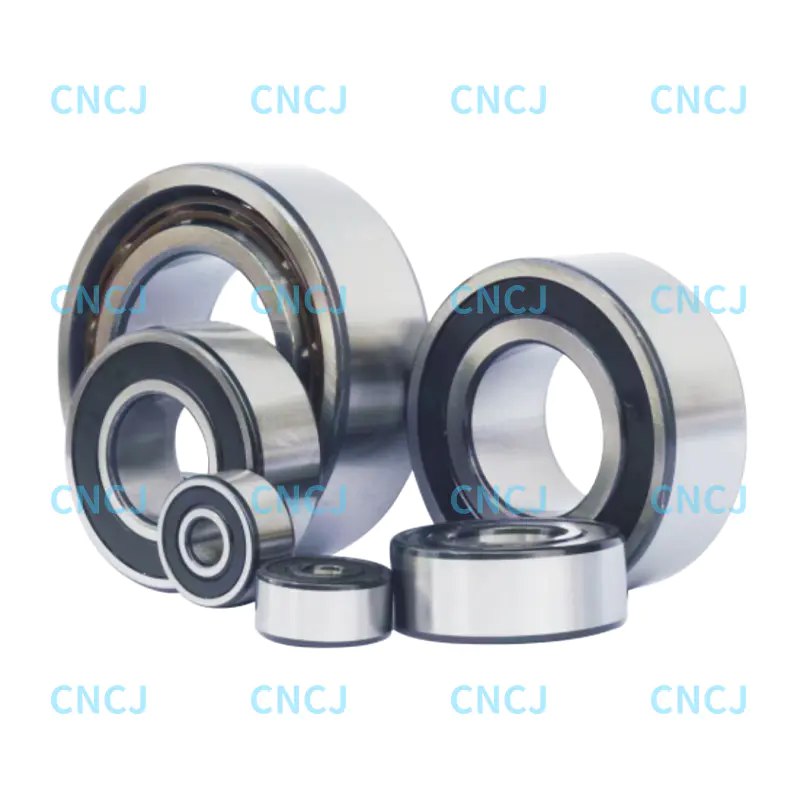
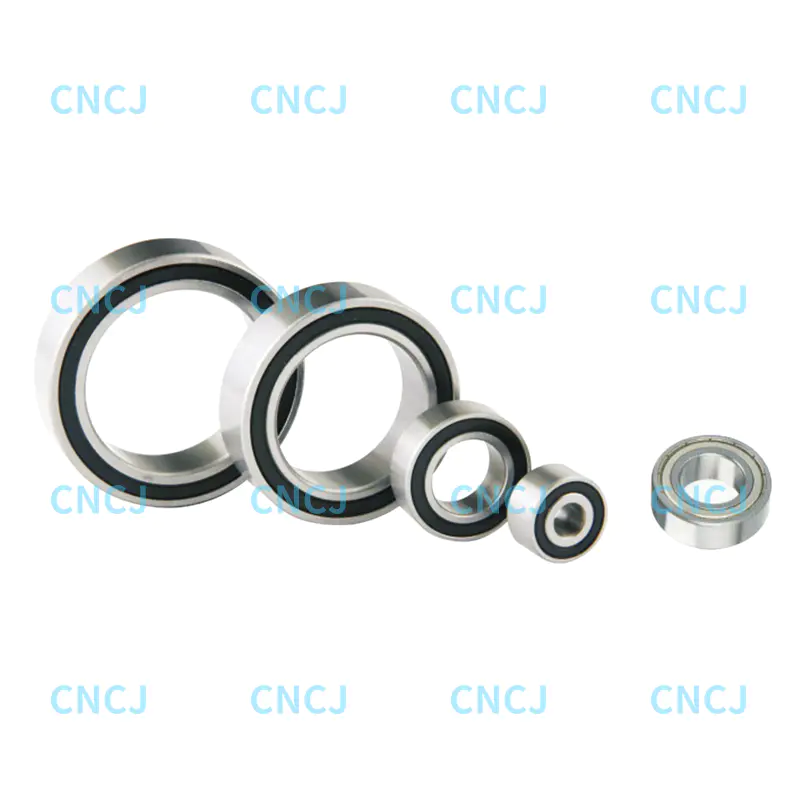
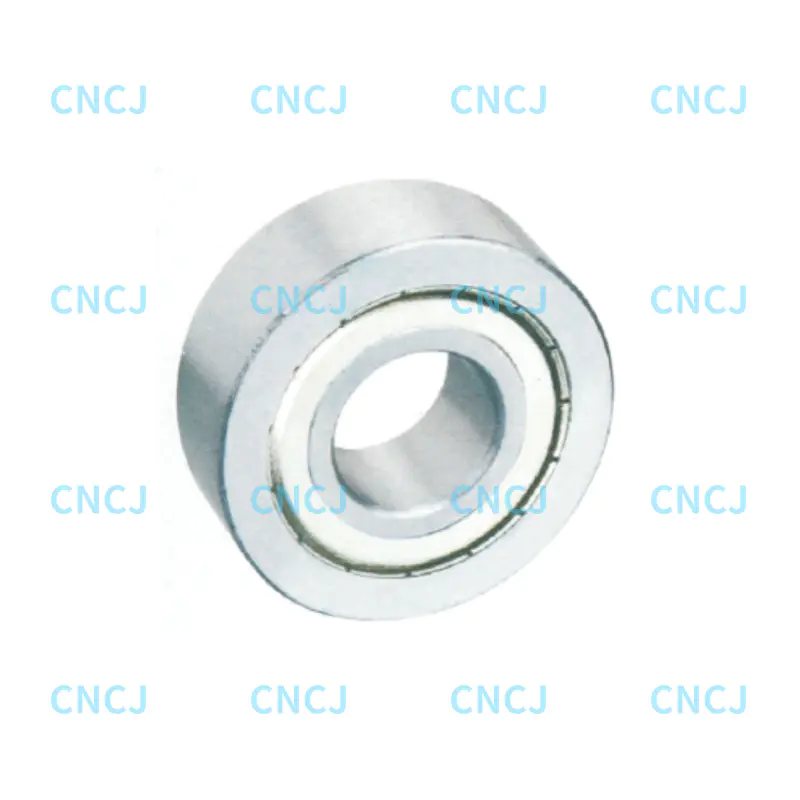
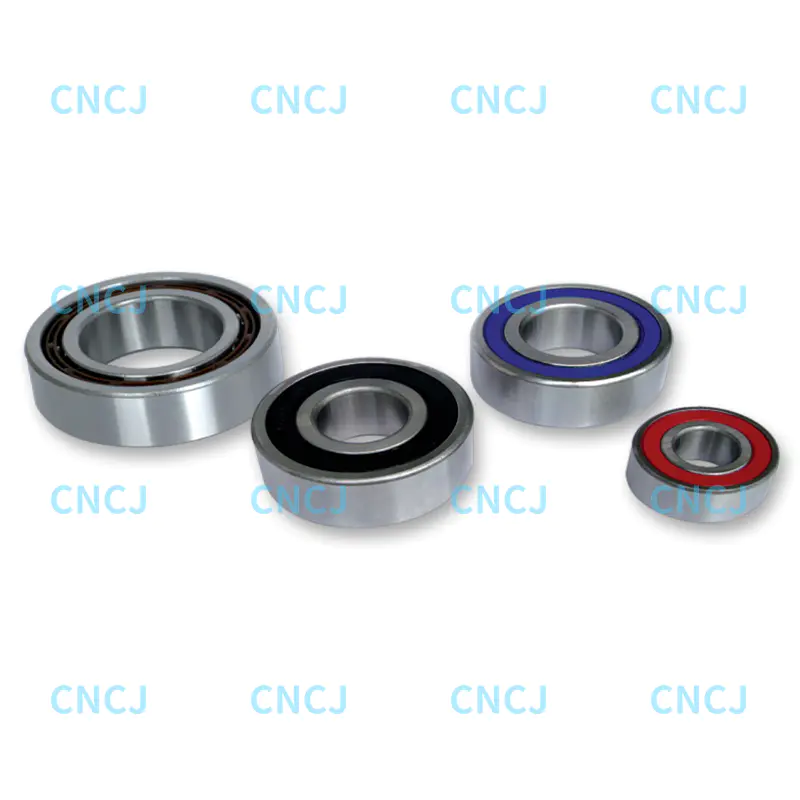
An AGV stops mid-aisle because a load wheel bearing has seized. The vehicle is carrying a 1,200 kg pallet, and the guide rollers are already showing flat spots. The root cause is rarely the motor or the navigation system. It is often the smallest purchased component in the drive train: the bearing. For AGV material handling equipment, bearing selection determines whether the vehicle moves smoothly, holds positioning accuracy, and stays in service between maintenance windows. Get the bearing wrong, and you pay for it in unplanned downtime, excessive noise, and premature wheel replacement. Get it right, and the AGV becomes a reliable part of the material flow.
What Counts as AGV Material Handling Equipment
AGV material handling equipment covers any automated guided vehicle that moves materials without a human operator. In practice, that includes unit load AGVs carrying pallets or totes, towing AGVs pulling carts, forklift AGVs lifting racks, heavy burden carriers moving steel coils, and hybrid AGVs that switch between manual and automatic modes. These vehicles work in warehouses, manufacturing cells, cold storage, and outdoor yards. The common thread is controlled motion: start, stop, turn, lift, and position a load repeatedly.
Bearings appear in several places on these vehicles. Drive wheel assemblies use bearings to support the wheel hub and transmit torque. Steer wheel assemblies use bearings to allow rotation under load. Load wheels carry the weight of the vehicle and the payload. Guide rollers keep the AGV on track or follow a rail. Lift columns and conveyor decks use bearings in pulleys, rollers, and pivot points. Each position has a different load direction, speed, and environmental exposure. That is why one bearing type rarely fits every AGV application.
Bearing Types Used in AGV Material Handling Equipment
The table below maps common bearing types to typical AGV positions. Use it as a starting point, not a final specification. Load magnitude, duty cycle, and contamination level will decide the final choice.
Typical bearing types and their roles in AGV material handling equipment.
| Bearing Type |
Typical AGV Position |
Why It Fits |
| Double row angular contact ball bearings |
Drive and steer gearboxes, pivot assemblies |
Handles combined radial and axial loads with high rigidity |
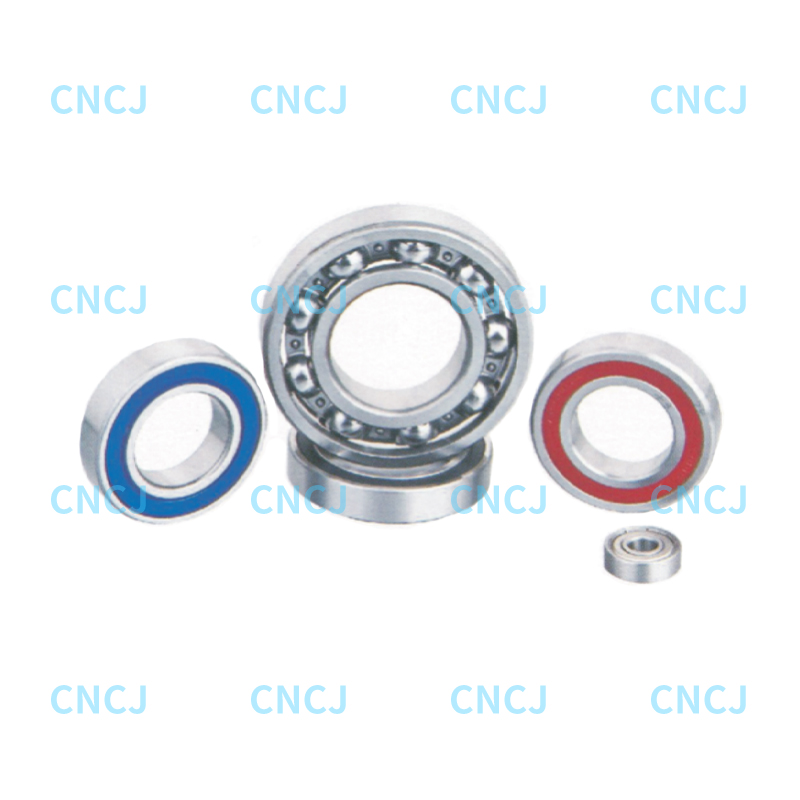
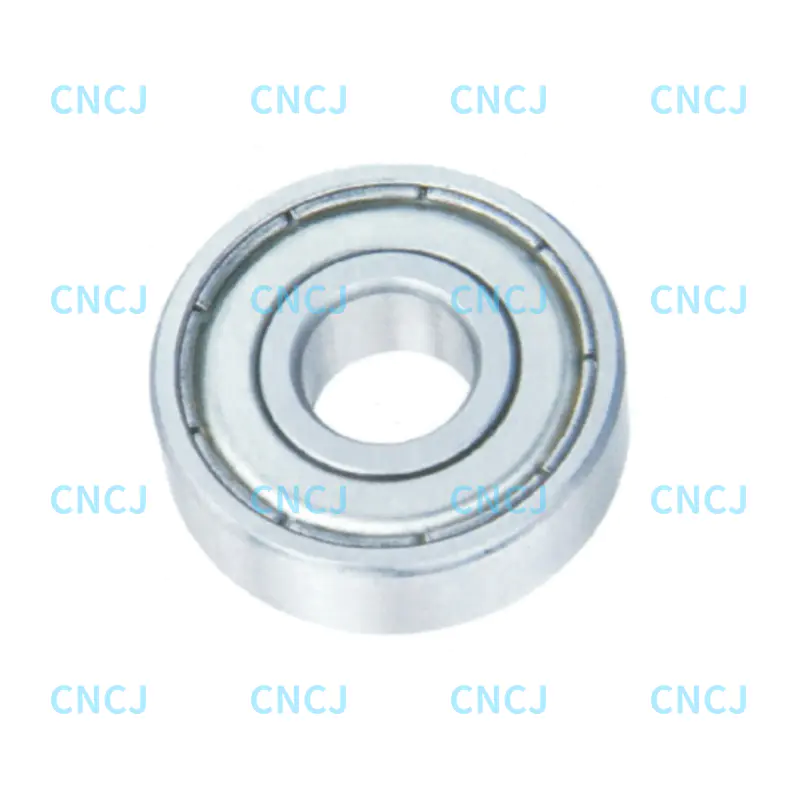
| Deep groove ball bearings |
Motor shafts, small wheels, conveyor rollers |
Simple radial support, low friction, available with seals or shields |
| Track rollers with cylindrical or crowned outer ring (LR) |
Load wheels, guide rollers on flat tracks |
Runs on rails or floors, accommodates slight misalignment |
| Track rollers with gothic arch groove (LFR) |
Precision guide rollers on profile rails |
High load capacity and smooth linear motion |
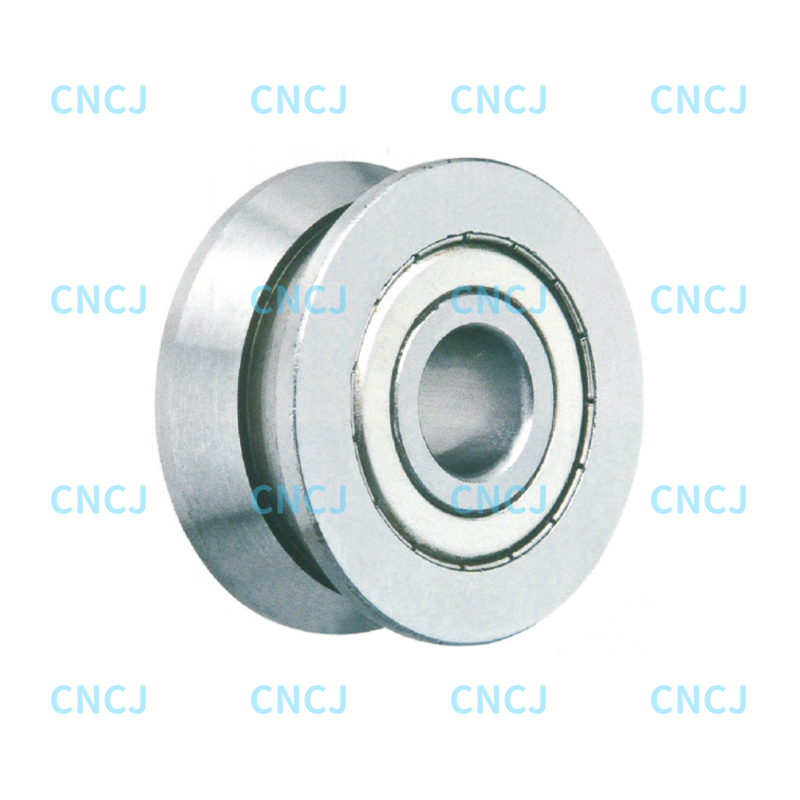
| W series line track rollers |
Linear rail guidance systems |
High precision linear motion with low friction |
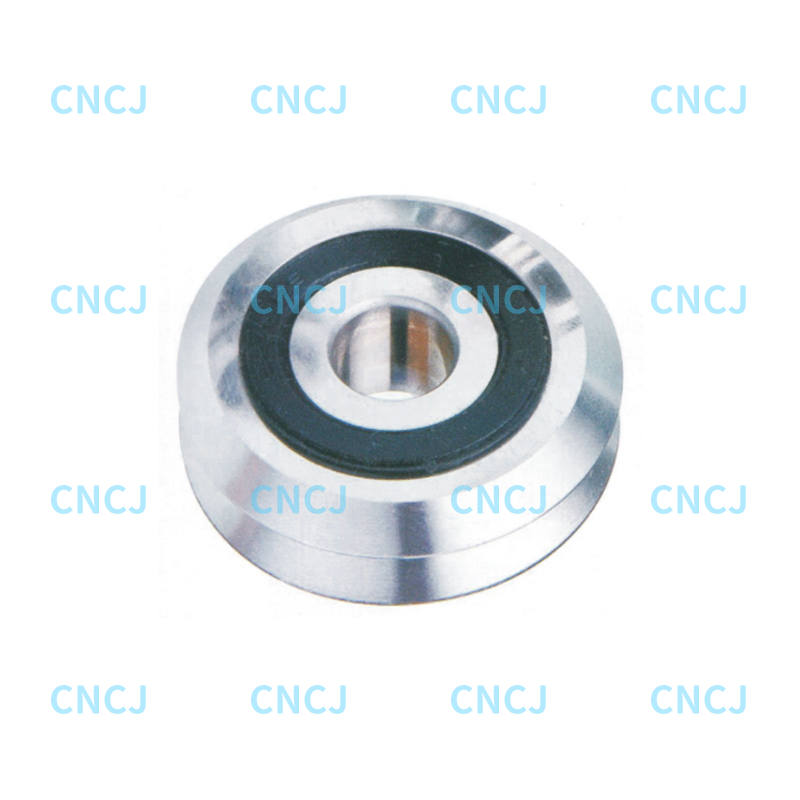
| V groove track rollers (Vee'D bearings) |
V rail guidance and profile rail systems |
Low friction operation on V shaped tracks |
In many AGV designs, the drive wheel uses a double row angular contact ball bearing because the wheel must handle both the vehicle weight and the side forces from steering. The load wheels often use track rollers with a crowned outer ring, because the floor or rail is never perfectly flat. Guide rollers on a linear rail may use a gothic arch groove design to control play and maintain positioning accuracy. The exact mix depends on the vehicle architecture.
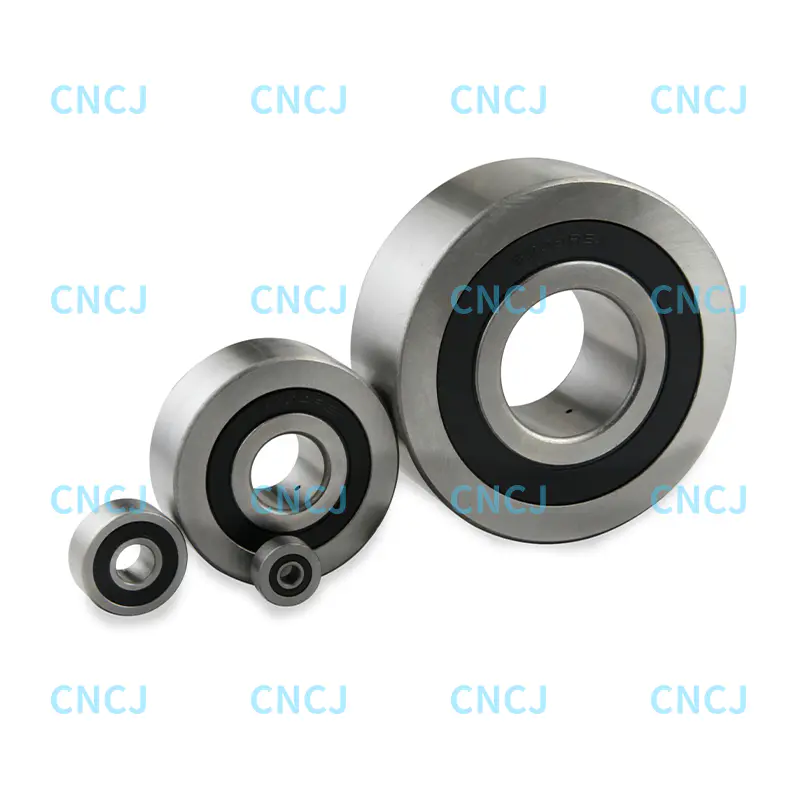 Cylindrical or Crowned Track Rollers for Load WheelsFor AGV load wheels on floors or simple rails, the crowned outer ring helps reduce edge stress under slight misalignment.View Product →
For load wheels that run on floors or simple rails, a track roller with a cylindrical or crowned outer ring is often the practical choice. The crowned profile helps avoid edge stress when the wheel is slightly misaligned.
Matching Bearings to AGV Load Cases
Start with the load per wheel. A 1,500 kg unit load AGV with four load wheels does not simply divide 1,500 kg by four. You must add the vehicle weight, the dynamic factor from acceleration and braking, and the load distribution when the pallet is off center. A 375 kg static load per wheel can become 600 kg or more during an emergency stop. The bearing's dynamic load rating must cover that peak, not just the steady state.
Speed and duty cycle come next. An AGV that runs 16 hours a day at 1.5 m/s has a different bearing life than one that runs 8 hours a day at 0.8 m/s. The bearing life calculation should use the actual speed and load spectrum. For a 50 mm track roller running at 200 rpm, the required L10 life might be 20,000 hours. For a guide roller that only moves during positioning, the life requirement may be lower but the precision requirement is higher.
Clearance and preload also matter. A double row angular contact ball bearing with too much clearance will allow the wheel to wobble, which shows up as noise and uneven tire wear. Too much preload increases friction and heat, which shortens grease life. The same logic applies to track rollers: axial clearance affects guide accuracy. A manufacturer that controls raceway geometry and uses proper inspection equipment can hold these tolerances consistently. That is where an ISO 9001 quality system and incoming inspection for raceway roundness and surface finish make a difference.
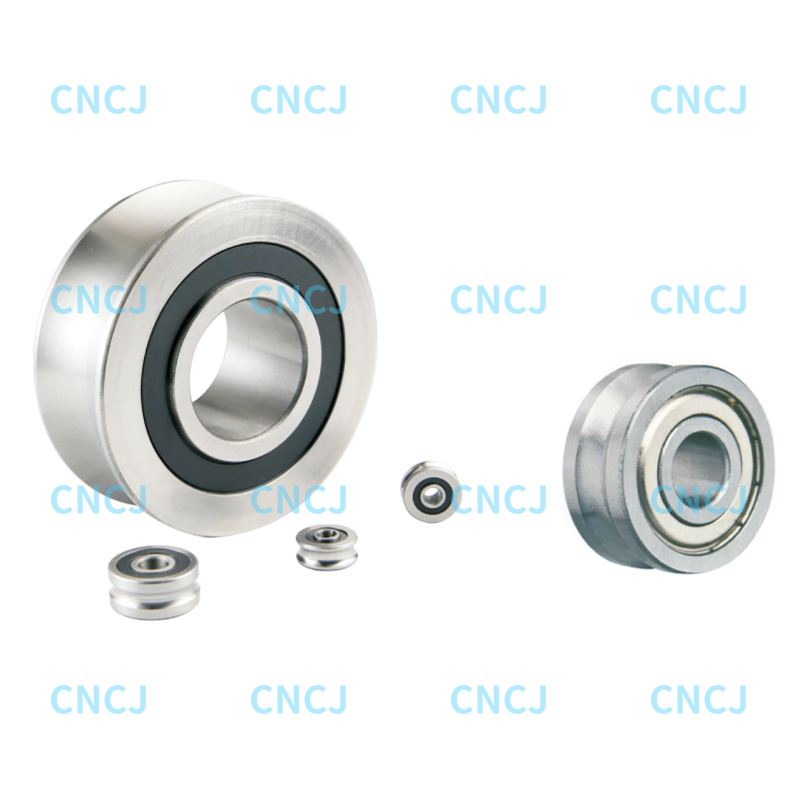 Gothic Arch Groove Track Rollers for Precision Guide RollersFor precision guide rollers on profile rails, the LFR series’ gothic arch groove supports load distribution and stable running in tight-tolerance AGV guidance.View Product →
For precision guide rollers on profile rails, a gothic arch groove design can improve load distribution and reduce stress compared with a simple circular groove. It is a common choice when the AGV must hold a tight path tolerance.
Procurement risk is another factor. Counterfeit or mixed-grade bearings can enter the supply chain through low-cost channels. A bearing that looks identical may have a different steel grade, heat treatment, or grease fill. The result is a wheel that fails in weeks instead of years. Ask for material certificates, dimensional reports, and noise test data. If the supplier cannot provide them, the risk is yours. For a deeper look at roller selection, see this guide on how to choose the right track roller bearing.
Sealing, Lubrication, and Environment
AGV material handling equipment operates in more environments than many designers expect. A warehouse AGV may run in a clean, climate-controlled aisle. The same vehicle model may be used in a cold storage room at -20 C, a food processing area with washdown chemicals, or an outdoor yard with dust and rain. The bearing seal and lubricant must match the worst case, not the best case.
For deep groove ball bearings used on motor shafts, 2RS contact seals are common because they keep dust out and retain grease. For higher speed or lower drag, ZZ metal shields may be used, but they do not seal against liquid. Track rollers often use metal shields or sealed versions depending on the rail environment. In washdown areas, stainless steel or coated bearings may be necessary, and the grease must be food grade. In cold storage, the grease must remain soft enough to avoid excessive starting torque.
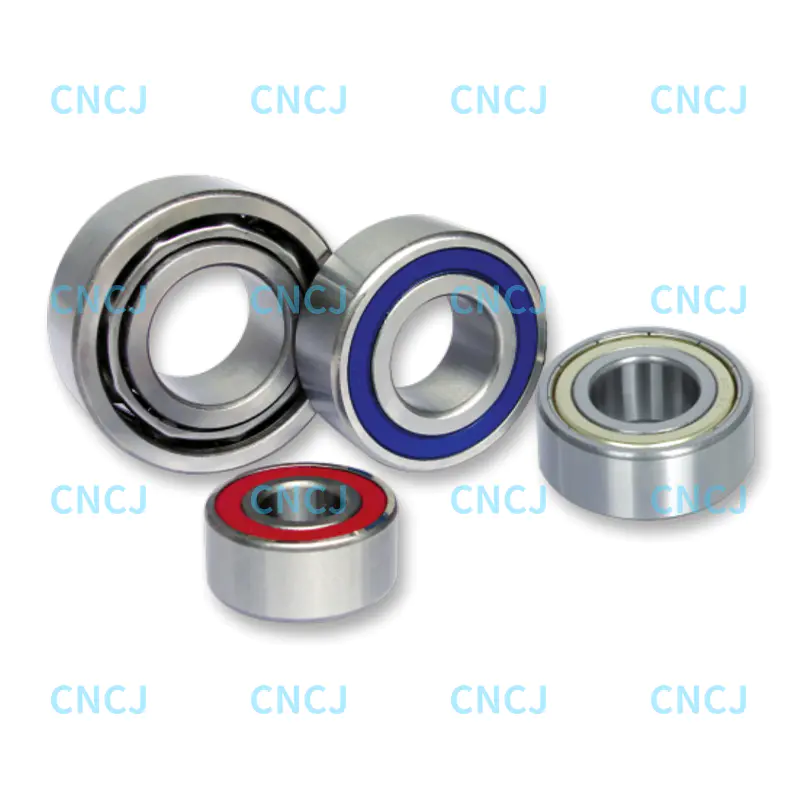 W Series Linear Track Rollers for Rail GuidanceFor AGV linear rail guidance, W series rollers are designed for precise linear motion and can be sealed against raceway contamination.View Product →
Linear rail guidance systems on AGVs often use W series line track rollers. These rollers are designed for high precision linear motion and can be sealed to keep contamination out of the raceway. If the AGV follows a floor rail or a fixed guide, the roller profile and seal choice determine how long the guide system stays accurate.
Lubrication also affects noise. A high precision, low noise bearing needs the right grease fill and clean assembly. Overfilling can cause churning and heat. Underfilling can cause metal-to-metal contact and raceway damage. The correct fill depends on speed, load, and orientation. For vertical shafts, a smaller fill is often better. For horizontal shafts, a slightly larger fill can help distribute grease.
Maintenance and Troubleshooting Checklist
Even a well specified bearing will eventually wear. The goal is to catch the problem before it stops the AGV. Use the following checks during scheduled maintenance.
- Listen for changes in noise. A steady hum is normal. A grinding or clicking sound suggests raceway damage or contamination.
- Measure axial and radial play. Compare with the original specification. Increased play often means wear or a loose fit.
- Check wheel and roller temperature after a shift. A bearing that runs hot may be over preloaded, under lubricated, or misaligned.
- Inspect seals for cuts, hardening, or leakage. A damaged seal lets dust and water into the raceway.
- Look for uneven tire or roller wear. This can indicate a bearing clearance problem or a bent axle.
- Verify mounting torque. Loose bolts allow the bearing to move, which damages the housing and shaft.
If a load wheel bearing fails, replace both the bearing and the seal. Reusing a seal after removal often leads to leaks. Also check the shaft and housing for wear. A worn housing will not hold the new bearing correctly, and the failure will repeat. For guide rollers, check the rail for dents, debris, or wear. The roller cannot compensate for a damaged track.
Specification Checklist for AGV Material Handling Equipment
Before you send an RFQ for AGV bearings, gather the following information. This list helps the bearing manufacturer recommend the right product and avoid back-and-forth.
- Load per wheel or roller: static and dynamic, including acceleration and braking peaks.
- Speed and duty cycle: maximum rpm, average rpm, and hours per day.
- Mounting interface: shaft diameter, housing bore, width, and tolerance class.
- Load direction: radial, axial, or combined. Note the ratio if combined.
- Clearance or preload: required axial play or preload for the application.
- Sealing: open, shielded, sealed, or special material for washdown.
- Lubrication: grease type, fill level, and temperature range.
- Environment: dust, water, chemicals, temperature, and washdown frequency.
- Expected life: L10 hours or distance, and acceptable noise level.
- Quality documentation: material certificates, dimensional reports, and noise test data.
Ningbo Wanshun Bearing Co., Ltd. manufactures double row angular contact ball bearings, deep groove ball bearings, and track rollers for these kinds of motion systems. The company works from Cixi, Ningbo, an area known as China's bearing hometown, and operates an ISO 9001 quality system with inspection equipment for raceway geometry and noise. Its product range includes LR track rollers, LFR gothic arch rollers, and W series line track rollers, which cover many AGV load wheel and guide roller positions. If you are specifying bearings for a new AGV or replacing a failing wheel, share the load case and environment with the bearing supplier early. That conversation is cheaper than a mid-shift breakdown.
AGV material handling equipment is only as reliable as its smallest moving parts. By matching bearing type, load rating, clearance, sealing, and lubrication to the actual vehicle duty, you reduce noise, extend maintenance intervals, and keep the material flow moving. Start with the load per wheel, check the environment, and ask for documented quality data. The bearing may be small, but it carries the weight of the whole system.
 English
 中文简体
 Deutsch
 Español