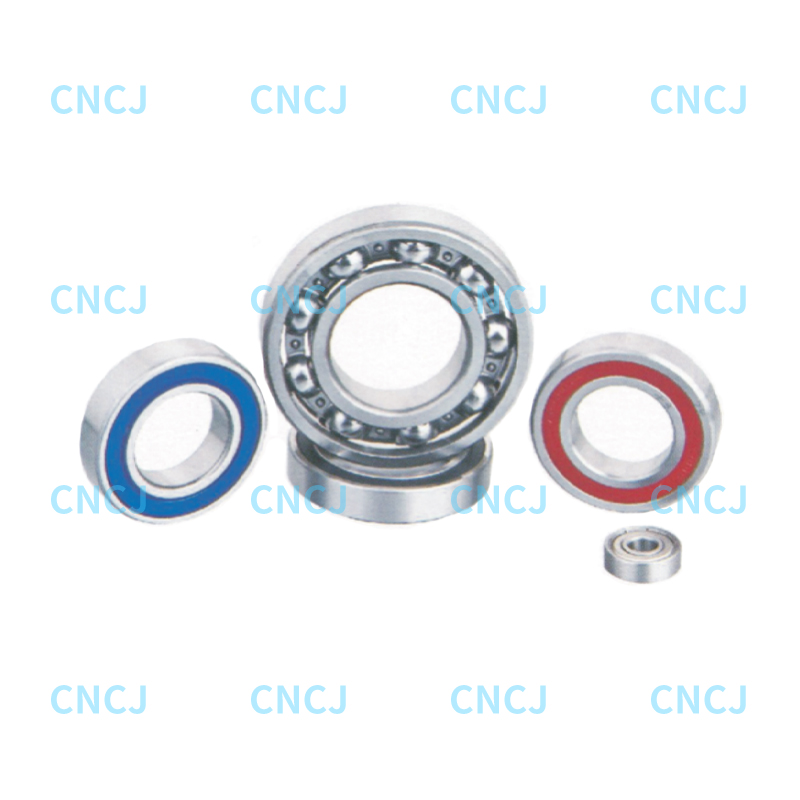
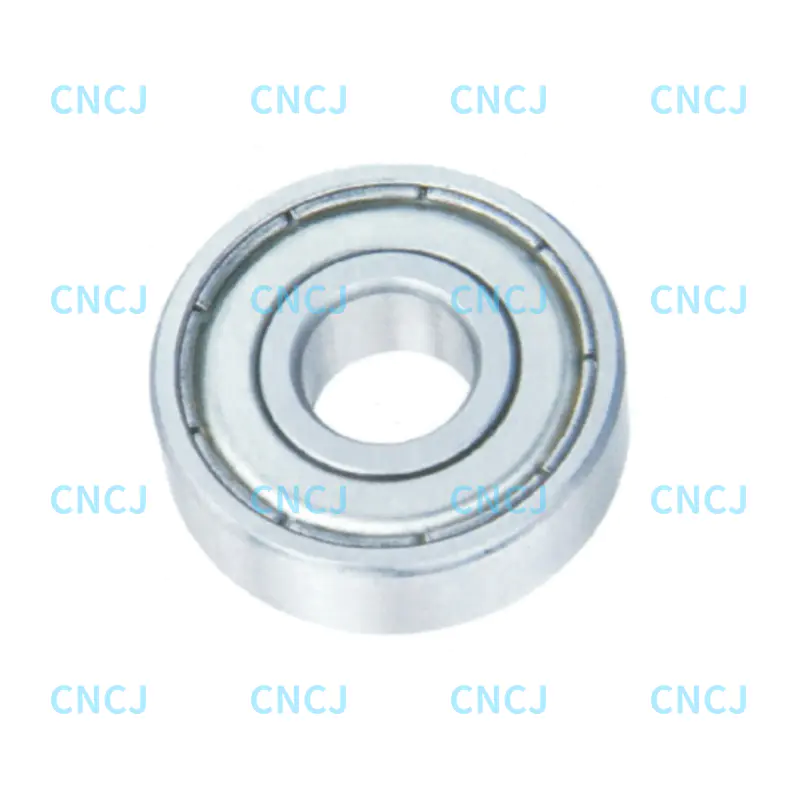
A gearbox bearing on the night shift runs a few degrees warmer than it did last month. Nothing has failed and the line keeps moving, so the easy answer is to add grease and look again next quarter. Bearing condition monitoring exists to remove that guess: it turns a bearing into a part with a measurable remaining life. The short version is that the discipline rests on baselines and trend rates more than on instruments, and three signals, vibration, temperature and lubricant condition, catch most developing faults weeks before they cause a stoppage.
The economics are blunt. A bearing changed inside a planned window costs a part and a few hours of labor. One that seizes adds a scored shaft, a damaged housing, contaminated lubricant in the circuit and an unplanned stop. Failure analyses of premature damage keep ranking lubrication problems and incorrect mounting ahead of fatigue of the steel itself, and both of those causes leave traces in the data long before pitting appears.
The four stages you are actually looking for
Bearings degrade in a recognizable order, and that order is what makes the readings readable. Early damage is invisible in an overall velocity figure and obvious in a high frequency band; by the time a defect tone dominates the spectrum, the window for a planned change is already closing.
Table 1: The classic progression of bearing damage and the response each stage justifies.
| Stage |
What the data shows |
Practical response |
| 1 |
Ultrasonic and high frequency energy rises; velocity spectrum still clean |
Review lubrication and alignment, keep sampling on schedule |
| 2 |
Bearing natural frequencies ring; envelope spectrum shows weak bearing tones |
Fix a review date, check fit and preload |
| 3 |
Defect tones at outer or inner race frequency with sidebands; audible noise, some heat |
Plan replacement within weeks, inspect the housing on removal |
| 4 |
Noise floor rises, tones smear together, temperature climbs |
Stop in a controlled way, seizure risk is real |
Two consequences follow. A single reading proves very little, because the useful information sits in the difference between readings taken on the same machine at the same load. And the instrument has to see the stage you care about, which makes an overall velocity meter a late warning device for bearings.
Vibration analysis: the earliest usable signal
Vibration stays the most widely used technique because it reacts to mechanical change directly and needs one accelerometer on the housing near the load zone. Mount quality matters more than sensor price. A stud mounted accelerometer holds usable data well above 10 kHz, a magnetic mount loses the top of that range exactly where early bearing energy sits, and a handheld probe is fine for route screening but not for envelope work.
Defect tones worth knowing
- Outer race, BPFO: steady amplitude, because the outer ring stays still relative to the load zone, which makes it the easiest defect to trend.
- Inner race, BPFI: amplitude rises and falls with shaft rotation, so expect sidebands spaced at 1x around the tone.
- Rolling element, BSF: weaker and modulated by the cage, easy to confuse with a harmonic of something else.
- Cage, FTF: low energy, but a rising cage tone together with heat points to lubrication starvation or cage wear.
Envelope analysis and the slope that matters
Envelope or demodulation processing pulls a low frequency repetition out of a high frequency carrier and is the standard way to see stage one and two damage. The value lies in repetition: a confirmed tone should be re-measured often enough to plot at least three points before the predicted failure, because the slope sets the work order date, not the amplitude. Weekly readings once a fault is confirmed, monthly on a healthy critical machine, is a workable default. Fault records from similar equipment, such as this review of common faults and solutions for double row ball bearings, help you judge which tones are expected and which are new.
Temperature and lubricant checks
Temperature is cheap, easy to automate and late. It rises once friction has already increased, so it confirms a problem rather than predicting one, but where vibration access is awkward a permanent sensor still earns its place. Baseline it at comparable load and ambient, flag a rise of about 10 °C above baseline for investigation, and treat 20 °C as a stop and inspect condition. A thermal camera on the route does the same job and is handy for comparing sister bearings on one shaft.
Lubricant condition is the other half of the picture. Grease that has oxidized, hardened or absorbed water creates the friction that shows up later as heat. Sampling is not continuous, so the discipline sits in the record: grease type, quantity, interval, color, and any sign of water or metal at the seal lip. Over greasing deserves its own warning, since it lifts running temperature and can push past a seal with nowhere to go in a shielded part.
Table 2: How the common monitoring methods compare on detection speed and practical limits.
| Method |
Best at detecting |
Typical lead time |
Main limitation |
| Overall vibration velocity |
Imbalance, misalignment, looseness, advanced bearing damage |
Weeks to months |
Late for early bearing defects, sensitive to unrelated faults |
| Envelope or high frequency |
Early raceway and rolling element defects |
Weeks to months |
Needs known geometry and a firm mount |
| Temperature |
Lubrication breakdown, overload, cooling problems |
Days to weeks |
Confirms damage rather than predicting it |
| Lubricant inspection |
Contamination, water, wrong grease, wear debris |
Weeks |
Depends on sampling discipline, not continuous |
Baselines and alarm thresholds that hold up
Generic vibration limits, such as the zone boundaries in ISO 20816, suit acceptance checks and spotting a machine in broad trouble. They are coarse for bearings. A trend based rule works better: alert at roughly 3 dB above the established baseline, plan work at 6 dB, and stop for 10 dB or any sudden step. In linear terms 3 dB is about 1.4 times the amplitude and 6 dB is double.
Three conditions keep those numbers honest: the same measurement point every time, the same machine state in terms of speed, load and warm up, and a history that survives staff changes. A baseline taken on a bearing of unknown origin is worth very little, which is why procurement records belong in the same file as the spectra.
Why bearing quality changes the data
Monitoring separates a fault signal from a background noise floor, so a quieter bearing in healthy condition reveals its faults earlier. A low noise, high precision part gives a clean spectrum with predictable tones; a batch with inconsistent clearance or rough raceways moves the floor around and makes trends ambiguous. Noise and precision are therefore procurement criteria with a direct effect on monitoring, not marketing words.
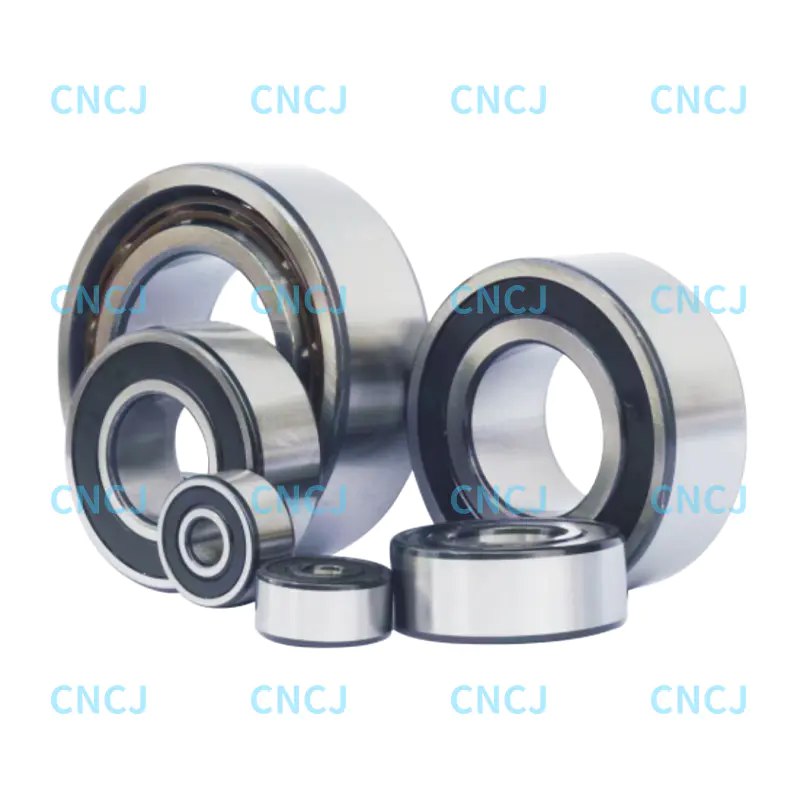
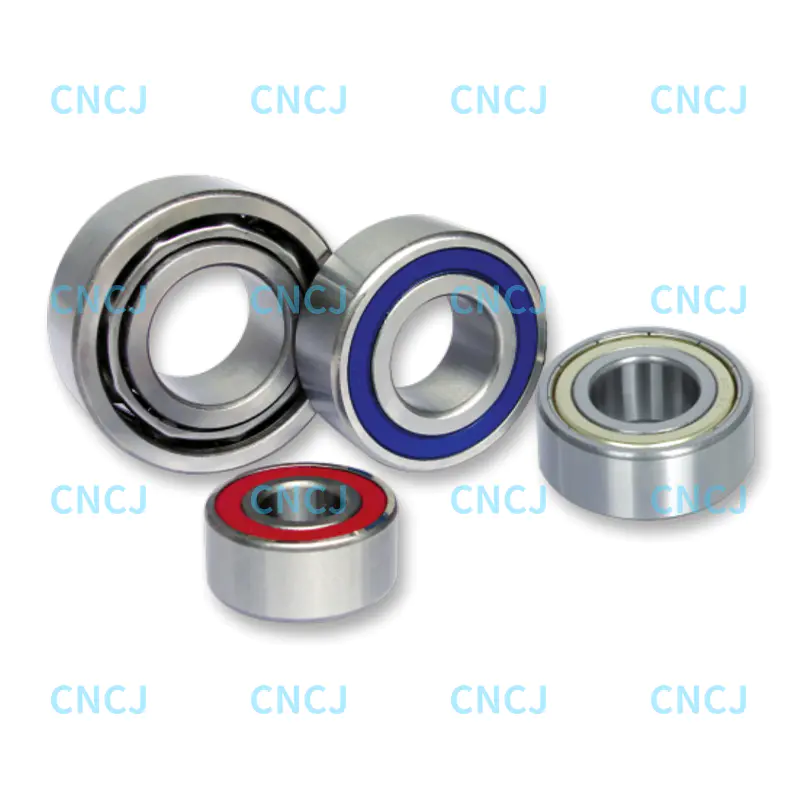
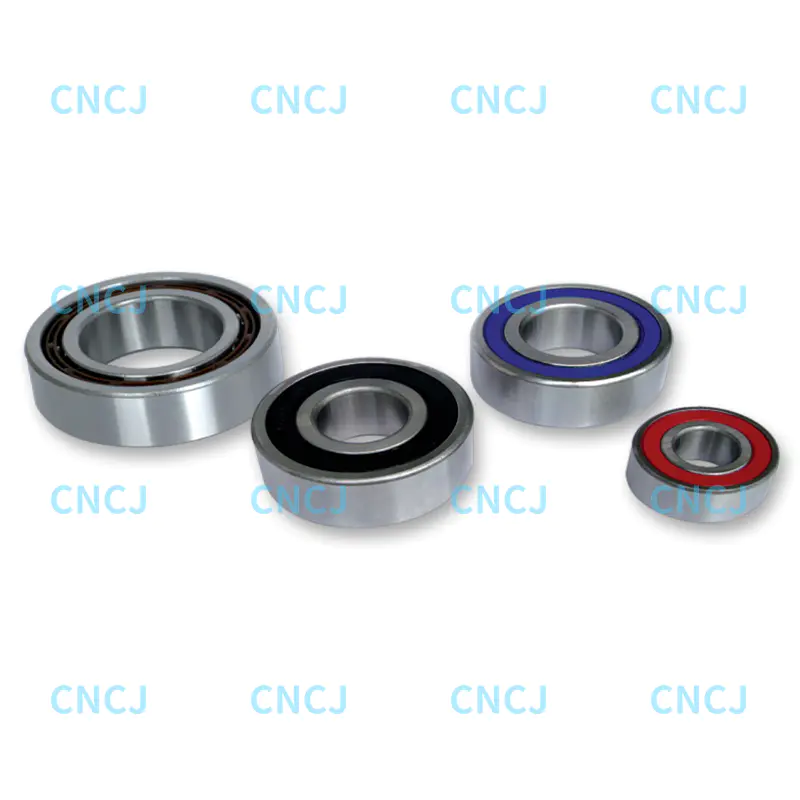
Ningbo Wanshun Bearing Co., Ltd. manufactures the two families that dominate this conversation, high precision low noise double row angular contact ball bearings and small to medium deep groove ball bearings, from a plant in Cixi, Zhejiang, an area known as China's bearing town. Quoted output is 6 million double row angular contact bearings and 35 million deep groove bearings a year, backed by ISO 9001 quality management and a technical team of 35.
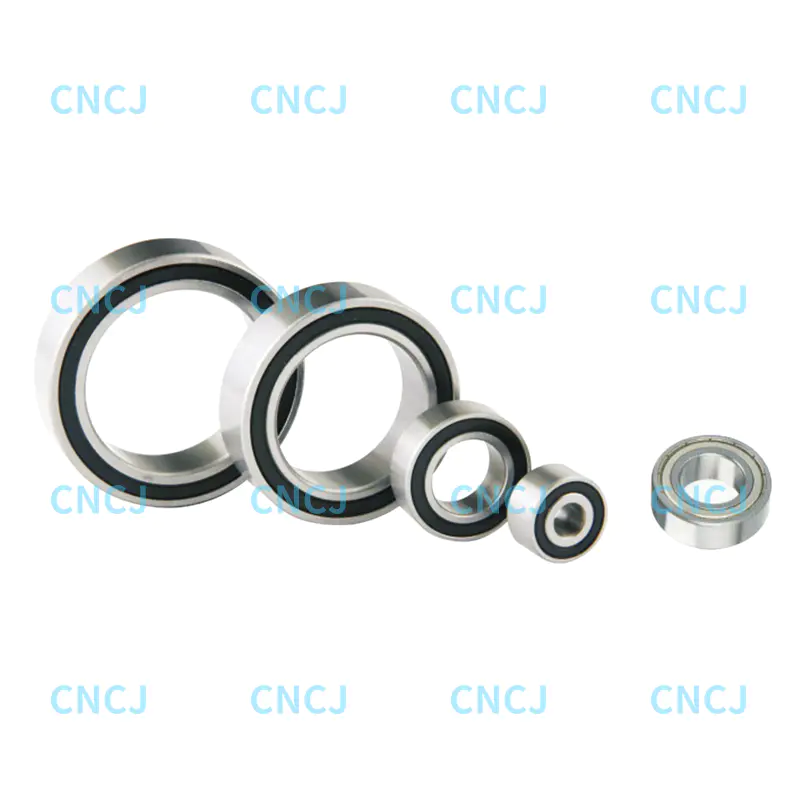 32 and 33 Series Double Row Angular Contact BearingsReview these double row angular contact bearings for high rigidity, a typical 30-degree contact angle, and combined radial and axial load capacity in monitored machines.View Product →
For a monitored machine, the specification details that shift the defect frequencies and the noise floor matter most: contact angle and preload in the double row parts, clearance and grease fill in the deep groove parts. Preload set too high lifts the high frequency floor and adds heat from the first run, while clearance too loose shows up as 1x and cage tones at low speed.
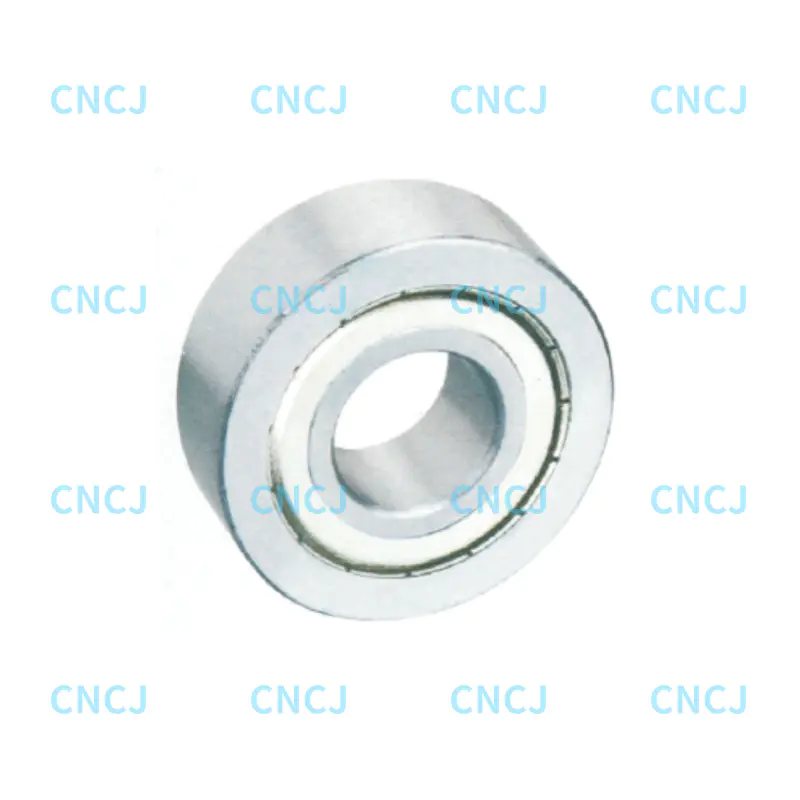
Deep Groove Ball Bearings for Motors and MachineryBrowse deep groove ball bearings in 42 and 43 series plus small precision sizes, suited to motors, automotive, agricultural machinery, and machine tools.View Product →
Where combined radial and axial loads appear and shaft deflection has to stay small, matching the series and preload to the duty before installation saves a lot of interpretation later. The sealed and shielded variants of the 52 and 53 series are a common answer for pumps and gear units where a grease line is not practical.
52 and 53 Series Double Row Angular Contact BearingsThese 52 and 53 series bearings combine radial and axial load capacity with RS sealing options for pumps, gear units, and high-speed machinery.View Product →
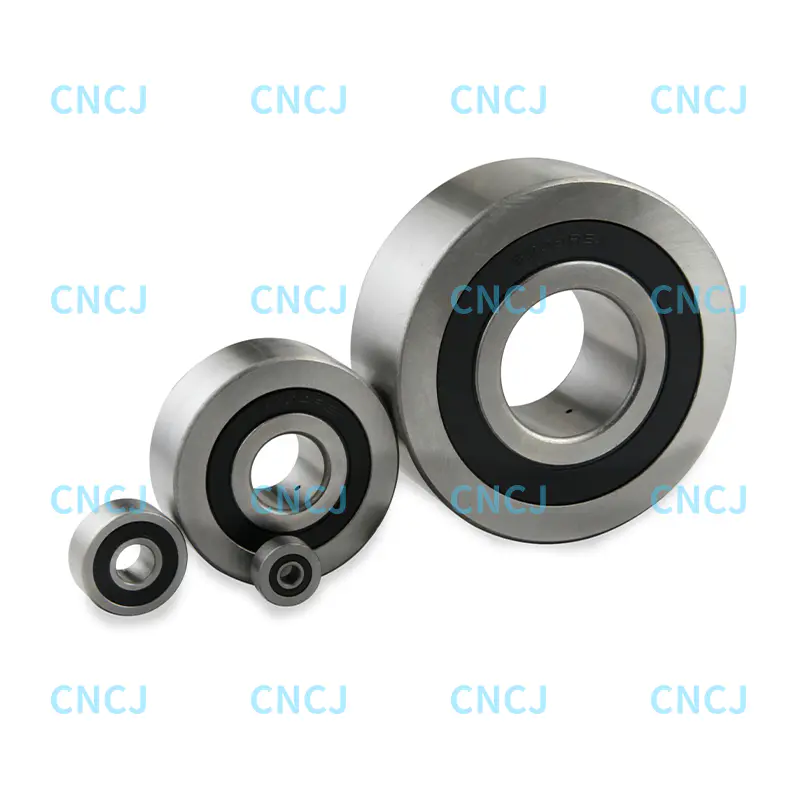
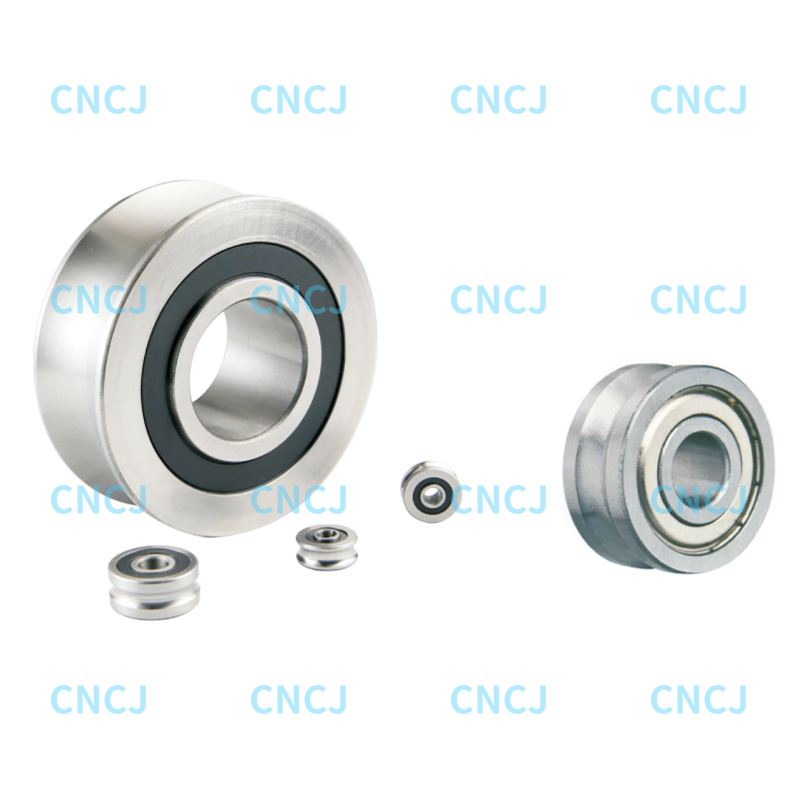
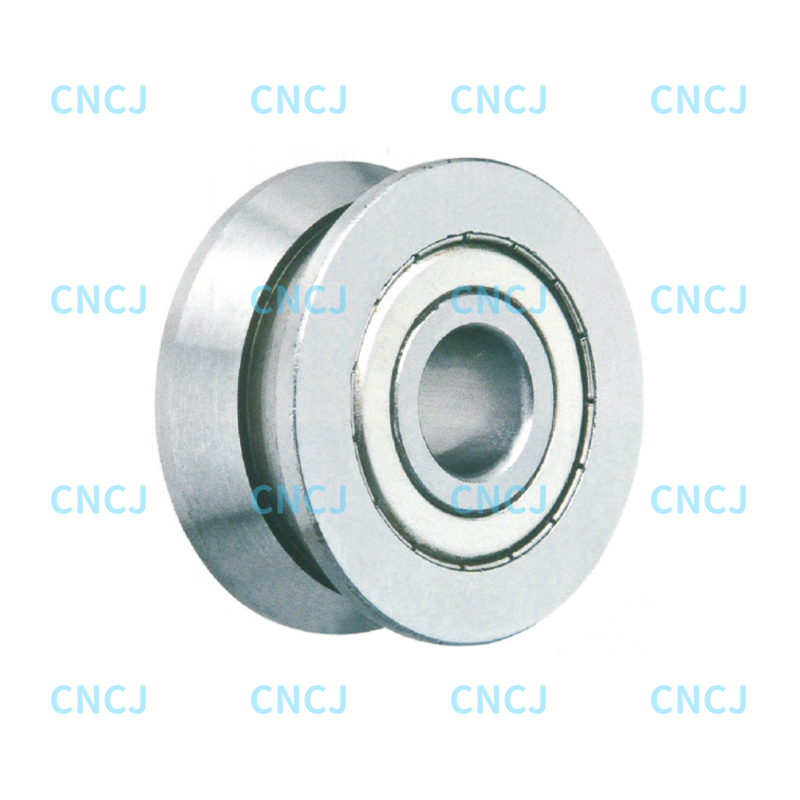
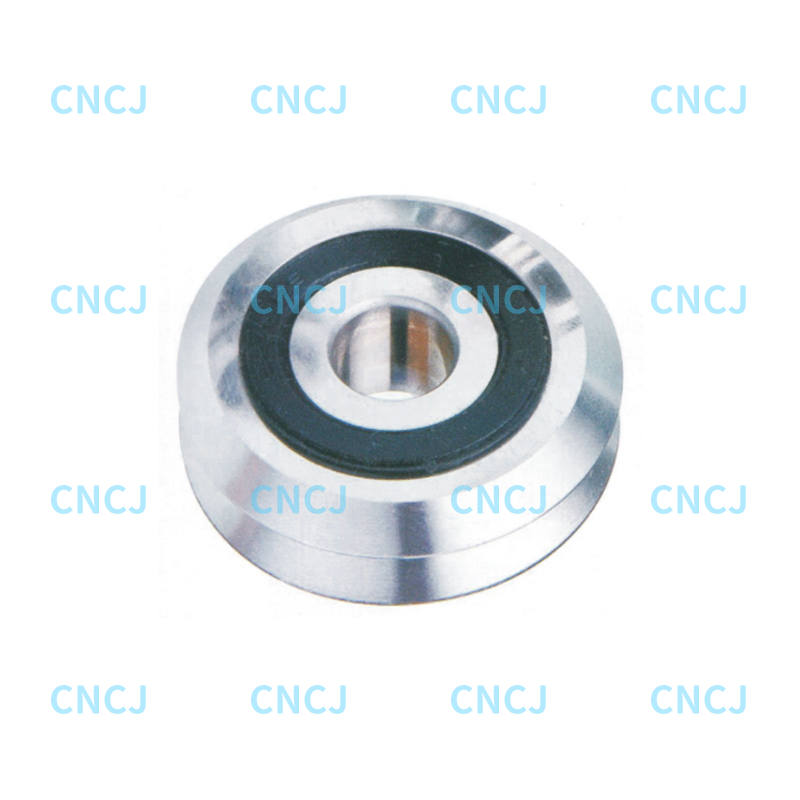
Guidance systems and robot axes add a different case. There the rolling elements travel rather than rotate in place, so the monitoring question shifts toward rail flatness, roller contact and contamination, which is why the design of track rollers with gothic arch grooves matters as much as the bearing inside them.
A practical starting checklist
- Pick the machines where a bearing failure actually stops production, not the whole plant.
- Record a baseline on each, at one fixed point, at the same load and speed, after thermal stabilization.
- Store the bearing designation with the data so defect frequencies and spare parts stay known.
- Set alert and alarm levels from that baseline rather than from generic tables.
- Fix the sampling interval from criticality and keep it, because an irregular route produces unusable slopes.
- Review trends with the people who maintain the machine, since a grease change and a vibration step are usually the same event.
None of this needs a large budget at the start. One accelerometer with envelope capability, a thermal camera already used on the route and a written record of grease intervals will find most of the failures that matter in a mid sized plant. Instruments can grow with the program; the discipline of a clean baseline cannot be added retrospectively.
 English
 中文简体
 Deutsch
 Español