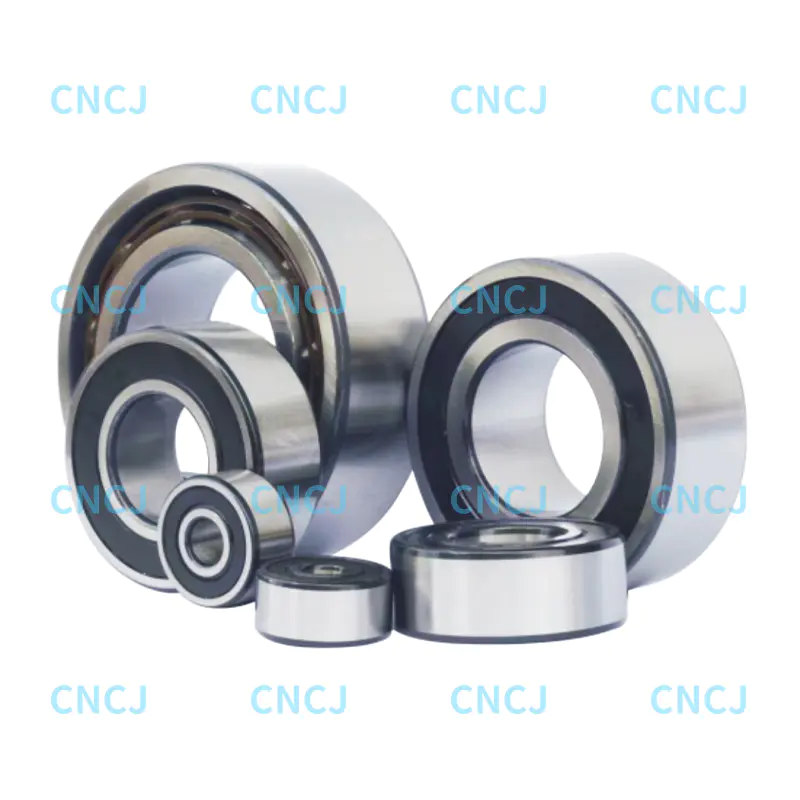
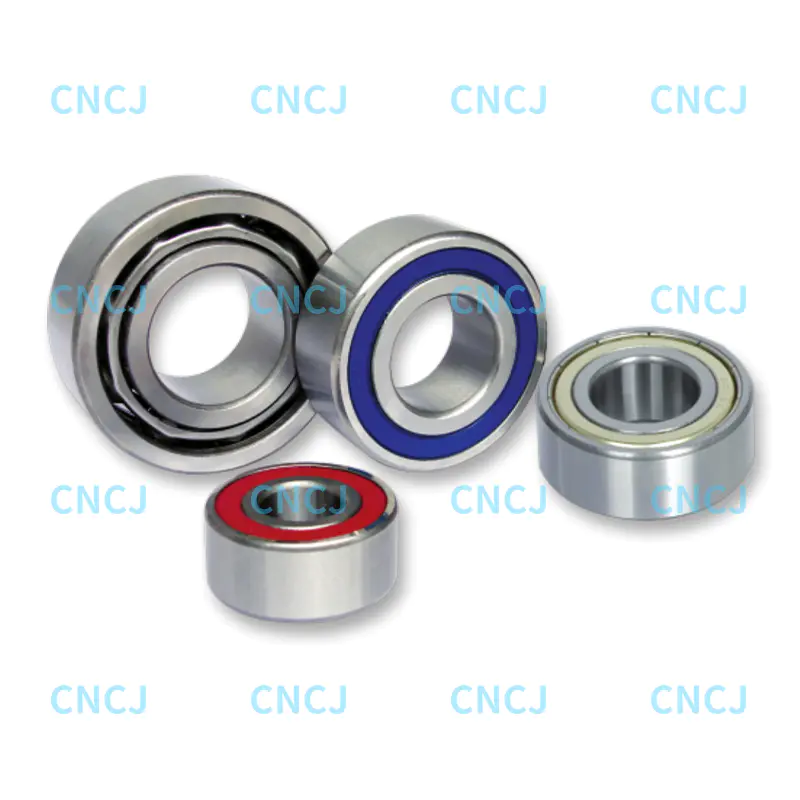
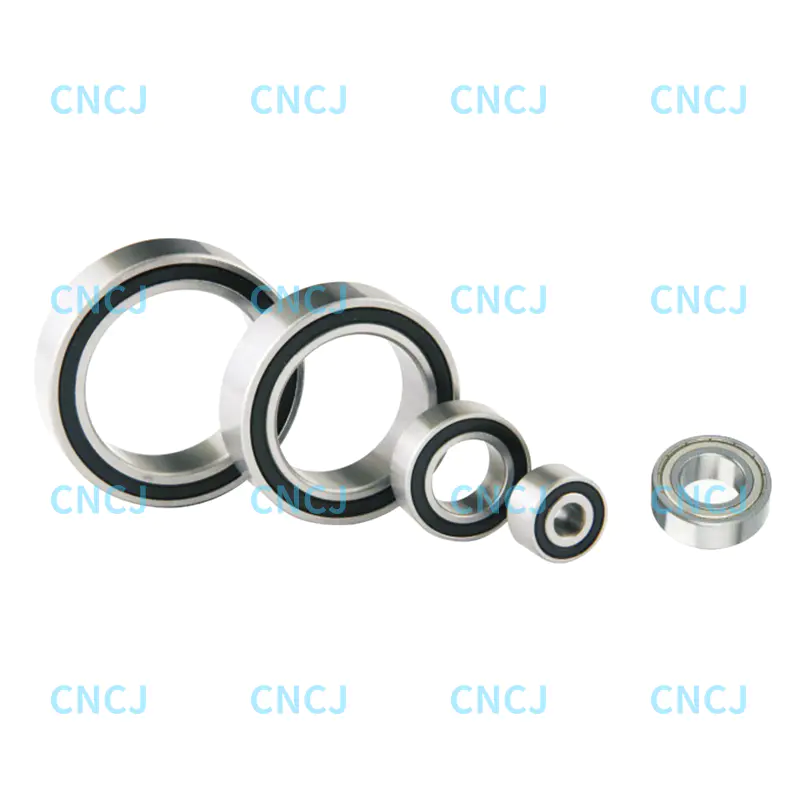
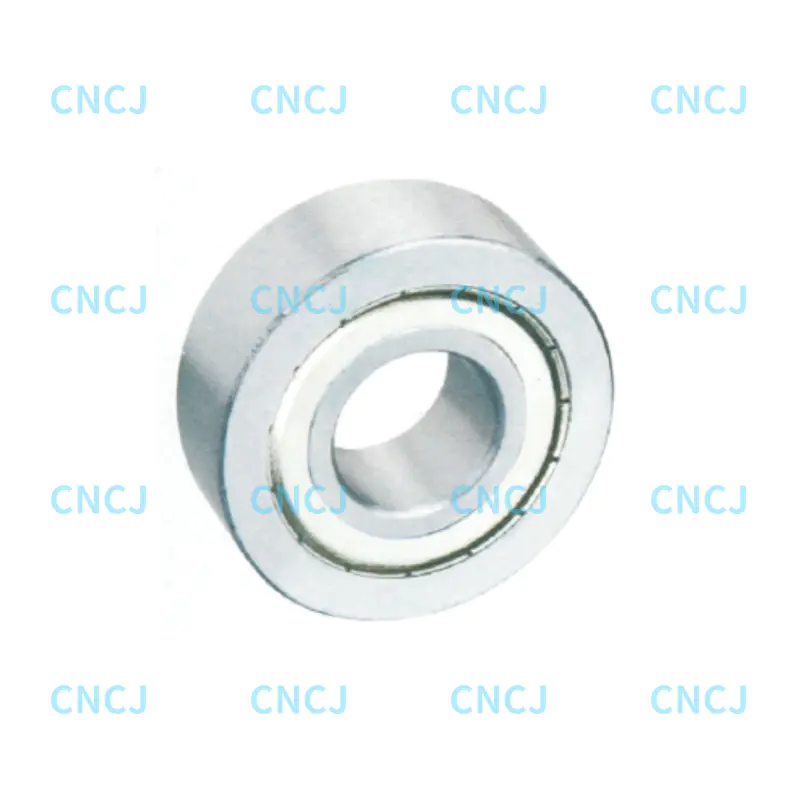
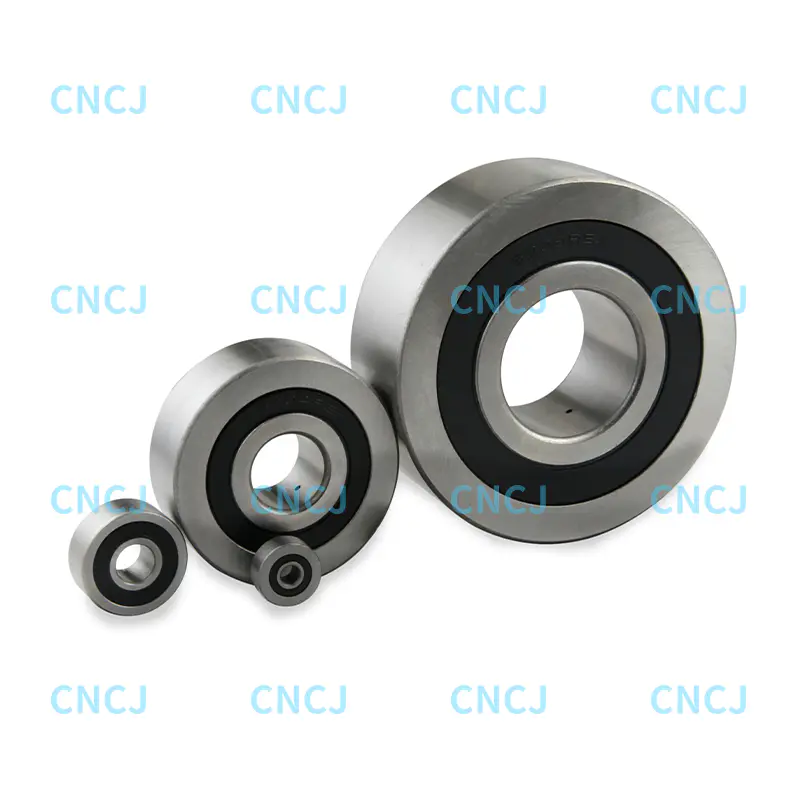
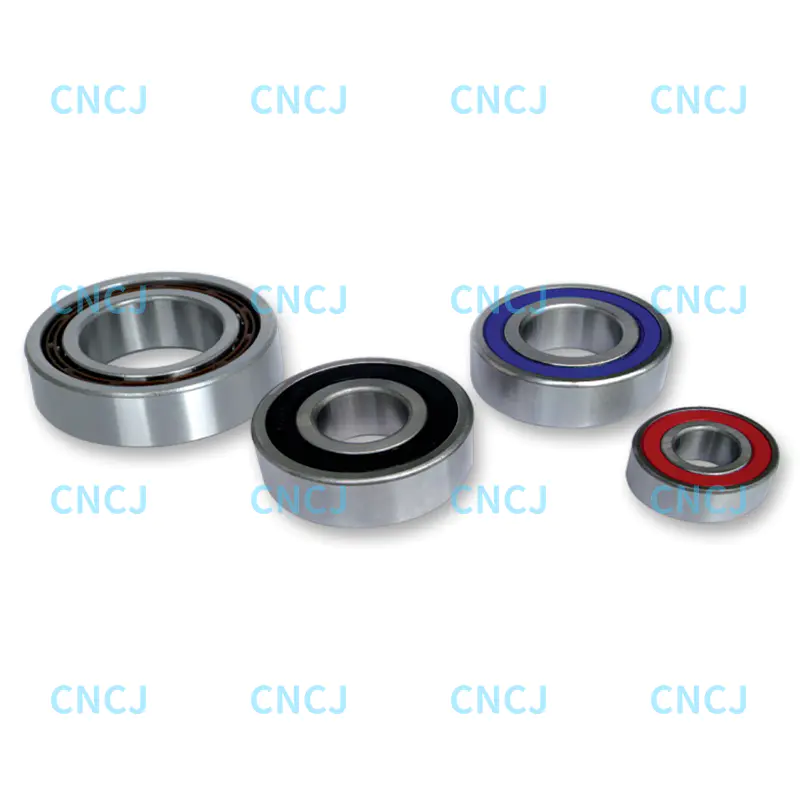
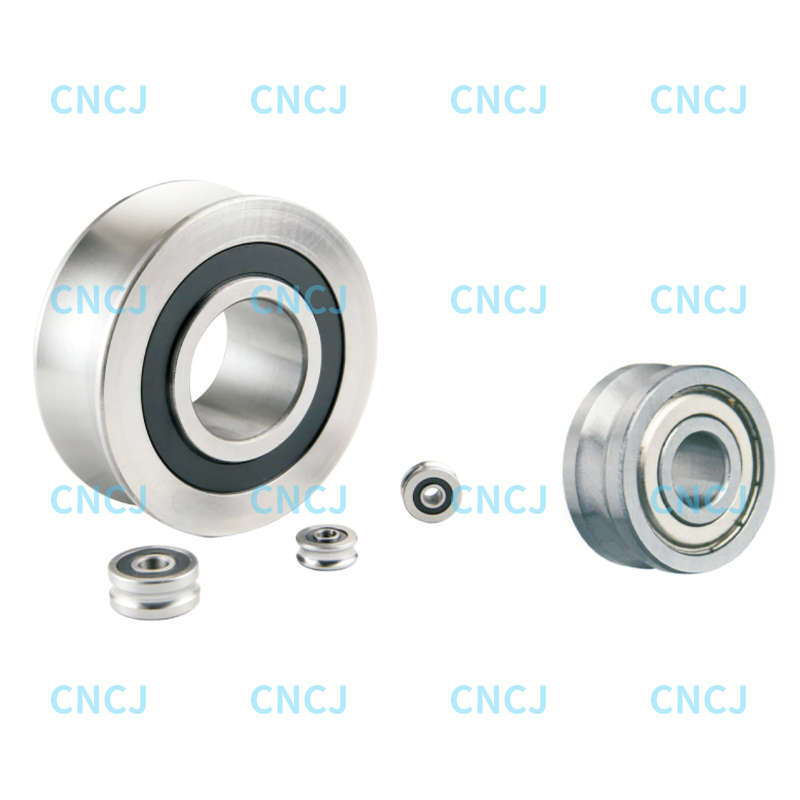
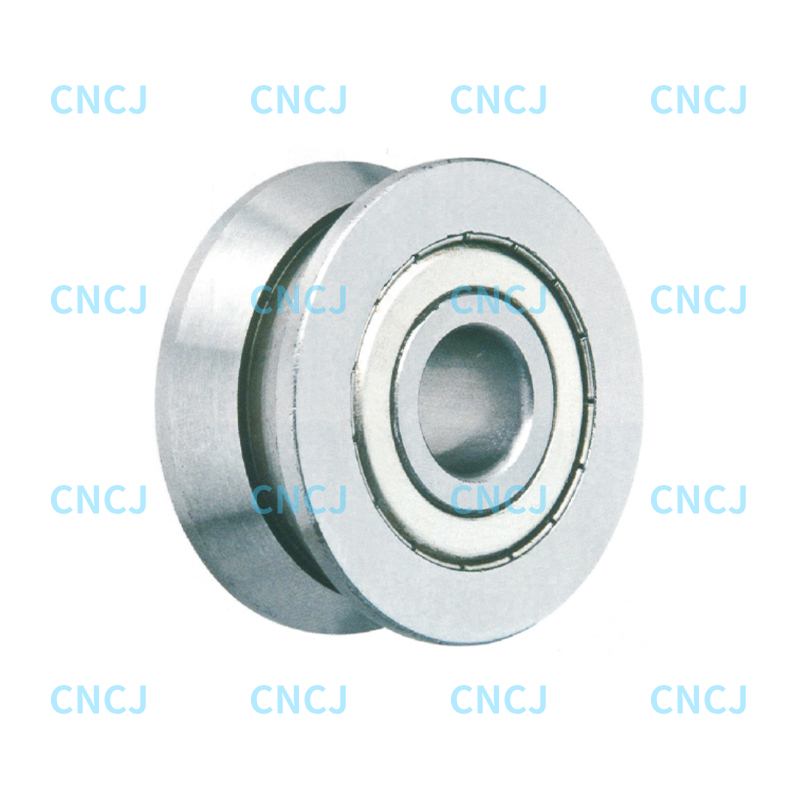
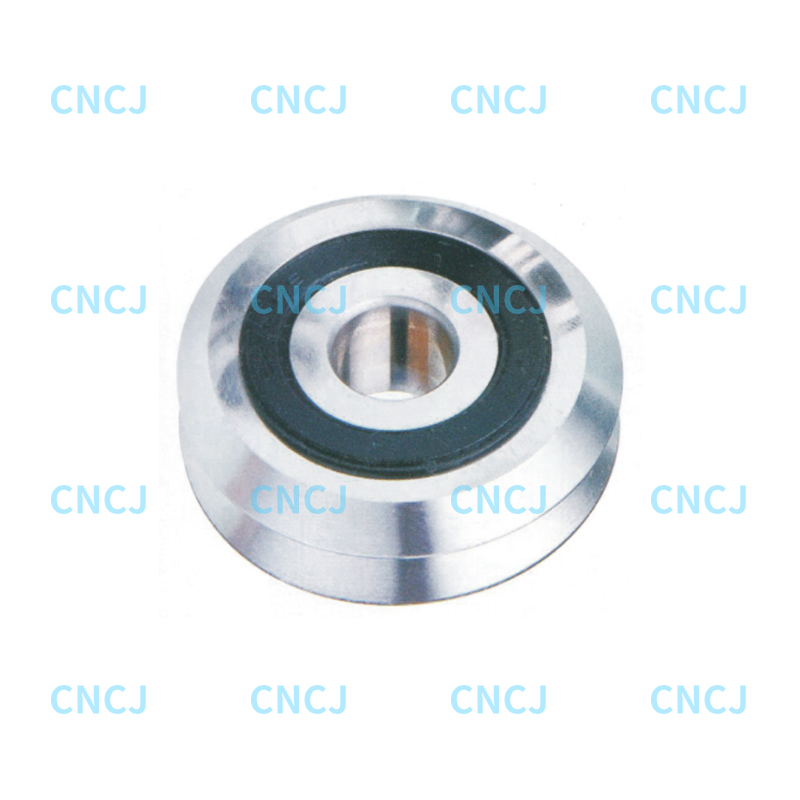
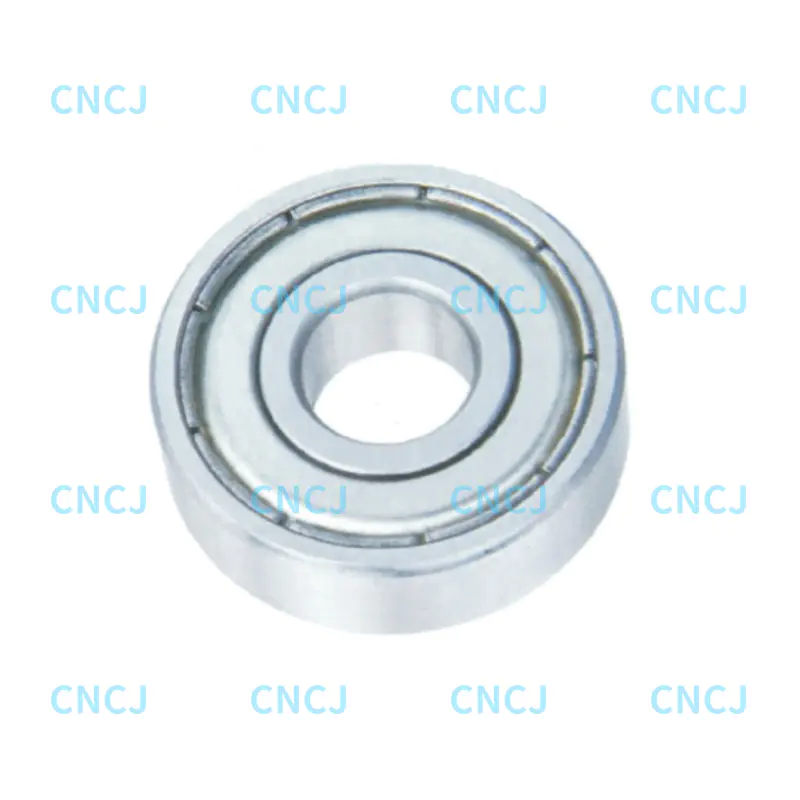
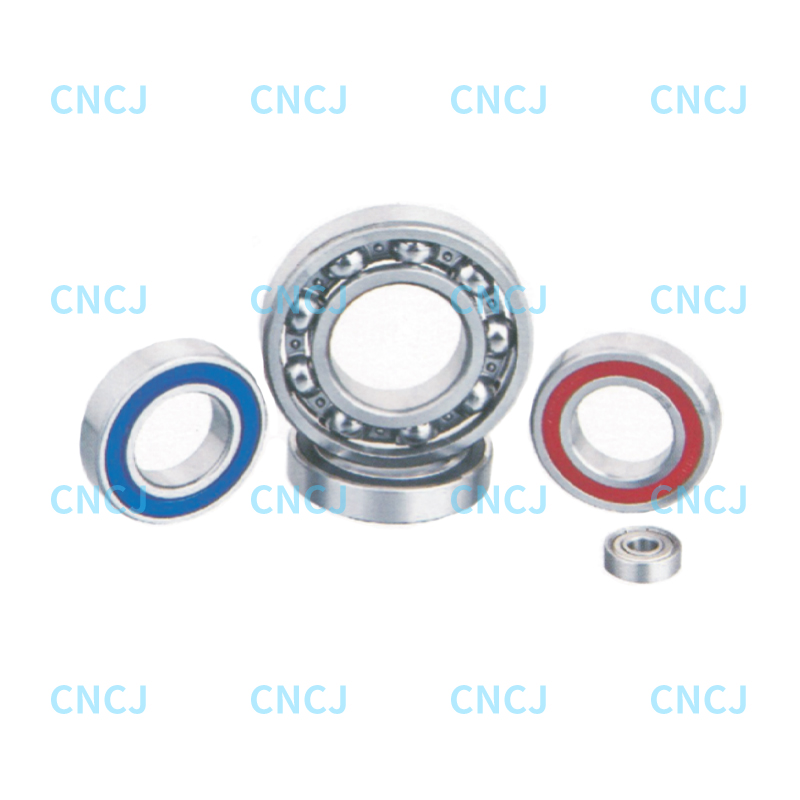
Deep groove ball bearings have deeper, more precisely formed raceway grooves than standard shallow-groove or other ordinary ball bearings, which enables them to carry both radial and axial loads simultaneously, achieve higher speeds, operate more quietly, and deliver longer service life across a much wider range of applications. The term "ordinary bearing" typically refers to single-row shallow-groove ball bearings or cylindrical roller bearings that are optimized for only one type of loading — usually radial — with limited axial capacity.
Structural Differences: What Makes the Groove "Deep"
The defining geometric difference between deep groove and ordinary ball bearings is the depth and curvature of the raceways machined into the inner and outer rings:
- Deep groove ball bearing: The raceway groove radius is typically 51–53% of the ball diameter — a close conformity that creates a large contact area and allows the raceway walls to support both radial forces (perpendicular to the shaft) and axial forces (along the shaft axis) simultaneously
- Ordinary/shallow groove ball bearing: Groove depth is reduced to allow easier ball insertion during assembly; this simplification reduces axial load capacity to near zero and concentrates contact stress, limiting speed and load rating
- Cylindrical roller bearing (another "ordinary" type): Uses rollers instead of balls, providing high radial load capacity but essentially zero axial capacity, and operating at lower maximum speeds due to roller end-flange friction
Load Capacity Comparison
Load capacity is where the practical advantages of deep groove ball bearings over ordinary bearings are most clearly demonstrated:
| Bearing Type |
Radial Load |
Axial Load |
Combined Load |
| Deep groove ball bearing |
High |
Moderate (both directions) |
Yes — handles simultaneously |
| Shallow groove ball bearing |
Moderate |
Very low |
Very limited |
| Cylindrical roller bearing |
Very high |
None (without flanges) |
No |
| Angular contact ball bearing |
Moderate-high |
High (one direction) |
Yes — but requires pair mounting |
Load capacity comparison between deep groove and ordinary bearing types
For a standard 6205 deep groove ball bearing (25 mm bore), the dynamic radial load rating (C) is approximately 14.8 kN with an axial load capacity up to 30–40% of the radial rating — giving it genuine multi-directional capability from a single bearing unit.
Speed Performance: Deep Groove Bearings Run Faster
The low friction of deep groove ball bearings, resulting from point contact between balls and raceways, allows them to achieve very high rotational speeds. The limiting speed for a 6205 deep groove ball bearing with grease lubrication is typically 12,000–15,000 rpm, while the same size in oil lubrication reaches 16,000–18,000 rpm.
By comparison, a cylindrical roller bearing of similar size is typically limited to 8,000–10,000 rpm due to higher rolling element friction. This speed advantage makes deep groove ball bearings the preferred choice for electric motors, spindles, turbines, and other high-speed rotating machinery.
Noise and Vibration: Why Deep Groove Bearings Are Preferred in Consumer Products
Deep groove ball bearings, particularly those manufactured to higher precision grades (P5 or P4 in ISO 492), produce significantly lower noise levels than ordinary bearings due to tighter geometric tolerances on the rolling elements and raceways. This makes them the standard choice for applications where low acoustic emission is critical:
- Electric motors in household appliances (washing machines, fans, power tools) where bearing noise defines perceived product quality
- Hard disk drives and precision instruments where vibration causes data errors or measurement inaccuracy
- Medical equipment such as imaging systems where vibration affects diagnostic precision
Sealing Options and Maintenance Advantages
Deep groove ball bearings are widely available with integrated sealing and shielding options that ordinary bearing types rarely offer:
- Open (no seal, suffix: none): Requires external lubrication; used when relubrication during service is planned
- Single or double shielded (suffix: Z or ZZ): Metal shields exclude large particles; allows some grease flow; used in moderate contamination environments
- Single or double sealed (suffix: RS or 2RS): Rubber or PTFE contact seals provide full protection against dust and moisture ingress; the bearing is grease-packed for life and requires no relubrication throughout its service life
The availability of pre-lubricated, sealed-for-life variants makes deep groove ball bearings a maintenance-free solution in inaccessible locations — an advantage that ordinary open bearings without integrated sealing cannot offer without the addition of separate external sealing arrangements.
When to Choose Each Type
- Choose deep groove ball bearing when combined radial and axial loads are present, high speeds are required, low noise is a priority, or when a maintenance-free sealed unit is needed
- Choose cylindrical roller bearing when very high radial loads dominate and axial loads are absent, and the lower speed limit is acceptable
- Choose angular contact ball bearing when high axial loads in one direction are the primary requirement, typically in machine tool spindles or wheel hub applications
- Choose tapered roller bearing when both high radial and high axial loads must be accommodated at lower speeds, such as in vehicle wheel hubs, gear reducers, and heavy shaft applications
 English
 中文简体
中文简体 Deutsch
 Español